10 Things You Shouldn’t Buy When You Are Struggling Financially
This post may contain affiliate links which might earn us money. Please read my Disclosure and Privacy policies here

If you are struggling financially right now, I want you to hear this first: there is no shame in it.
A financial crisis can happen to any of us. A job changes, work hours get cut, groceries cost more, a medical bill arrives, the car needs a repair, or several smaller problems hit at the same time. Sometimes our own spending decisions contribute to the problem.
I can admit that some of mine did. But struggling with money does not mean you are lazy, irresponsible, or bad with money.
It means something in your financial life needs attention.

This season can be temporary. The choices you make while you are in it do not have to be permanent, either. Pausing a purchase today does not mean you can never enjoy it again. It means you are giving your budget room to breathe while you take care of what matters most.
That room matters. According to the Federal Reserve's 2026 report on the economic well-being of U.S. households, 63% of adults said they could cover a $400 emergency using cash, savings, or a credit card they would pay off with the next statement.
That leaves more than one-third of adults who would need to borrow, sell something, carry a credit card balance, or find another way to handle the expense. If that sounds familiar, you are far from alone.
I have been in a financial mess before. Even when I had a good-paying job, I had to look honestly at my habits and admit that I was spending money on things I did not need. I have checked my bank account with a knot in my stomach, and I have dealt with overdraft fees. I know how quickly a fee can make an already tight week even harder.
What helped me was not pretending I would never spend money again. It was learning to ask a better question: Does this purchase help my family right now, or will it make the next paycheck harder?
The ten things below are not universal rules. Your needs, health, job, children, transportation, and home are different from mine. Use this list to find the expenses that are adding pressure to your budget, then decide what can be paused, reduced, replaced, or planned for later.
What Should You Stop Buying When Money is Tight?
When money is tight, begin with purchases that create another payment, another fee, or another obligation. Protect money for housing, utilities, food, medicine, essential transportation, insurance, and the minimum payments that keep your accounts current. Then look at the ten areas below.
You do not need to change all ten today. Finding one or two expenses that free up money every month is progress.
1. Another Car or a Vehicle Upgrade You Cannot Comfortably Afford
Transportation is a need for many families. A reliable car can be the difference between getting to work and losing income, especially in an area without dependable public transportation. This section is not telling you that owning a car is irresponsible.
It is asking whether adding or upgrading a vehicle is the right decision during a financial crisis.
We are a one-car family. Would a second vehicle make parts of our life easier? Yes. But when I look at our finances in 2026, I know that multiple cars are not something we can afford right now. A second car would not bring only a purchase price or loan payment.
It could also add insurance, registration, inspections, fuel, maintenance, repairs, and possibly parking.
Living with one car takes planning. We have to communicate, combine trips, and sometimes wait. For our family, that inconvenience is easier to manage than another large monthly obligation.
If you need to replace a car, look beyond the advertised payment. According to Experian's Q1 2026 automotive finance data, the average monthly payment was $770 for a new vehicle and $531 for a used vehicle. Those are averages, so your payment could be higher or lower, but neither amount includes the full cost of keeping another car on the road.
The latest household spending figures make that cost easier to see. The U.S. Bureau of Labor Statistics reported that households spent an average of $13,318 on transportation in 2024, or about $1,110 per month. Transportation included more than a car payment, which is exactly the point.
Insurance, fuel, maintenance, repairs, registration, and other expenses still have to fit into the budget after the payment is made. These national averages do not tell you what your family can afford, but they show why adding another vehicle deserves more than a quick look at the monthly payment.
Before buying, ask:
- Can our current vehicle be repaired safely for less than the cost of replacing it?
- Can we manage temporarily with one vehicle, carpooling, public transportation, or combined errands?
- What will the total monthly cost be after insurance, fuel, and maintenance?
- Am I shopping for transportation, or am I being pulled toward an upgrade?
If a vehicle is necessary for work, medical appointments, caregiving, disability access, or safety, then it belongs in your essential plan. The goal is not to go without necessary transportation. The goal is to avoid taking on more vehicle than your current budget can carry.
2. More Cell Phone Service or a New Phone You Do Not Need
A phone is not a luxury for most households anymore. We use it for work, school messages, medical appointments, banking, emergencies, directions, and staying in contact with family. The place to save is not necessarily by getting rid of your phone. It may be by paying only for the service and device you actually use.
I use Tello and choose a lower-tier plan. Because I am home most of the time, my phone connects to our home internet, so I do not need to pay for a large amount of mobile data every month. That choice fits my daily life. Someone who works away from home, travels, drives for work, or does not have reliable Wi-Fi may need a different plan.
Look at your last two or three months of data use before changing anything. If you consistently use much less than your plan includes, compare lower tiers. Check the coverage where you live and work, and confirm whether taxes or fees will change the advertised price.
If you switch providers, the Federal Communications Commission says you can generally keep your phone number when remaining in the same geographic area.
The same thinking applies to the device itself. If your phone still makes calls, sends messages, runs the apps you need, and receives security updates, an upgrade may be able to wait. A phone advertised as a small monthly payment is still another claim on future paychecks.
If your phone is broken, unsafe, no longer supported, or required for your work, replacement may be necessary. Consider a less expensive model, a reputable refurbished phone, or a device you can buy without stretching the payments across several years.
3. Subscriptions You Are Not Actively Using
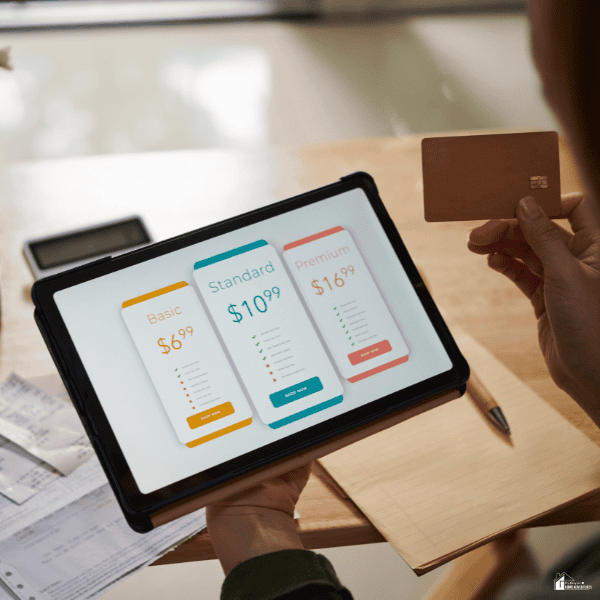
Everything seems to be a subscription now. Television, music, cloud storage, apps, games, meal plans, fitness programs, beauty products, pet products, software, memberships, and features inside products we already bought can all come with recurring charges.
One small subscription may fit your budget and provide real value. The problem begins when several small charges renew on different days and quietly take money needed for groceries, gas, or a bill.
Do not rely on memory. Review at least the last two months of bank and credit card activity. Write down every recurring charge, including annual renewals. For each one, ask:
- Did anyone in the household use it during the last month?
- Does it replace a more expensive expense, or is it adding another one?
- Can we pause it instead of canceling it permanently?
- Are we paying for two services that do nearly the same thing?
- Will the price change when a trial or promotional period ends?
Canceling unused subscriptions is not a punishment. It is stopping a company from deciding where next month's money goes before you do.
Keep the subscriptions that truly support your household and fit the budget. Internet service may be essential for work, school, telehealth, and, in my case, keeping my cell phone plan lower. One entertainment service may be an affordable way for a family to relax at home.
The goal is not zero subscriptions. The goal is no forgotten, duplicated, or unaffordable subscriptions.
4. Buy Now, Pay Later Purchases for Nonessential Items
Buy Now, Pay Later can make an item look affordable because the total is divided into smaller payments. But splitting the price does not reduce the price. It moves part of today's purchase into a future budget that may already be tight.
This becomes difficult when payments come out of an account that is already tight. According to the Federal Reserve's 2026 findings on credit and Buy Now, Pay Later, 16% of adults used BNPL during the previous 12 months.
Among the people who used it, 11% said a BNPL payment caused an overdraft or insufficient-funds fee. A purchase advertised as four manageable payments can become much more expensive when one of those withdrawals triggers a bank fee.
Before using one of these plans, stop and look at the full price. If the item is not essential and you cannot buy it today without falling behind, that is information—not a personal failure. Add it to a list and wait. If you still want it after the financial pressure has eased, you can plan and save for it.
There may be times when a payment arrangement is used for an urgent need. If that happens, write every due date and amount into the same budget or calendar. Do not treat the first installment as the item's price, and do not add another plan without checking what is already scheduled.
5. Cosmetic Home Improvements Financed with Debt
My house needs repairs. I am not pretending that everything is perfect. But the repairs we need right now are not emergencies, and I am not here to make my home into a palace to make other people happy.
There is a difference between protecting your home and trying to make it look like someone else's home.
A leaking roof, unsafe wiring, broken heat, plumbing failure, mold or moisture, and conditions that affect health or safety should not be ignored. Necessary maintenance can also become more expensive if it is postponed too long. Those items need an estimate, a plan, and, when appropriate, help from a qualified professional.
Cosmetic projects are different. New cabinets because the current color is dated, a complete room makeover for social media, or new furniture because someone else upgraded theirs can wait when the household is struggling to cover regular expenses.
Before starting a home project, sort it into one of three categories:
- Emergency: It threatens health, safety, basic function, or the structure of the home.
- Necessary maintenance: It is not an emergency today, but it needs a realistic timeline before it becomes one.
- Cosmetic: It would be enjoyable, but the home remains safe and usable without it.
This does not mean you cannot care about your home. Clean, rearrange, repair what you can safely repair, use what you already own, and keep a list of projects for later. A comfortable home does not have to be a showpiece, and debt is too high a price to pay for someone else's approval.
6. Extended Warranties Purchased Automatically
Extended warranties are becoming a joke to me because they seem to be offered on everything. At checkout, we are often given only a few seconds to decide whether saying no is a risk.
An extended warranty is not automatically valuable just because the item is expensive. It may overlap with the manufacturer's warranty, exclude the repair you are most likely to need, require a deductible, limit where the item can be serviced, or make the claims process so difficult that the coverage is less useful than it sounded.
The Federal Trade Commission recommends comparing an extended warranty with the coverage already included. It also advises checking deductibles, service fees, shipping costs, reimbursement limits, exclusions, and who is actually responsible for the contract.
Before adding coverage, ask:
- What does the original warranty already cover, and for how long?
- What specific additional protection am I buying?
- Is there a deductible, service fee, or shipping cost?
- How likely is this item to need a repair that the contract covers?
- Would saving the warranty price give me a better repair or replacement fund?
There are situations when extra coverage may bring value, especially for specialized equipment or an essential item that would be extremely difficult to replace. But it deserves a real decision. Do not buy it automatically because the cashier, website, or salesperson makes you feel careless for declining it.

7. Food Delivery and Convenience Spending That Does Not Solve a Real Need
Food is not optional, and convenience is not always wasteful. A parent caring for a sick child, a person with a disability, someone recovering from surgery, or a household working through an exhausting week may genuinely need prepared food or delivery. We should not judge a family's circumstances from one purchase.
The budget problem happens when delivery becomes the default while groceries are already sitting at home. Then the household may pay for the meal, delivery charges, service fees, a tip, and food that later goes unused.
Average household spending on food away from home—including restaurants, takeout, and delivery—was $3,945 in 2024, according to the U.S. Bureau of Labor Statistics. That is an average, not a target and not a description of every family. It simply shows why this category is worth reviewing.
Instead of promising that you will cook a complicated meal every night, create a backup plan for the days when energy and time are low. Keep two or three simple meals your family will actually eat. Use leftovers intentionally. Freeze an extra portion when you cook.
If takeout fits the budget occasionally, decide the amount before ordering rather than hoping it works out afterward.
The goal is not to remove every treat. It is to stop paying twice—once for groceries and again for a replacement meal—when the budget cannot comfortably support both.
8. Bank Accounts and Payment Habits that Repeatedly Create Fees
When money is already tight, a bank fee can turn a small shortage into a much larger problem. The Consumer Financial Protection Bureau notes that many banks and credit unions charge $30 or more per overdraft transaction, and more than one fee may be charged in a day.
I know how frustrating overdraft fees can be because I have dealt with them. They take money you already do not have to spare and make it harder to catch up. That is why I started paying closer attention to automatic payments and questioning whether an account that kept costing me money was still the right account for me.
If fees keep appearing, begin with the account—not with shame.
- Turn on low-balance and transaction alerts.
- List automatic payments and their withdrawal dates.
- Ask whether the bank offers a grace period, linked savings transfer, or lower-cost overdraft option.
- Find out whether you opted into debit-card overdraft coverage and whether opting out fits your needs.
- Compare accounts at banks and credit unions, including their minimum-balance and direct-deposit requirements.
Do not close an account impulsively while deposits or automatic bills are still connected to it. Open and verify the replacement first, move transactions carefully, and keep enough money in the old account for anything still pending.
This category is not technically something you “buy” from a store, but fees are taking your money without improving your life. That makes them one of the first expenses worth addressing.
9. Upgrades and Appearance Purchases Made for Other People's Approval
Financial pressure does not stop comparison. Sometimes it makes comparison worse because we want to look as though everything is fine.
This can show up as clothing for one event, seasonal decorations, furniture, beauty appointments, electronics, children's gifts, or an upgrade that photographs better than what we already own. None of these categories is automatically wrong.
Personal care can support health, culture, confidence, work, and emotional well-being. Children need clothing, activities, and joy. A person with physical limitations may need professional foot or hair care rather than a do-it-yourself suggestion.
The question is why this particular purchase needs to happen now.
When I was paying off debt, I stopped having my hair professionally colored because it did not fit my budget. Later, when the money was available, I could choose whether to add it back. That was a temporary adjustment, not a statement that nobody should ever go to a salon.
Before buying, ask yourself:
- Would I still want this if nobody else saw it?
- Am I replacing something that works?
- Is this required for my health, work, or daily life, or am I feeling pressure to keep up?
- Can I wait 48 hours before deciding?
- Is there a lower-cost option that still meets the real need?
You are allowed to enjoy your money. But during a financial crisis, protecting your household matters more than performing financial comfort for other people.
10. Stock-Up Deals That Take Money Away From Current Needs
Buying in bulk and stocking up can save money when the item is regularly used, the unit price is truly lower, and the purchase fits inside the current grocery or household budget. A deal stops being a deal when it takes money needed for this week's bills.
Large packages can also create waste. Food may expire before the family uses it. A product may not work for your child or household. Buying more to earn store rewards may lead you to spend $30 to “save” $5.
Before stocking up, check:
- The unit price, not only the sale sign
- How quickly your household normally uses the item
- Whether you have safe storage space
- Whether the purchase fits this month's budget without borrowing
- Whether a smaller quantity would leave needed cash available
I believe in planning ahead, but there is a difference between being prepared and tying up every available dollar in products on a shelf. When cash is limited, flexibility has value. Sometimes paying slightly more per unit for the amount you need today is the safer financial decision.

What If You Have Already Stopped Buying All of These Things?
You may reach this point and think, “I already do all of this. There is nothing left to cut.”
I hear you.
If you are already using one car, carrying a low-cost phone plan, cooking at home, avoiding subscriptions, shopping secondhand, and delaying every nonessential purchase, another list of tiny cuts may not solve the problem. Your essential expenses may simply be higher than your current income.
That is not a character flaw.
At that point, the next step is not to remove every small comfort. Look at the larger picture:
- Are you receiving every benefit, tax credit, food program, utility discount, school meal, or communication discount for which your household qualifies?
- Can a medical provider, utility company, lender, or creditor offer a payment plan or hardship option?
- Is there an expense that can be renegotiated rather than eliminated?
- Can income be increased in a way that fits your health, caregiving responsibilities, time, and energy?
- Do you need help from a nonprofit credit counselor, community organization, food pantry, or local assistance program?
Asking for assistance is not failing. These resources exist because difficult seasons happen to real families.
How to Use This List Without Becoming Overwhelmed
Do not try to fix your entire financial life tonight. Start with one honest review.
First, check the money available before the next payday. Protect housing, utilities, food, medicine, transportation, insurance, and other essential obligations.
Second, look for upcoming automatic charges. Cancel or pause anything unused before it renews. Check your Buy Now, Pay Later schedules, bank balance, and bill dates so a forgotten withdrawal does not trigger a fee.
Third, choose one recurring expense and one upcoming purchase to change. Maybe you lower the phone plan, cancel a subscription, delay a cosmetic project, or decide not to add another payment. Write down how much that decision keeps in your budget.
Finally, give that money a job. It may keep the checking account above zero, cover groceries, catch up a bill, or begin a small emergency cushion. Even a small amount has more power when it stays available for your family's priorities.
Financial Hardship is a Season, Not Your Identity
You may need to say no to purchases you could afford in another season. You may need to share one car, use a lower phone plan, live with an outdated room, cancel services, or wait before replacing something that still works.
That is not shameful. It is you responding to the reality in front of you.
This season does not erase your progress, your value, or the life you are building. It also does not have to last forever. The purpose of cutting back is not permanent deprivation. It is to create enough breathing room to get through the crisis, regain control, and eventually make choices from a steadier place.
Start with what you can change. Protect what your family truly needs. Let the rest wait without guilt.
What is one purchase or recurring expense you have paused during a difficult financial season—and did it help your budget?







Great list. When our son was little and we were trying to pay off student loans, we bought a fisher price toy (like the farm) and took it from the box. Each little piece got wrapped separately so he had a bunch of fun little gifts under the tree and we spent less than $40 for Christmas! It’s been 20 years since then, and we still don’t spend much. A few gifts under the tree is enough. (I still can’t justify salon prices for hair color either. :D)
When I was 10 years old, we moved to Pennsylvania and our first Christmas in the states ever. I remember my mom bought me an $18 little toy piano. I was so excited I cherished that moment forever. After learning the hard way, we do the same thing you do for your son! I want my boys memories of the holidays of being of traditions not of how many toys they got under the tree. Thank you, Karen.
Awesome tips. Just what I need for my starting point to start saving! Thank you!
Kristine 🙂
Thank you Kristine 🙂
Love all these tips! Another you can add is fast food or eating out. I can definitely say it became a problem in my house but now instead of throwing out expired unused groceries, we are cooking more & avoiding eating out.
All great tips, I also feel that a lot of people, mainly women still spend a lot of money on clothing, shoes, accessories and purses/bags when they have a bunch that are perfectly acceptable to still be used. Those are not necessities!
Absolutely agree with you 100%! Sadly, we live in a world where a female has to look good. We want the latest fashion accessory. We think of what others think of us.
I must say up front that I am not a fan of Oprah…but over the years she has said one or two things that really stuck with me…she said when you die, you will be amazed at all the time you spent worrying about what other people thought of you when the truth is they were not thinking of you at all. They were thinking of themselves. That really resonated with me…maybe you too. Since then…no worries! It is very freeing to not worry about such trivia. In retrospect…why exactly did I care what someone I did not like, did not sleep with, was not married to or related by blood think about my shoes? Can you get more trivial than that? I think not. How stupid was I.
Well said !!!; Happy Holidays!;
I completely DISAGREE. The biggest spenders I know who constantly complain about their financial situation are MEN. They “can’t afford the bills” but CAN afford to go out to eat, buy car parts, go to the liquor store…
Just about anything decorative, whether for you our your house should be on that list.
Yes!! Awesome tips @disqus_sUwLk56ceK:disqus! Thank you for adding this.
I found that I am spending a ridiculous amount of money eating out, even though I thought (foolishly!) that we had been doing better in that department. Eating out is one of the biggest obstacles to my financial success!
I totally agree on not buying toys for your kids! As you said, there are tons of other people who will buy children toys. Frankly, kids have too many these days. There are usually a few favorites; after that, some basic arts and crafts supplies will go a long way to keeping the house tidier (my problem with toys) and finances free. 🙂
Arts and crafts supplies are always welcome in my family. I rather have that than tablets and electronic devices. During Christmas time our Christmas tree get ridiculous full with presents. I even posted it on social media one year. The truth was that 95% of those gifts weren’t even from us but family members who just sent gifts or they stay over Christmas night to see the kids opening their gifts.
I think it’s kind of awesome you don’t buy your kids toys. I mean, how much stuff does a person need? I feel like my brother and I barely touched half the stuff we had as kids.
One year my youngest spent the entire day playing with the boxes and the wrapping paper. I am not kidding. Majority of the toys will be forgotten by new years eve!
Esp. Nature Arts & Crafts; then go to a Nature preserve w the Art Kit;
A funny story; about the wrapping paper ‘ ngifts; I bet my Cat would luv an empty box with wrapping paper; and catnip inside!!
Many of these I don’t buy anyway, like music/movies , hardly go out eat.
Same here. I never buy paper towel when i am saving. I have rags and use these. I wash a load every few days. My biggest expense is food. Grocery day, ughhh
I’m expected to look nice at work every day, and I must say that it’s completely possible to do on a budget. I grew my hair out to avoid having to get it cut so often, switched to less expensive products, and paint my own nails when I choose to wear them painted. I get makeup samples and they last a while, so I only buy foundation and mascara about every 4 months. As for clothes, I buy classic styles and take care of my clothes so I don’t have to buy a lot of new things. Washing is hard on clothes, so I only wash or dry clean them when they’re dirty, not every time they’re worn. (Ahem…undershirts and undies that cover your bum will keep your work clothes clean longer.) I fix them when they get worn and have them altered when they don’t fit.
About half of these things I don’t buy period…struggling financially or not. There are many (legal) ways to get books, movies, music, magazines etc for free. I don’t pay to get my hair colored or my nails done. DIY saves tons. And water…no bottled for me! A Brita filter does the trick and is better for the planet too!
My husband and I have lived this way ever day of our twenty-plus year marriage. We have been able to buy a home and send our two children to private schools with no credit card debt. Now our oldest is in college. It’s wonderful to see her wisdom around money, as opposed to many of her peers. She works, saves, and practices frugality. I would add to the list that if you are trying to get out of debt, stop buying retail clothing or household goods. In our town, it is totally possible to have a designer wardrobe through thrifting. Fabulous post, thank you.
I agree 100%! We still buy music and movies, eat out sometimes, and buy toys for kids parties, but we manage well. I can’t wait until we pay off our vehicle.
Great article!! I know tons of people that waste so much money on these things but they truly are just luxuries. Unfortunately I already don’t actually spend money on any of these things, so I can’t stop and save more money…
Thank you for this article! My boyfriend and I recently started our own business and dropped down to only working a couple days a week at “regular” jobs. It’s awesome getting to pursue our dreams, but money is definitely tighter than it used to be. We’re learning to live off of about 1/4 what we used to but are always finding new ways to cut back and still live the lifestyle we want.
We always cook at home. We used to spend a lot of money on beverages but now we make our own kombucha and brew our own beer. Luckily, neither of us have ever really bought many new clothes, we both know how to sew (essential skill for everyone I think) and when we do buy something new we usually seek it out second-hand or consignment.
While we don’t have kids, I find the one about not buying toys really interesting. When I think back to my childhood, I hardly remember what toys I played with, but have wonderful memories of the activities and experiences we had (hiking, going to the beach, hanging out at the public fountains our city had everywhere.) We have seven nieces and nephews and we usually buy them toys for birthdays and Christmas, but we’re trying a new approach this year – all homemade gifts. Thanks to my partner’s awesome artistic skills, we’re putting together a board game that we’ll be making for all the kids.
This is so very true. As we keep going through and annihilating our debt. We have cut down drastically on excess expenses. It’s tough at times, but the end result is SOO worth it!
Yes it will be! Keep it up and don’t give up!
This was a great post. I absolutely agree with the not buying your kids toys. If grandparents, aunts, uncles, etc. buy for them, that’s great. But as parents, I don’t buy my kids toys. And yes, they are perfectly fine if you don’t. Thanks for sharing.
Thank you Jessica.
I would add to that beer/alcohol, fancy food or meats like filet minon, etc., also cable TV or other monthly/yearly subscriptions like net flix, amazon prime, hulu, stitch fix, etc. Maybe even internet and phone services if you don’t need it for your work. Also I don’t think you should give/loan to others who are hurting financially until you are out of debt yourself. There are so many others you could probably think of to add if you really sit down and start writing. Thanks so much for these thought provoking ideas.
Thank you Tami for sharing your tips. These are very helpful and I agree with them. I think desperate times you need to simply unplug and get it together. It is not an easy road but it is possible.
one thing that has really helped me was setting up a strict budget. i wrote it down on paper and i look at it everyday. I also make sure to check my bank account regularly. A lot of time i used to overspend, and not realize it, and my bank would charge me the full amount of funds that I overdrafted on top of an overdraft fee on top of the transaction that didnt decline. Once I found myself -$300.00 from one purchase! Another thing is to turn off automatic payments. I always forgot about them and then would spend all my money right before the automatic payment went out. OUCH!
Happened to me in my twenties and yes, OUCH! By the time my next check came I was broke already thanks to fees!
We shopped used clothing stores; consignment and Goodwill. Half the fun there is looking for the treasures. We also checked out videos from the library and went to free concerts in the park.
Specially te material things: like clothes, jewellery, makeup, bags shoes. They can be costly and honestly if you don’t want them please don’t buy them. I’ve been trying to change that about me as much as I can. Instead spend on something that can be productive.
This is true about the magazines. I stopped buying women’s magazines, which has been a kind of deprivation 😉 Instead I turned to Pinterest – colourful and for free.
One of the best posts I’ve read about getting out of debt. When we were trying to get back on track, I did a detailed budget to see where all the money was going. Eating out, books and magazines were at the top of the list. Now that we’re doing a little better, I budget for eating out very sparingly.
wow…. My priorities are shelter, electricity and water. Food, gasoline and car insurance. that way no matter how bad things are, DFCS won’t be taking my kids away. Sometimes your pride needs to be the first thing to go. I tell people to stop buying cigarettes, alcohol, soda, chips, candy and fast food. It’s hard but get rid of the cell phone, car payments and any other luxury payment. Change your living conditions. , I walked away from it all. I started over. I regrouped for a year in a 2 bedroom with my 3 children. I slept on the couch. We ate but most people would just say they couldnt do what I did. I gambled and bought a house at auction. 10 yrs old. A relly nice house. I saved my money and did about 9 thousand in improvements. I am now mortgage free. I saved some more and paid cash for a little car. Same budget applies. We meal plan and cook from scratch. Doing without when necessary brought me to today. I have no debt and am stress free. The people who lost the house I bought could not pay a 375.00 mortgage because they would not give up their I Phone. satellite tv or AAron rents furniture payment. How do I know? They left the house trashed with all their records………
Not eating out is what my family struggles with. I commute to work and I don’t really like to cook anyway. I try to remind myself when I go grocery shopping that for my family, it is more cost effective to buy convenience meals than cheaper ingredients to make the meals from scratch because we will ACTUALLY use them. Otherwise, I’ll get home, look around the kitchen, and decide we should eat out.
I can relate to a lot of these. It is so easy to get sucked into the mindset of having to have everything new, or a new toy every time you turn around.
I agree completely with not buying your kids toys. My daughters have a few solid toys that they play with every day rather than a bunch of junk lying around that never gets played with. When my family asks what they can get my kids for gifts I tell them what the girls need instead of toys. My daughters are so excited to get a new book or a new sweater that Grandma and Grandpa picked out.
I was barely 21 when I got my first credit card. I was alone with 2 children & I went crazy!! Buying anything my kids wanted & some luxuries for me!! It was so easy – 0% interest for the first year, etc. BUT boy, did I learn my lesson when I ended up paying 3x what the stuff I bought was worth!! It really was an expensive lesson!
You are so right about bank fees!!! They really try to squeeze blood out of a turnip!! Our “senior” ages helps get our fee waived! Sorry I wrote a book here, but some of these points hit a raw nerve! I wish I would have read an article like this 40 years ago!!! ?
I would add Dry Cleaning.
I’d add in that anything that sets you up for monthly payments (phone, car, etc…) should be the CHEAPEST and MOST ECONOMICAL no-frills setup you can get. Perhaps if you are in debt, you don’t need cable? Basic internet and a telephone. And not all the the bells and whistles for your phone service of “just add one dollar a month and you get THIS!” sort of thing. Three extra “thingies” on your phone bill will cost you $36 in a year, and will you use it? No. Instead, you keep that in your cash box for emergencies! Check out your utilities and make sure you are making the best of them – perhaps you will learn that you need to do your laundry and baking outside of peak hours, for example. And don’t set yourself up for things that need upkeep like fake nails and hair processing, which become monthly payments. Get your hair “naturalized” back to its original color and start doing it yourself until you’re out of debt.
Great list! Although I’m not on a super strict budget right now, there are a few things we do to try and save money. We cut cable last year, though have hardly been deprived since we can use our parents log-in for all the good channels on appletv. I have a 7mo, so I also breastfeed and cloth diaper.
I still use some disposables, mostly when out and about( we bought those on a killer deal+target gift cards months before our baby was born) so it has been a while since I spent any money on diapers.
Also when shopping, the biggest killer of my budget is all those small trips for things that I forgot. Meal planning is important, also try to plan meals that will actually fill up a man(and me..). Unless I can bulk up a meal with something like lentils (cheap!) he/we starts looking around for something else about an hour after dinner, regardless of how good it was. Hearty things like beans and grains take a while to digest and are inexpensive.
I’ve also been making my own clothes and dishwasher detergent, I can cut down on cost and questionable chemicals now that there is a baby in the house.
Bonus tip: there are some vegetables that can be planted and keep growing. Green onions are the only ones I’ve tried, but keep the white part with the roots, pot it in a little water for a couple days then transfer to a pot. I never have to run to the store to buy a whole bunch of green onions for just the random recipe, I just walk outside and cut off a couple pieces!
Whew, well that was longer than I expected, sorry! 🙂
Where is the code?
I disagree about the car part . I drive 100 mile round trip to my job, I must have adependable car. Every time I get one paid for it starts needing work. all others on list I already do . I have learned most people in debt are spoiled .
I was on the same boat as you and thought the same way too. I drove all over the place, came inspection time the car also needed major work so I completely get what you are saying. Let me give you an example of what I did and many have done. I need a good car, so I go and get a car I deserve because I need a reliable car. I forked out $300/mos. (because my credit wasn’t the greatest, my loan interest was insane) and I also added a GAP insurance. Every year I needed new tires, add the cost of car maintenance each year and repairs while STILL paying this car; I was paying a lot of money for my reliable car. Fast forward to my used car: Paid cash for it, when it needs work I pay for it because the money I was paying on car payments I was tucking away and I budget for those things. The end result we are paying less EVEN with car maintenance and car issues. Now when the car dies which it will happen we will get a newer one and might not pay cash for it, but since the post is about people that are broke and struggling a car payment shouldn’t be a struggle to make. This is my personal experience and I appreciate your comment very much.
Starbucks. I cut back significantly on Starbucks when I’m short on cash and expensive groceries. Stick to simple meal plans that don’t break the bank. I love homemade tacos and they can go for a couple extra meals.
YES on tacos and meal planning for the win!!
I have to disagree only with the pedicure one. But I’ll concede that it doesn’t have to be a “spa” (read: more expensive) pedicure. I’m morbidly obese and simply can’t take care of my feet myself, so I have to pay someone else to do things like cut my toenails. Since it comes with a polish, I get that too. But I definitely don’t need the $45 one when the $20 will suffice.
I’m also justifying the car because I don’t currently have one and I need one for work. I just plan to buy it outright and not have any payments. A cheap beater to get me to and from work every day is all I need!
We already don’t do any of this because almost all of it is unnecessary (whether you have the money for it or not). I found one thing that helps that most people just can’t give up, is name brands of food or care products. Getting your car detailed we’re paying for a carwash when you can do all that stuff at home.
Good point Taylor! Thank you!
Those were no- brainers except for the buying a book or magazine???Okay they can be expensive I guess when I’m broke,I go to the library to get a good book or magazine try borrowing a movie from the library. I know what it’s like to be broke I live paycheck to paycheck.
I agree with most of what was said. How ever I do buy toys for my kids. They do not have grandparents anymore as they have passed away. And my husband and I come for small distant families so aunts and uncles really aren’t around.
With that said I rarely buy new toys most of what my kids get is used lots of stuff is posted on freecycle or for sale sites pretty cheap. And you can find some great finds at second hand stores.
Cigarettes. I stopped buying cigarets & smoking. I have to buy water. We have an infant on formula and we have well water vs city water. I’d honestly still buy bottled water even if we had city water because the city water has had issues for years. But snacks and prepackaged foods are also a luxury we quit.
I buy the discounted bakery bread @ $0.50 a loaf & freeze it! I also buy the family packs of chicken & beef and divide into meal sizes as soon as I get home. Farmers markets are great! Fresh produce & lower prices than the grocery store.
For books, you could use an app like Overdrive or Libby to get ebooks and audiobooks free. It’s a seriously amazing alternative to buying the books or paying for an audible subscription.
Thank you for the tip, Nora!
Great tips! I totally agree 🙂
Totally agreed! We cut out all of these years ago and it’s allowed us to buy a home and have a significant amount put into savings each month.
Sweet!!! We cut down on a lot of things for the same reason to save and pay our debt.
I remember when my husband wanted to overhaul our daughter’s bedroom, like new furniture, curtains, the works. She had received a futon bunk bed as a present (from a family member) and the dark color of the walls made the room feel so tiny. While I understood where he was coming from, I was not a fan of spending all that money. We waited for a sale/high value coupon from our local paint store (sometimes they even have free quarts!). Turns out just a fresh coat of paint was all the “overhaul” it needed.
If you must have a “new” book, I recommend a Book Swap among your friends. I even found a brand new book at the thrift store.. the tag said $34.99 original, but I got it for $1.67. I spent the next few months loaning it out and swapping it for other books. So much fun!
So good to hear! Glad you all didn’t go with what the entire remodel and waited. Thank you about the Book Swap idea!
Some of the things mentioned are common sense and others relate to vanity which I can never understand why folks get so caught up in that anyway. Even buying the stuff and doing it at home is still wasted money. B e content with who you are and what you look like.
Wireless services, many non major services have limitations and if your family is spread out everywhere, you might end up out of contact. Also, reliability issues are common with smaller carriers.
Online banking with a major bank can be the best move. MetaBank is one of the best paying out the highest interest earnings and they use a visa debit that is accepted everywhere.
A huge money saver is also a money earner. Grow a garden! Learn to can your foods. And if you grow too much of one or more veggie items, sell them and or donate to local food pantry. Do not buy sweetened junk foods and adopt snacks that are savory. Yellow corn tortilla chips are more nutrient value over popcorn or white restaurant tortilla chips.
We’ve been living as a family of five on 735/mo for years and via garden and spending wisely, we managed to buy a fixer upper house and stay out of debt once the house was paid off.
Gives you something to think about and check as to what the priorities are real ones and what ones are pure waste in vanity.
Thanks for sharing! I totally agree that the personal care items can go. Our culture has made them so normal but it is pampering!
This was a good read! It is hard to say no to those fun purchases , but so necessary!
This is just great.
I totally agree with you. Who needs a pedicure when there is barely enough to pay for the rent or buy groceries. The nails can wait a little bit.
Well, I am old, so I remember very lean times after the war, as I was born in 1945, when people had NOTHING!
So I would add to your list:
1. coffee (or tea) from a coffee shop,
2. new clothing, (wash the clothing you have, hang it outside in the fresh air, iron it, give it some love and care, and you can fall in love with it again.
3. Pre-packaged foods (buy big bags of rice, pasta, and potatoes, then add to those for nutritious meals)
4. A dozen eggs goes a long way, and is quite economical.
(One place you can save a lot of money is on food.)
5. Bus fare (walk where you are going).
6. Needless car use. (Gas is expensive, group your errands to one excursion)
That’s just a few… I could certainly come up with lotsmore.
I already dont do or buy any of these things. Guess I’m looking for how to live on minimum wage as an adult having to start over after putting in 30 years of work and not wanting to touch what very little I’ve saved for retirement. I’m already frugal, own nothing new, shop at good will and Aldi, and have no credit card debt because I cant afford to pay the bill later. I have 150 dollars a month left over for fiod and entertainment. Give some advice on how to save when a person is already penny pinching.
I definitely agree with all of these! I am big on audiobooks and recently learned that my local library has free audiobooks I can download via an app on my phone, which saves me $30 – $45 a month.
Great ideas! Some of the things I do to save some money have to do with groceries. Mind you, I live on my own, so no kids.
I make a grocery list and stick to it. No extras. With every item that I want to buy, I ask myself if I really need it, or just crave for it.
Also I get my fruits and veggies from the market. I go there about half an hour before closing time especially on a Saturday – since Sundays there won’t be any markets in the country – and buy my fruits and veggies. Most of the time, you either can get a nice discount or something for free. Since they won’t be able to sell the fresh products the next day, they really rather sell it with a discount instead if having to throw things away.
I’ve given up cable tv/internet/hard line phone. Get by well with just a 3 yr old cell. Kindle books for free with Amazon Prime and that saves bundles because I read so much. No hair color or make-up. 3 yr old van, shopped insurance down from $250/mo. To $ 99. Only have 1 dog, used to have 3 (2 seniors with health issues who have passed away). No Christmas gifts this year and am using random blank free cards I have received instead of pricey Christmas cards. Pared the list way down, really only to out of state people who don’t use internet. Every little bit helps!
Lili
Wedding Venues In GT Karnal Road. Wedding Venues GT Karnal Road Book Farmhouses, Banquet Halls, Hotels for Party places at GT Karnal Road Ever thought of enjoying a multi-theme Wedding Function while being at just one destination? If no then you must not have visited Farmhouses