Why September Is a Great Time to Track Grocery Spending
This post may contain affiliate links which might earn us money. Please read my Disclosure and Privacy policies here

September always feels like the month when life should finally settle down after summer, but that has not been the case for us this year. School started, appointments picked up, we have had more outings and family gatherings, and I am already thinking ahead to holidays and events. Instead of feeling calmer, September is starting to feel a lot like May around here, with something happening almost every day.
That is actually one of the reasons I think September is such a useful month to track grocery spending. When our schedule changes, the way we shop changes too. We might make an extra stop because we are already out for an appointment, buy something easier for dinner because we get home later than expected, or pick up additional food because we are getting together with family. None of those purchases are necessarily a problem, but they can quietly change the grocery budget if I am not paying attention.
For me, September is a good time to look closely at what we are spending because there is still time to make adjustments before October, November, and December. Those months bring their own expenses, holiday meals, events, school activities, and plenty of days when convenience wins. I would rather know what our spending looks like now than head into the busiest part of the year guessing.

How Your Busy Schedule Can Affect Grocery Spending
One thing I have learned from sharing my Real Life Grocery Budget updates is that the final number does not always tell the whole story. Two months can have similar grocery totals and still look completely different in real life. One month might include a planned stock-up that lasts well into the next month, while another could include a bunch of smaller trips because we were busy and kept picking up things as we needed them.
That is why I pay attention to more than the total amount spent. I want to know how often we shopped, what was happening that week, and whether there was a reason we bought differently than usual. If I notice several grocery trips clustered around appointment days, family gatherings, or outings, that gives me information I can actually use. Simply telling myself that I spent too much does not tell me what needs to change.
A tip that has become more useful to me is looking at our calendar alongside the grocery budget. If I can already see that one week has several appointments, school activities, errands, and a family gathering, then I know that week is probably not going to look like a quiet week at home. We may need easier meals, an extra store stop, or groceries we would not normally buy.
Sometimes your calendar can warn you about a more expensive grocery week before you even enter a store. That gives you a chance to prepare instead of being surprised afterward. I can make sure we have a few quick meals available, check what is already in the house before the week gets busy, or simply give myself a little more room in the budget because I know that week is going to look different.
How I Track My Grocery Spending Throughout the Month
I am still doing my September grocery challenge and keeping up with our numbers as the month goes along. The main tool I use is my free grocery tracker, because I would rather know what is happening during the month than wait until the last day and add everything up after there is nothing left to change.
The tracker lets me watch the total build throughout the month, but what I find even more useful is seeing the individual trips. Maybe we have made more grocery stops than I realized. Maybe one week was unusually expensive because I stocked up on things we will use for several weeks. Maybe our spending increases during weeks when we are out of the house more often. Those details make the final grocery total much more useful.
If you are new to tracking grocery spending, you do not have to wait until the first day of a new month. Start with your next grocery trip. Write down the date, where you shopped, and what you spent. If you want to make those numbers even more useful, add a quick note about why you went.
Something as simple as “regular grocery trip,” “appointment day,” “family gathering,” or “stock-up” can change the way you look at the number later. A $140 trip might seem high until you remember that part of it was food for a family gathering and another part was a bulk purchase you will not need again next month.
That context matters because I do not want to look at one expensive week and immediately assume that our grocery budget is failing. Sometimes the month is simply different.
How Small Grocery Trips Can Increase Your Monthly Spending
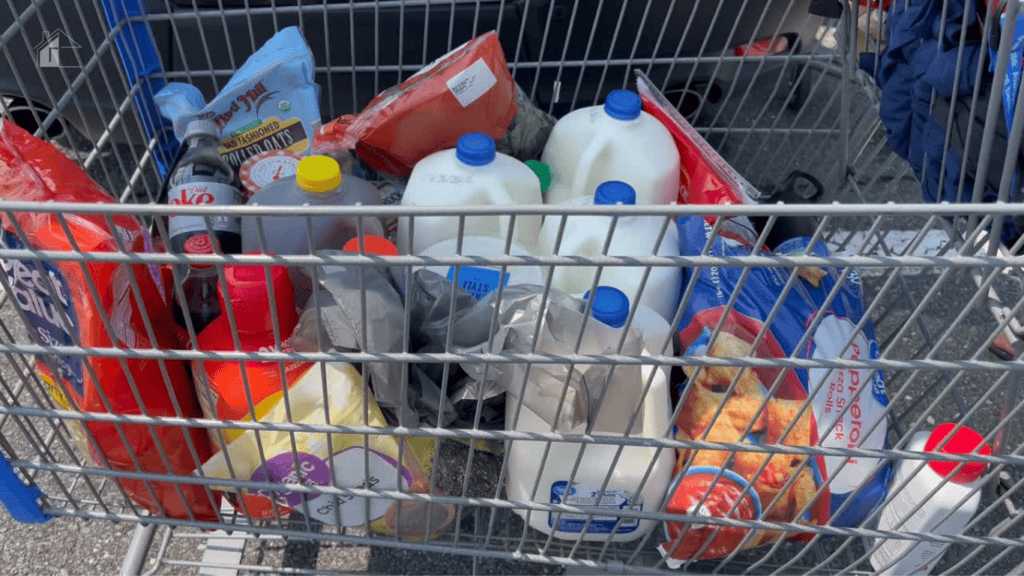
One thing that is especially easy to miss during a busy month is all the spending that happens between the main grocery trips. When we have more outings and appointments, the extra spending does not always show up as one giant purchase. It might be a small stop because we ran out of something, an extra ingredient because the dinner plan changed, or a quick meal because we were out longer than expected.
Those smaller purchases do not always feel important when they happen. A $15 trip or a $25 stop can feel harmless, especially if you are already out running errands. Once several of those trips happen during the same month, though, they can make up a noticeable part of the grocery budget.
That is why I like tracking the number of grocery trips along with the money spent. Sometimes the problem is not one large shopping trip. It is all the little trips that happened in between.
I also do not automatically consider convenience spending wasteful spending. There are weeks when buying something easier for dinner makes sense because the alternative could be ordering takeout or grabbing fast food on the way home. I would rather understand which convenience purchases are actually helping us and which ones are happening because I did not plan ahead.
That gives me something realistic to work on. I do not have to decide that we can never buy convenience food again. I can look at our schedule, decide where convenience will actually help us, and try to avoid the random purchases that are not really making our week any easier.

How I Use ChatGPT With My Grocery Budget
Earlier this year, I experimented with using ChatGPT alongside my grocery budget to help me look at purchases, spot patterns, think through what we already had at home, and stay focused on the bigger picture. I shared exactly how I was doing that in my post about using ChatGPT to help with a grocery budget.
I have not used ChatGPT as much for my grocery planning this September, but that does not mean I have stopped focusing on our grocery challenge. I am still tracking, reviewing the numbers, sharing updates, and paying attention to what we spend. September has simply been busy enough that I have relied more heavily on my regular tracker instead of using ChatGPT for every part of the process.
That has actually reminded me that the most important part is not which tool you use. My grocery tracker gives me the numbers. ChatGPT can help me look more closely at those numbers when I want another way to analyze them. A notebook can work too. The tool matters less than actually having the information in front of you.
If you want to lower your grocery spending, I would start by tracking before creating a bunch of rules for yourself. See what you actually do first. You might discover that the thing you assumed was hurting your grocery budget is not really the biggest problem.
Why I Track Grocery Spending Before the Holiday Season
One reason I am especially interested in our September grocery spending is that I want a realistic baseline before the holidays. I know the next few months will not look exactly like September, but that is exactly why I want to know what a fairly normal fall month costs us before holiday meals, gatherings, and extra events start getting added.
If November costs more because we have family gatherings and special meals, I do not want to look at the higher number and automatically think we failed. I want to know how much of that increase came from things we intentionally planned for. The same goes for December.
Some months simply cost more because we are doing more. A realistic grocery budget needs to leave room for that.
I also think it is important to say that we do not track groceries because something is wrong financially. We do not have credit card debt. Our debt is our house and our car, and we are a one-vehicle household because one vehicle works fine for us.
I still care about what we spend on groceries because being financially comfortable does not mean I want to stop paying attention to where our money goes. For me, budgeting is about being intentional. If we are going to spend more during a holiday month, I would rather make that decision knowing what our normal spending looks like.
Being able to afford an extra grocery trip does not mean I want every extra trip to happen without thinking about it.
How to Do a Mid-Month Grocery Budget Check
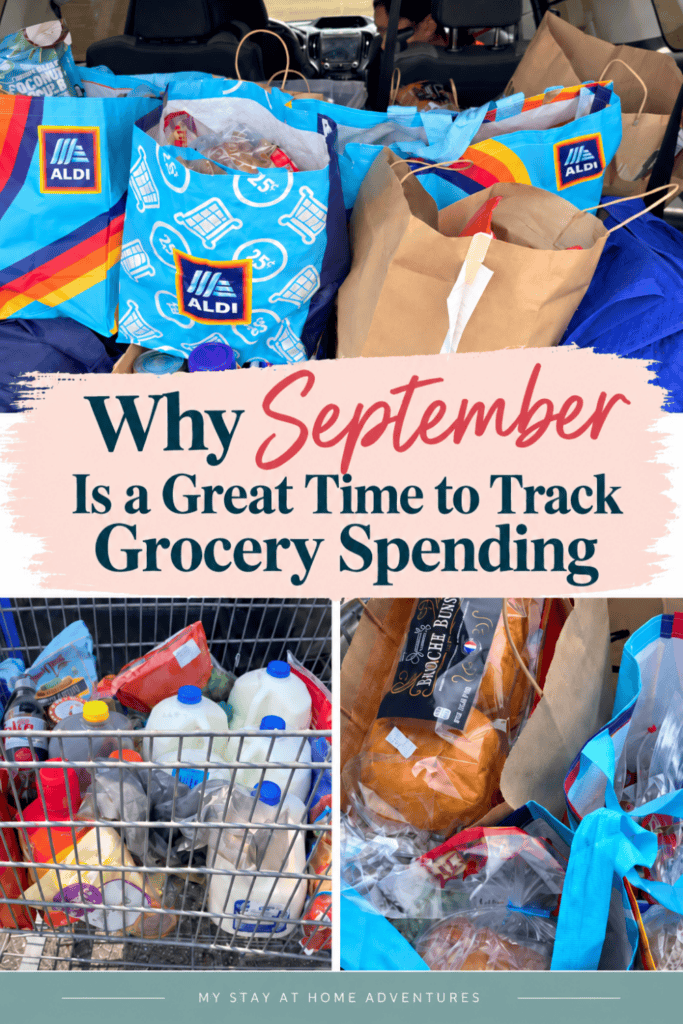
I think the middle of the month is one of the most useful times to look at a grocery budget. At the end of the month, all you can really do is review what happened. Halfway through, you have enough information to notice patterns and enough time left to make a small adjustment if you want to.
I would not take your current total, double it, and assume that is exactly where the month will end. Grocery spending does not usually happen that evenly. You may have already done your biggest stock-up of the month, or you may know that a family gathering is coming up and will require additional groceries.
Instead, look at what has actually happened so far and what is still ahead. Think about how often you have been shopping, whether the smaller trips are adding up, whether any of your larger purchases will carry over into next month, and what is sitting on your calendar for the remaining weeks.
This is also a good time to ask whether your original grocery goal still makes sense. Sometimes the answer is yes and you just need to make a small adjustment. Other times the month has changed enough that the original number is no longer realistic.
I would rather adjust a grocery budget based on what is actually happening than force a number that no longer fits our life.
My Mid-September Grocery Budget Update
We are already halfway through September, so I sat down and looked at where our grocery spending stands right now. I recorded a Mid-September Grocery Budget Update because I want these posts and videos to show the process while it is actually happening, not only after I already know how the month ended.
These real-life updates are important to me because grocery budgeting is not a straight line. Some months are easier to manage than others, and sometimes the reason spending changes has very little to do with grocery prices and a lot to do with what is happening in our lives.
September has been busy for us, and I do not expect the next few months to suddenly become quiet. That is exactly why I want to understand our spending now. I would rather head into the holiday season knowing what our normal grocery routine actually costs than wait until everything gets even busier and hope for the best.
If you want to start tracking along with me, you can download my free grocery tracker here. Use your own numbers, make notes about what was happening around those purchases, and give yourself enough context to understand your total instead of judging it.
For me, that is where grocery budgeting becomes useful. It is not only about knowing how much we spent. It is understanding why we spent it, what worked for our family, and what we might want to do differently before the next busy month arrives.