
Real Life Grocery Budget for March 2026 (Month 3)
This post may contain affiliate links which might earn us money. Please read my Disclosure and Privacy policies here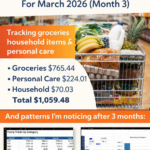
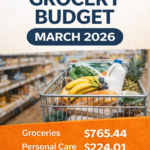
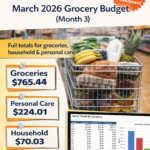
Real life grocery budget tracking for March 2026 showing how our family actually spent on groceries, household items, and personal care while adjusting to real life changes.
January was about clarity.
February was about watching patterns.
March felt different.
March is the first month where I feel comfortable saying I’m ready to build a real grocery budget.
Not a perfect one.
Not a restrictive one.
A realistic one.
If you’re new to this series, you can start here:
👉 Real Life Grocery Budget for January 2026 (Month 1)
👉 Real Life Grocery Budget for February 2026 (Month 2)
I’m still writing everything down.
But now I’m starting to understand what normal looks like for our family.
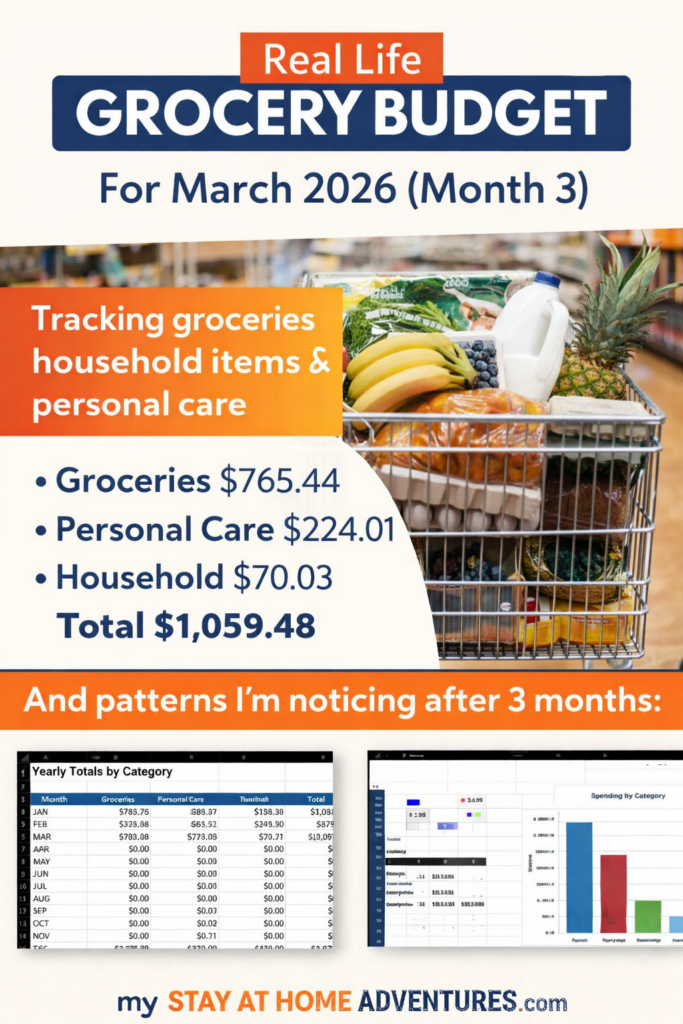
March Grocery Totals
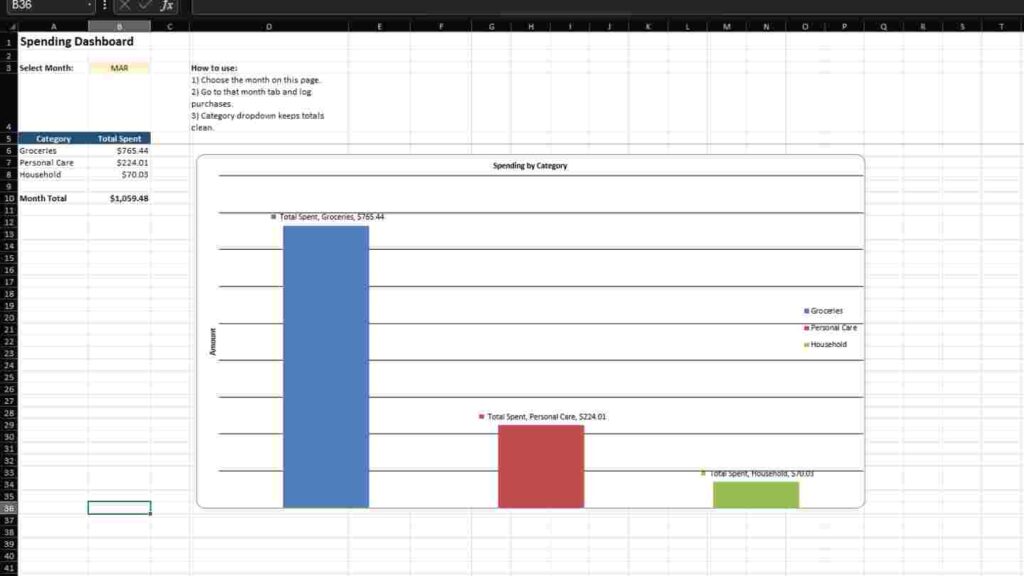
By the end of March, our grocery-related spending came out to:
Groceries: $765.44
Personal Care: $224.01
Household: $70.03
Month Total: $1,059.48
Seeing this number didn’t feel overwhelming.
It felt expected.
Because now I have multiple months of real data to compare it to.
What Happened This Month
March looked different for our family.
I traveled to Puerto Rico with my son, and during that time my husband handled grocery deliveries at home. That alone shifted how spending showed up this month.
Real life doesn’t pause just because you’re tracking.
It shifts.
And this is exactly why I track everything — so I can see how those changes affect our spending.
We also had an issue with my son’s diaper deliveries, which meant we had to spend more than expected in personal care.
That’s not extra spending.
That’s necessary spending.
What I’m Noticing About Our Shopping
At this point, one thing is very clear.
We stick to what we know.
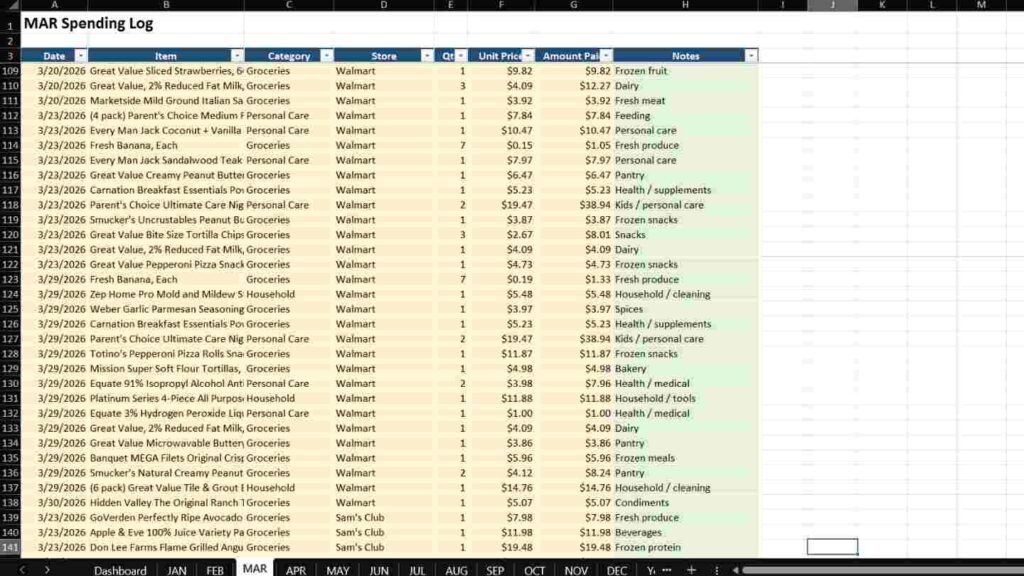
Most of our groceries are still coming from the same stores — Sam’s Club and Walmart.
That’s not by accident.
It works for our life.
We are a one-vehicle household, and I’m caring for special needs children. Grocery delivery and pickup aren’t just convenient for us — they help keep our days manageable and predictable.
Even when things shift, our routine stays consistent.
And that consistency matters more than trying to shop multiple stores to save a few dollars.
What Three Months of Tracking Is Showing Me
After tracking for three months, I’m starting to see patterns I didn’t notice before.
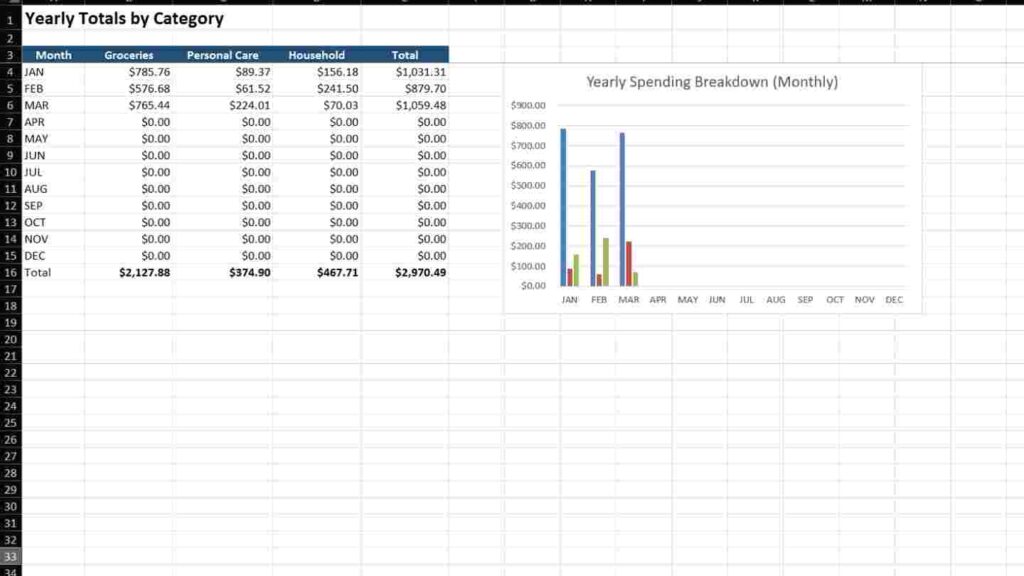
Our total spending stays fairly consistent — right around $1,000 each month.
January: $1,031.31
February: $879.70
March: $1,059.48
What changes is not the total.
It’s where the money goes.
Some months have higher household spending.
Some months have higher personal care spending.
And sometimes life — like travel or delivery issues — shifts everything.
That’s why I’m not rushing to fix anything.
I’m learning what normal looks like for us.
Why I’m Doing This
I’m not tracking groceries to cut everything down overnight.
I’m doing this to build a grocery budget that actually works for our family.
Not based on what someone else says we should spend.
Not based on unrealistic expectations.
But based on:
- how we eat
- how we shop
- what our family actually needs
Many of you asked to see real numbers.
This is what that looks like.
The Shift Happening Now
January gave me clarity.
February showed me patterns.
March gave me confidence.
I now feel comfortable setting a grocery budget moving forward — one that includes groceries, household items, and personal care.
Not perfectly.
But intentionally.
What’s Next
April is where things start to come together.
I’ll still be tracking everything, but now I’ll begin shaping a budget based on what I’ve learned over the past few months.
This isn’t about perfection.
It’s about building something that works in real life.
If you’ve been following along, I’d love to hear from you.
Have you started tracking your groceries?
Have you noticed any patterns in your spending?
Leave a comment and share what you’re seeing.
We’re figuring this out together.