Real Life Grocery Budget for May 2026
This post may contain affiliate links which might earn us money. Please read my Disclosure and Privacy policies here
Wow, it is already June, so let’s talk about what happened with our grocery budget in May.
When I first started sharing our grocery spending, I knew it would be helpful for me, but I did not realize how much it would help me see our family’s real patterns month after month.
May was another good reminder of why I keep tracking.
Our total went down compared to April, but that does not mean May was a simple or perfect grocery month. It was still full of real-life family spending, regular groceries, personal care needs, household items, and busy May events.
And that is the whole point of this series.
This is not about copying another family’s budget. It is not about cutting back to the extreme. It is not about feeling ashamed of what your family spends.
It is about tracking your own numbers so you can understand where your money is going.
Every family is different. What works for one home may not work for another. I share our numbers because real budgets are personal, and the only way to start making better money decisions is to look honestly at what is happening in your own household.
Previous months in this grocery budget series:
- Real Life Grocery Budget January 2026
- Real Life Grocery Budget for March 2026
- Real Life Grocery Budget for April 2026
May 2026 Grocery Total
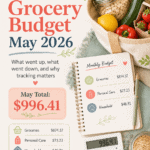
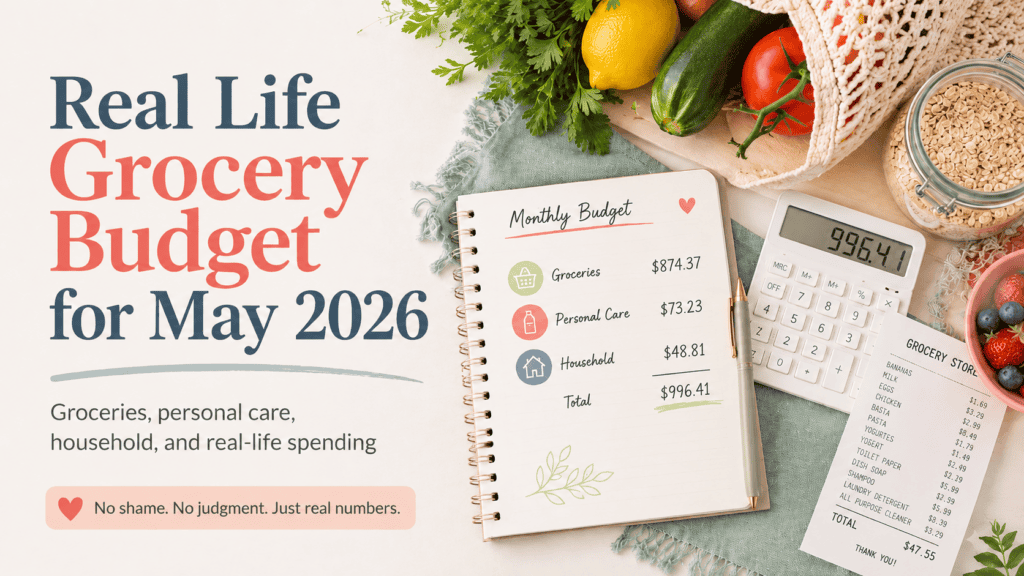
For May 2026, our total grocery spending came to $996.41.
That total includes:
- groceries
- personal care products
- household items
Here is the May breakdown:
- Groceries: $874.37
- Personal Care: $73.23
- Household: $48.81
Our grocery category was once again the largest part of the total. That has been the pattern all year so far, and May was no different.
May Compared to April
April was our highest month so far this year, with a total of $1,396.55.
May came in lower at $996.41, which means we spent $400.14 less than we did in April.
Here is how the categories changed:
- Groceries went down from $1,068.44 in April to $874.37 in May.
- Personal Care went down from $218.68 in April to $73.23 in May.
- Household went down from $109.43 in April to $48.81 in May.
Seeing those numbers side by side helps me understand the month better.
May was lower than April, but it was still not a tiny grocery month. Groceries alone were $874.37, which shows how quickly regular food, drinks, snacks, dairy, meat, pantry items, and family basics can add up.
What Stood Out in May
One thing I noticed in May is that our spending reflected real family life again.
For our family, some purchases are not optional or easy to remove from the budget. One example this month was overnight diapers. We had another delivery issue with our diaper supplier, so we had to make a purchase ourselves.
That is one of those real-life expenses that reminds me why grocery budgets should not be copied exactly from someone else’s home.
Your family size, routines, work schedule, transportation, food preferences, health needs, and season of life all matter.
May is also a busy month for us. We had birthdays, graduations, and family gatherings, and those things naturally affect what we buy and how we plan.
Another thing I want to mention for transparency is that our cow order came in on 05/19. I know bulk meat purchases can make grocery tracking look different because they are not the same as a regular weekly grocery trip.
For me, that is still part of the bigger grocery picture because it affects how I plan meals in the months ahead. I am also planning to purchase half a pig in a couple of months, so I want to be honest about how bulk meat purchases fit into our real-life food planning.
What Tracking Is Showing Me
This is where tracking becomes really helpful.
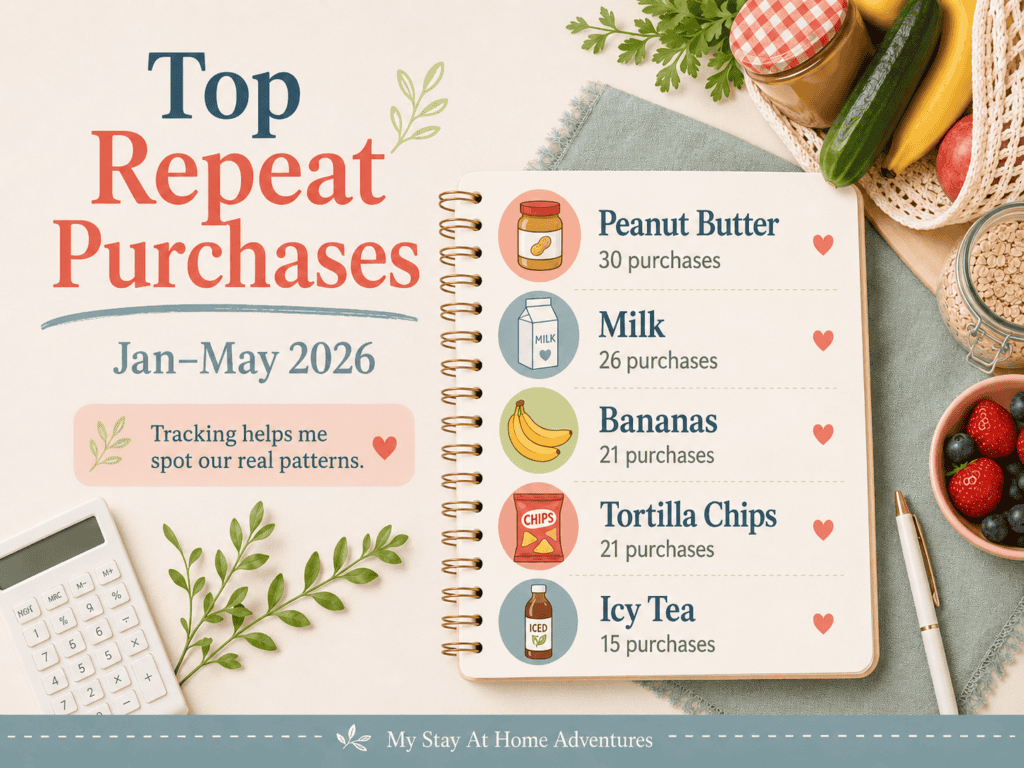
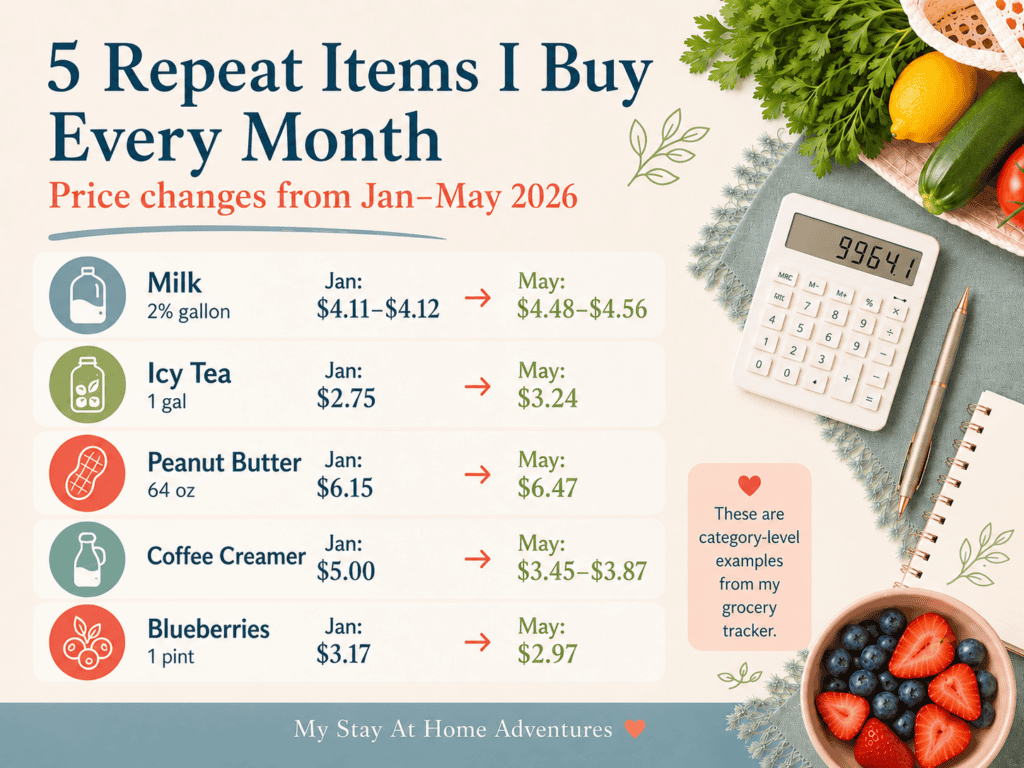
When I look at the spreadsheet from January through May, I can see that it is not always one big grocery trip that changes the budget. Sometimes it is the repeat purchases.
The things we buy again and again can quietly become some of the biggest spending areas.
Based on my tracking so far, some of our top repeat family items have been:
- Milk
- Peanut butter
- Angus beef patties
- Baby wipes
- Nighttime underwear / medical diapers
That does not mean every family will have the same top items. These are just the items that show up often in our home.
This is exactly why tracking matters.
Without writing things down, it is easy to think, “Oh, it was just a few things.” But when you see those same few things show up again and again, you start to understand where your money is really going.
What Went Up and What Went Down
Another thing I noticed is that prices are not moving in one direction all the time.
Some items went up. Some went down. Some bounced around depending on the store, the week, or whether there was a sale.
A few increases I noticed included:
- Milk was higher in May than it was earlier in the year.
- Angus beef patties went back up after being lower in March and part of April.
- Icy Tea has bounced between lower and higher prices.
- Peanut butter has been one of those repeat purchases that adds up quickly.
- Some snack items, like tortilla chips, have also changed depending on where I bought them.
But not everything went up.
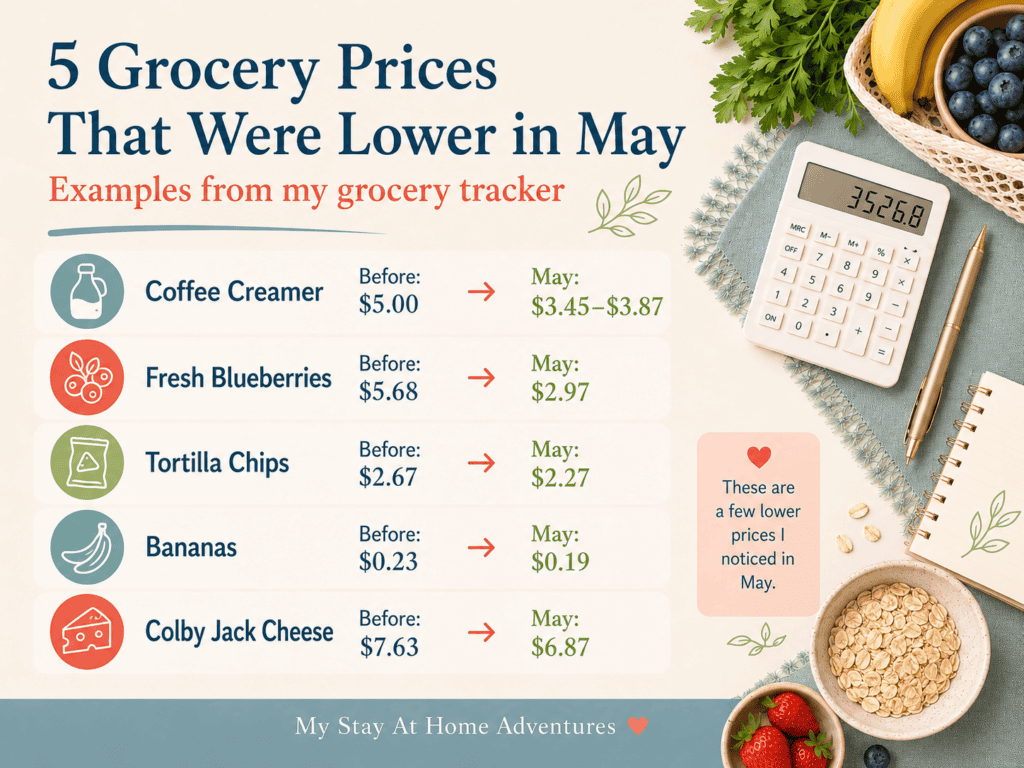
A few items I noticed going down or being lower at different points included:
- Chicken tenders were lower after January.
- Frozen sliced strawberries were lower in May than some earlier purchases.
- Blueberries were much lower in May than they were in April.
- Some cheese prices were lower in May.
- Shopping at Aldi helped lower the price on a few snack and produce items.
That is why I do not want to only look at the total and call it good or bad.
The total tells one part of the story, but the details tell me more.
Our 2026 Grocery Totals So Far
Now that we have tracked January through May, I can see the bigger picture.
So far in 2026:
- Year-to-date total: $5,363.45
- Monthly average: $1,072.69
- Months tracked: January through May
May landed below our current monthly average, but groceries are still the biggest part of our total spending in this category.
And honestly, that is helpful to know.
Tracking does not magically lower grocery prices, but it does help me stop guessing.
Summer Grocery Spending Is Coming
With summer here, I already expect groceries to increase.
The kids are home more, snacks go faster, drinks disappear quicker, and convenience foods become more tempting during busy days.
I am not saying that as an excuse. I am saying it because it is real life.
Part of budgeting well is being honest about the season you are in. Summer spending usually looks different from school-year spending, and I want to plan with that in mind instead of acting surprised when the numbers go up.
This is one reason tracking has helped me so much. I can look at the numbers and prepare instead of guessing.
What I Am Learning From May
May reminded me that a lower total does not always mean nothing happened.
We spent less than April, but our grocery spending was still a major part of our budget. We also had real family needs, a diaper supplier issue, bulk meat planning, and a busy month with family events.
That is real budgeting.
Tracking does not mean every month will look the same. It does not mean every family should spend the same amount. It does not mean you are doing something wrong if your total looks different from someone else’s.
It simply gives you information.
And that information helps you make better choices for your own home.
For me, this grocery budget series is not about perfection. It is about paying attention, learning from the numbers, and making small changes where they make sense.
No shame. No judgment. Just real numbers from real life.