
Puerto Rican Beef Sancocho Recipe
This post may contain affiliate links which might earn us money. Please read my Disclosure and Privacy policies here
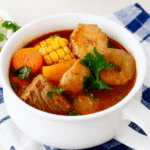
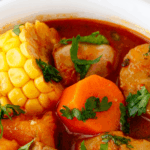
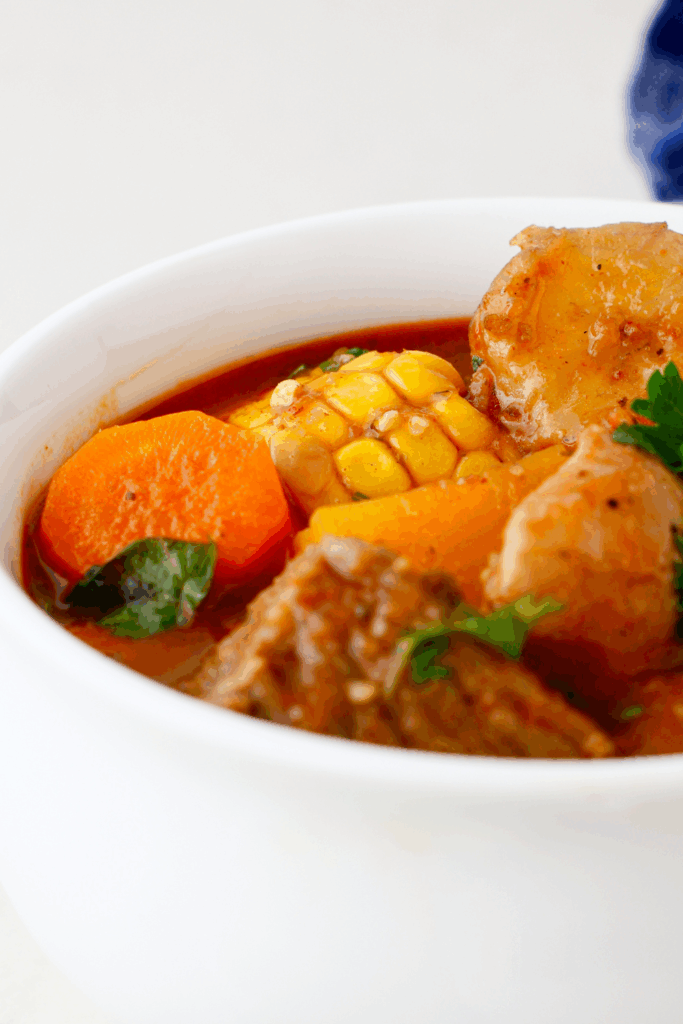
Puerto Rican beef sancocho is one of those recipes that brings warmth, comfort, and a deep sense of tradition to the kitchen. It’s a rich and hearty stew filled with beef, chicken, root vegetables, and bold seasonings that are staples in Puerto Rican cooking.
If you’ve been looking for a satisfying one-pot meal full of authentic island flavor, this is a great place to start. It’s especially perfect for cooler days, cozy family dinners, or anytime you want something that feels home-cooked and filling. I’ll be honest—this is one of my favorite soups of all time.
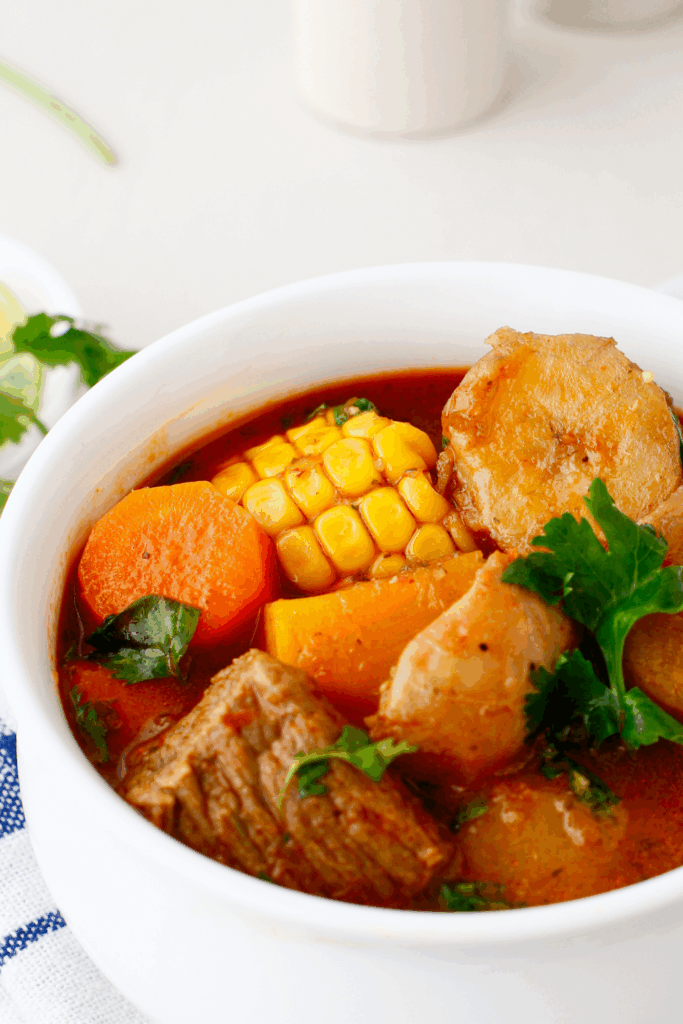
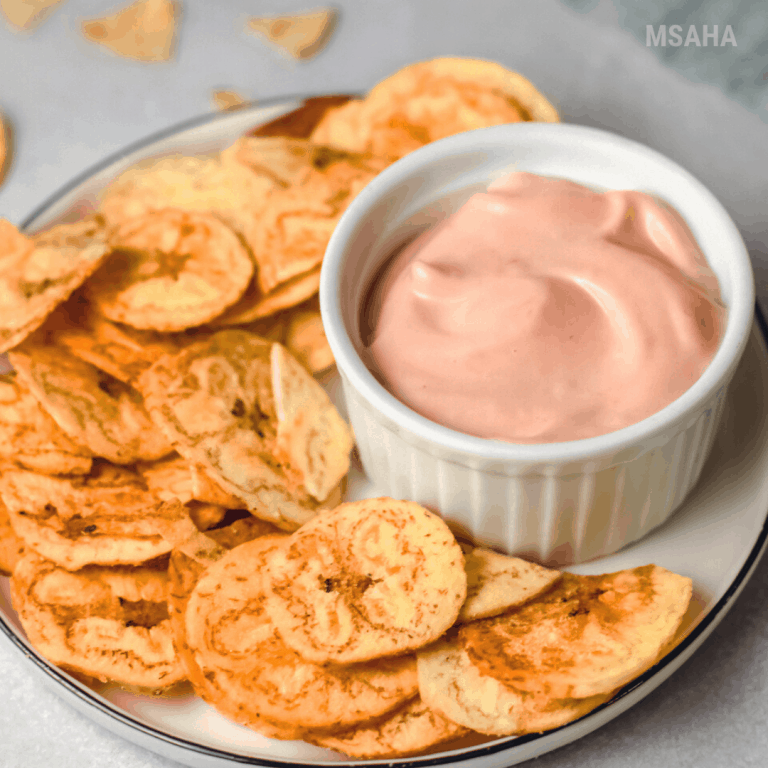
This traditional Puerto Rican beef stew pairs beautifully with a side of white rice, plantain tortillas, or tostones. It’s a meal that stands on its own but becomes even more comforting when served with these simple sides.
Some people enjoy squeezing a bit of lime over the bowl for brightness, and fresh cilantro at the end really brings it all together. With every spoonful, you’ll get layers of flavor and texture that make this stew so special.
What is Puerto Rican Beef Sancocho
Puerto Rican beef sancocho is a traditional Caribbean stew made with a mix of beef, chicken, starchy root vegetables, and savory broth. It’s slow-cooked to develop rich flavors and is commonly enjoyed during family gatherings, holidays, or when the weather calls for something warm and filling.
The dish has roots across Latin America and the Caribbean, with each country offering its own version. In Puerto Rico, sancocho is often made with beef as the main protein and supported by chicken, yuca, potatoes, green plantains, corn, carrots, and calabaza. The broth is flavored with traditional seasonings like sazon, adobo, oregano, sofrito, and chicken bouillon.
Sancocho is more than a stew—it’s part of cultural heritage. It’s made for birthdays, rainy weekends, and even after long workdays when something nourishing is needed. Many families have their own version, and over time, small changes become personal traditions passed down through generations.
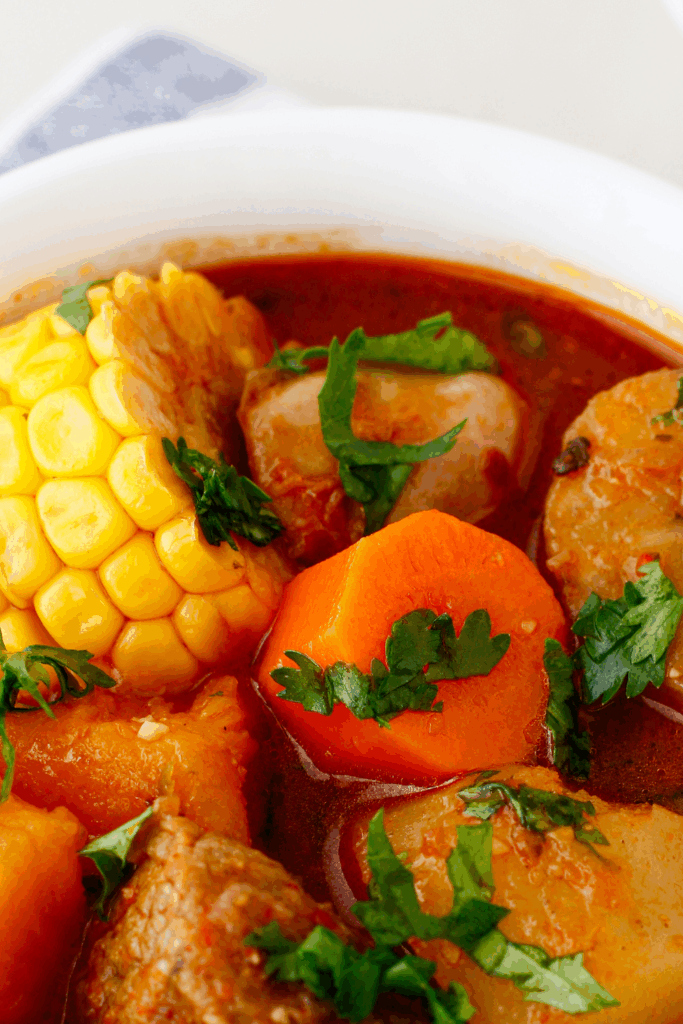
Ingredients To Make This Puerto Rican Beef Stew Recipe
The heart of Puerto Rican beef sancocho lies in its ingredients. Every component adds something different—flavor, texture, richness, or aroma.
Mixed meat (beef and chicken) – A combination of beef and chicken provides a variety of texture and a richer broth. The beef gives the stew body, while the chicken adds tenderness.
Sazon – This seasoning blend gives the stew its warm color and iconic savory taste. It includes ingredients like annatto and coriander.
Adobo seasoning – A well-known Puerto Rican all-purpose seasoning that combines salt, garlic powder, oregano, and other spices.
Dried oregano – A flavorful herb that adds earthiness to the stew.
Salt and pepper – Basic, but essential for balancing all other seasonings.
Chicken bouillon – Boosts the flavor of the broth and gives it more depth.
Oil – Used to sauté the aromatics and sear the meat.
Tomato sauce – Adds mild acidity and helps create a thicker broth.
Carrot – Adds a slight sweetness and a bit of color to the pot.
Yuca – This starchy root vegetable absorbs the flavor of the broth and softens beautifully without falling apart.
Green plantain – Adds a hearty texture and complements the richness of the broth.
Potato – Helps thicken the stew naturally and blends in with the other vegetables.
Corn – Cut into rounds, it gives a burst of sweetness in every bite.
Calabaza – A type of Caribbean pumpkin that brings a creamy texture and bright orange color.
Bay leaves – Infuse the stew with subtle flavor as it simmers.
Sofrito – A mix of onions, peppers, garlic, and herbs that forms the base of many Puerto Rican dishes.
Cilantro – Added at the end for a fresh, herbaceous finish.
Chicken stock – Creates a flavorful broth for simmering the meat and vegetables.
Water – Helps keep the liquid level high enough for everything to cook evenly.
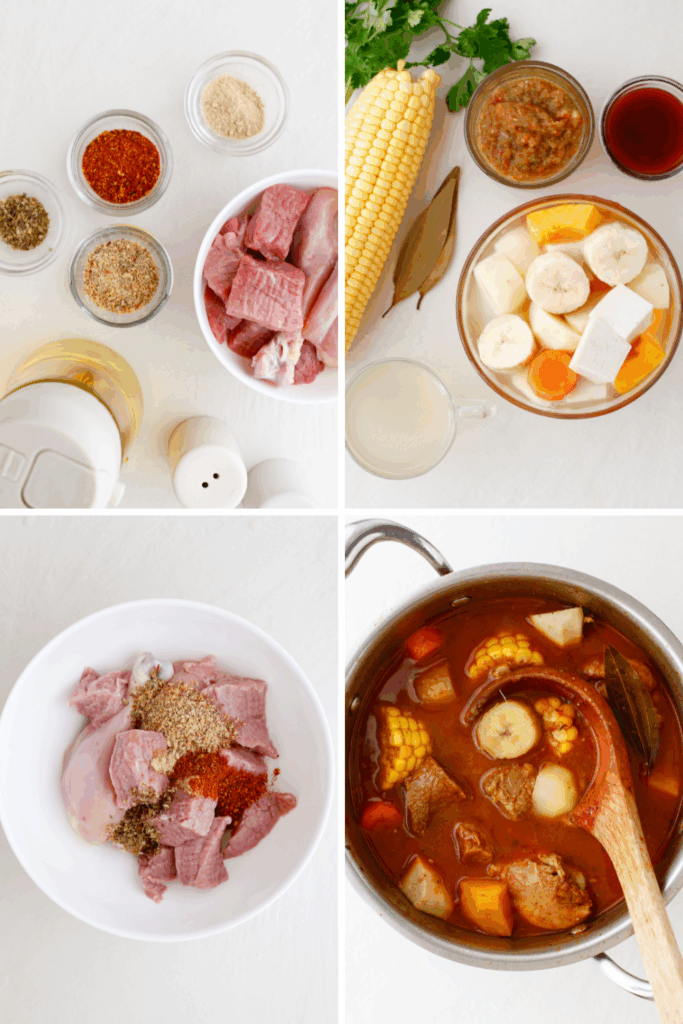
How to Make Puerto Rican Sancocho
If this is your first time making Puerto Rican sancocho, don’t worry. It’s easier than it looks once you break it down step-by-step. Here’s how I make it:
- Season the meat
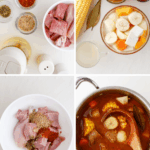
In a large bowl, combine beef and chicken. Add sazon, adobo, oregano, chicken bouillon, salt, and pepper. Mix well so the meat is evenly coated. Let it sit for at least 20 minutes to absorb the flavors. - Prepare the flavor base
In a large pot, heat oil over medium heat. Add the sofrito and tomato sauce. Stir and cook for 2 to 3 minutes until the mixture is fragrant and slightly thickened. - Sear the beef
Add only the beef to the pot first. Sear it on all sides over high heat, about 4 to 5 minutes total. This step adds extra flavor to the broth. - Simmer the beef
Pour in the chicken stock. Reduce the heat to medium-low and simmer for 45 minutes, or until the beef is tender. If the liquid gets low during this time, add water as needed to keep the meat mostly covered. - Add chicken and vegetables
Once the beef is tender, add chicken, yuca, calabaza, corn, green plantain, carrots, potatoes, and bay leaves. Stir gently to mix everything. Add more water if needed to make sure the ingredients are fully covered. - Simmer again
Cover the pot and let everything simmer together for another 30 to 40 minutes. Check occasionally and stir gently. The stew is ready when the vegetables are fork-tender and the chicken is cooked through. - Finish with cilantro
Before serving, sprinkle chopped cilantro over the stew and stir gently. Serve hot in bowls, and offer lime wedges on the side if you’d like a bit of brightness.
Tips For Making Puerto Rican Beef Sancocho
- Let the meat marinate longer if time allows. Even an hour makes a difference.
- Use bone-in meats for a richer broth.
- Cut vegetables in even sizes so they cook at the same rate.
- Don’t skip the sofrito—it gives the dish its traditional flavor.
- Add water slowly while simmering to maintain the right consistency.
- Stir gently to avoid breaking up the vegetables as they soften.
- Serve with white rice or tostones for a classic Puerto Rican meal.
Frequently Asked Questions
Can I use just one type of meat?
Yes, you can use only beef or only chicken, depending on your preference or what you have on hand. Just keep in mind that beef takes longer to become tender, so adjust your cooking time accordingly.
What can I use instead of calabaza?
If you can’t find calabaza, butternut squash is a great substitute. It has a similar color and sweetness and will hold up well in the stew.
Can I make this ahead of time?
Absolutely. In fact, sancocho often tastes even better the next day once the flavors have had time to come together. Store in the fridge and reheat on the stove when ready to serve.
Is it okay to freeze leftovers?
Yes. Let the stew cool completely, then transfer to a freezer-safe container. It can be frozen for up to three months. When ready to eat, thaw overnight in the fridge and reheat gently.
Can I leave out any of the vegetables?
You can adjust based on what’s available. The key is to include a mix of root vegetables and starchy ingredients. Just try to keep a balance of textures so the stew remains hearty and satisfying.
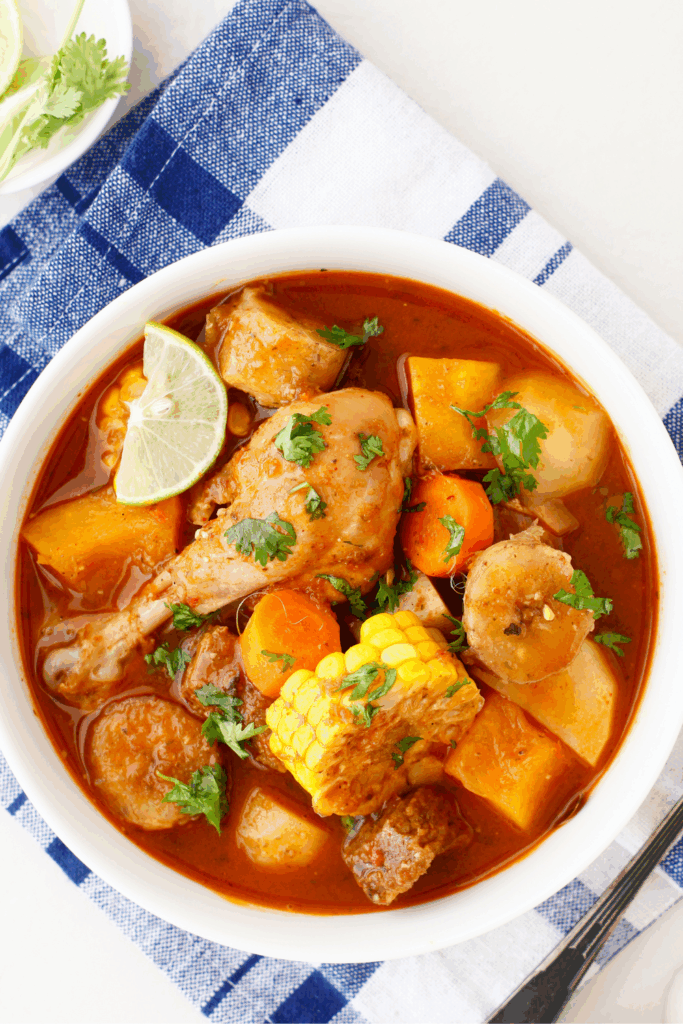
Have you tried Puerto Rican beef sancocho? Then, make sure to rate and review this recipe. I’d love to hear how it turned out for you and if it brought that cozy, home-cooked flavor to your table. This soup always reminds me of home and tradition, and I hope it becomes one of your favorites too.
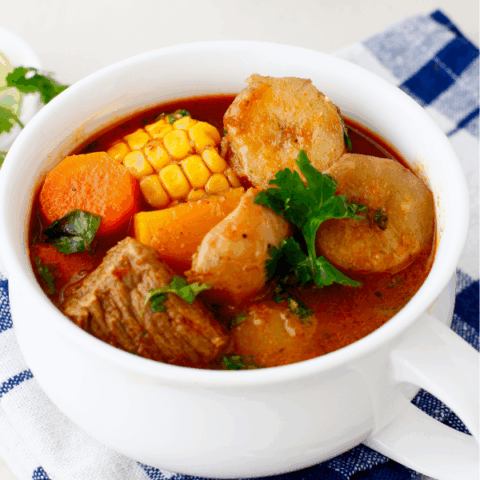
Puerto Rican Beef Sancocho
Making Puerto Rican Beef Sancocho at home is easier than you think. This hearty stew brings together tender beef, flavorful chicken, and a colorful mix of root vegetables like yuca, green plantain, and calabaza. Seasoned with sazon, adobo, and a generous spoonful of sofrito, this comforting dish is rich in flavor and tradition. If this is your first time preparing sancocho, don’t worry—each step builds layers of flavor, resulting in a satisfying one-pot meal the whole family will love.
Ingredients
- 2 lbs. mixed meat (beef and chicken)
- 3 tbsp. Sazon
- 1 tbsp. Adobo seasoning
- 1 tsp. dried oregano
- Salt and pepper
- 1 tbsp. chicken bouillon
- 3 tbsp. oil
- 2 tbsp. tomato sauce
- 1 carrot, cut into 1" pieces
- 1 yucca, peeled and cut into 1" pieces
- 1 green plantain, cut into 1" pieces
- 1 potato, cut into 1" pieces
- 1 corn, cut into 1" pieces
- 1 cup calabaza, cut into 1" pieces
- 2 bay leaves
- ¼ cup Sofrito
- Cilantro
- 4 cups chicken stock
- 3-4 cups water; adding as liquid reduces
Instructions
- In a large bowl, season the beef and chicken with Sazon, adobo seasoning, chicken bouillon, dried oregano, salt, and pepper. Mix well and let the meat marinate for at least 20 minutes.
- In a large pot, heat the oil over medium heat. Add the sofrito and tomato sauce, and sauté for 2–3 minutes until fragrant.
- Add the beef to the pot and sear it over high heat for about 4–5 minutes, flipping to brown all sides.
- Pour in the chicken stock and bring to a simmer.
- Lower the heat to medium-low, cover, and cook for about 45 minutes or until the beef is tender. Add water as needed to keep the meat covered.
- Once the beef is tender, add the chicken, yucca, calabaza, corn, green plantain, carrot, potato, and bay leaves. Pour in more water if necessary to fully cover the ingredients.
- Cover the pot and let everything simmer for 30–40 minutes, or until the vegetables and chicken are fully cooked and tender.
- Stir gently and check the seasoning. Add more salt or pepper to taste, if needed.
- Serve hot, topped with fresh cilantro and a squeeze of lime juice if desired.
Notes
- Marinate the meat ahead of time to deepen the flavor—30 minutes is good, but longer is even better.
- Cut all your vegetables into even 1-inch pieces so they cook evenly and blend well into the stew.
- If you're short on calabaza (Caribbean pumpkin), butternut squash makes a great substitute.
- Add the beef first, as it takes longer to become tender. Chicken goes in later so it doesn't overcook.
- As the stew simmers, keep an eye on the liquid level. Add more water or chicken stock if needed to keep everything well covered.
- For a thicker consistency, lightly mash a few pieces of yuca or potato in the pot during the last 10 minutes of cooking.
- Garnish with fresh cilantro and serve with lime wedges for a burst of brightness just before eating.
- This dish tastes even better the next day—perfect for leftovers or freezing in portions.
Nutrition Information:
Yield: 4 Serving Size: 1Amount Per Serving: Calories: 1156Total Fat: 62gSaturated Fat: 17gUnsaturated Fat: 45gCholesterol: 276mgSodium: 799mgCarbohydrates: 70gFiber: 5gSugar: 23gProtein: 78g
These nutritional calculations might not be accurate. Please speak with a licensed nutritionist to assist you.

Speed, steering, throttle, timing, and vehicle drift hunters setup all work together to determine whether you complete a smooth drift or end up spinning out. The more you practice, the more naturally these controls begin to work together.
Gamers looking for an authentic mix of economic planning and life simulation will find rich depth inside bills must be paid, so gather your companions and dive into the game today.
Your post on such an teresting subject has left me speechless. I regularlyly check out your blogs and stay current by reading the material that you offer; nevertheless, the blog that you have posted today is the one that I appreciate the most.