Real Life Grocery Budget for June 2026
This post may contain affiliate links which might earn us money. Please read my Disclosure and Privacy policies here
Somehow July arrived before I sat down to write our June grocery budget update. Life became busy, this post stayed on my list, and suddenly I realized I had never finished it.
But June is worth discussing because I said our grocery spending might increase once summer started—and it did.
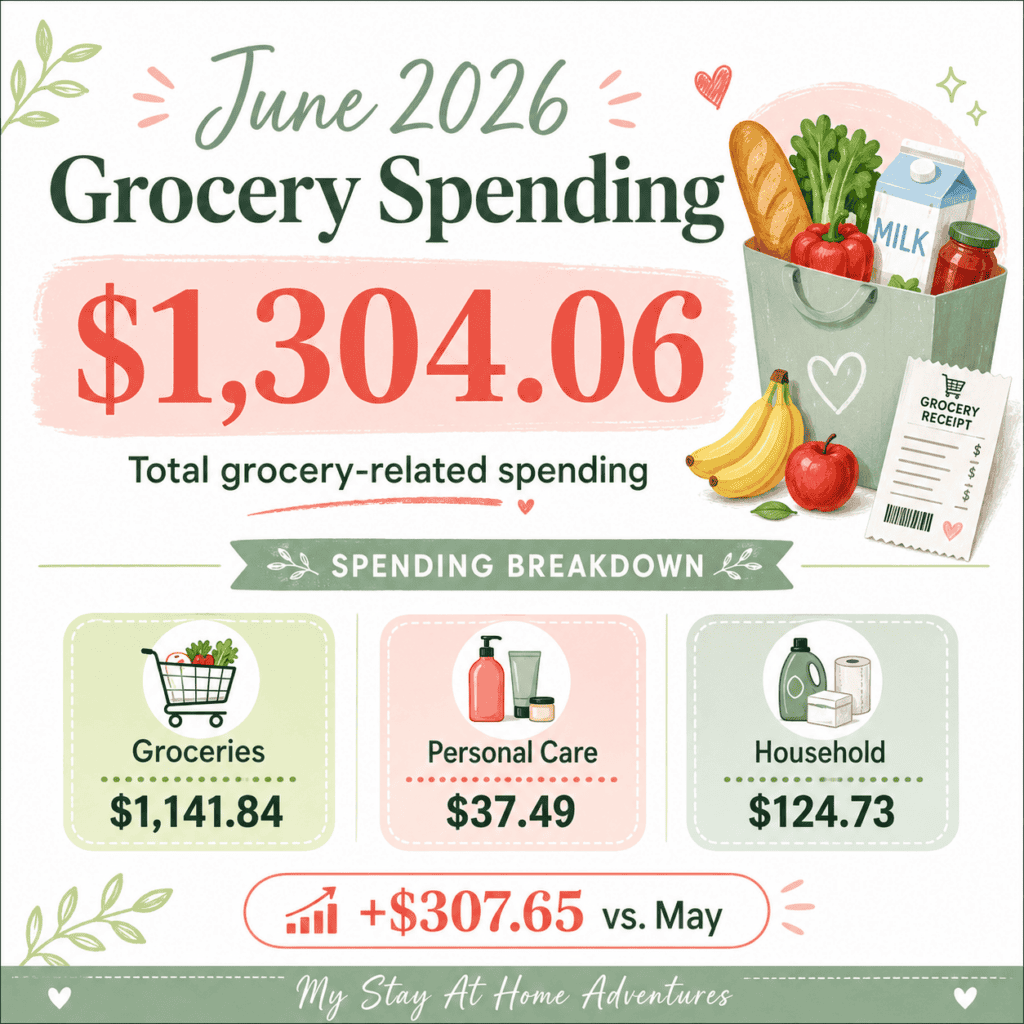
Our total grocery-related spending for June came to $1,304.06, compared with $996.41 in May.
When I first saw the number, my honest reaction was, what happened?
I could not immediately point to one purchase or shopping trip that explained the increase. At the same time, I was not ashamed of the number.
That is not what this series is about.
I do not share our grocery spending because every month goes perfectly or because I always stay under a certain amount. I share it because tracking helps me understand what is happening in our household.
Once I looked more closely at the spreadsheet, June began to make sense. The kids were home more, we had carpet installed, our normal routine was disrupted, and we made several large bulk purchases.
It was not one bad decision. It was several parts of real life happening during the same month.
Previous Months in This Grocery Budget Series
You can follow our grocery-spending journey from the beginning:
- Real Life Grocery Spending for January 2026
- Real Life Grocery Budget for February 2026
- Real Life Grocery Budget for March 2026
- Real Life Grocery Budget for April 2026
- Real Life Grocery Budget for May 2026
June 2026 Grocery Total
Our total grocery-related spending for June was $1,304.06.
That includes groceries, household products, and personal care items.
| Category | June spending |
|---|---|
| Groceries | $1,141.84 |
| Personal care | $37.49 |
| Household | $124.73 |
| Total | $1,304.06 |
Groceries were clearly the largest part of our spending, coming in at more than $1,100.
However, that category does not represent only ingredients for breakfast, lunch, and dinner. It also includes drinks, snacks, frozen foods, bulk proteins, diapers, wipes, and other necessities purchased during our grocery trips.
That is why one large grocery number never tells the full story.
June Compared to May
In May, we spent $996.41. In June, our total increased to $1,304.06.
That means we spent $307.65 more in June than we did in May.
| Category | May | June | Difference |
|---|---|---|---|
| Groceries | $874.37 | $1,141.84 | +$267.47 |
| Personal care | $73.23 | $37.49 | -$35.74 |
| Household | $48.81 | $124.73 | +$75.92 |
| Total | $996.41 | $1,304.06 | +$307.65 |
Personal care spending actually decreased in June. The increase came mainly from groceries and household purchases.
June also became our second-highest month of the year so far. April remains the highest at $1,396.55.
What Happened in June?
Honestly, I did not know until I looked through the spreadsheet.
The biggest clue was our Sam’s Club spending.
In May, we spent $375.89 at Sam’s Club. In June, we spent $677.22.
That is an increase of $301.33 at Sam’s Club alone, which is almost the entire difference between our May and June totals.
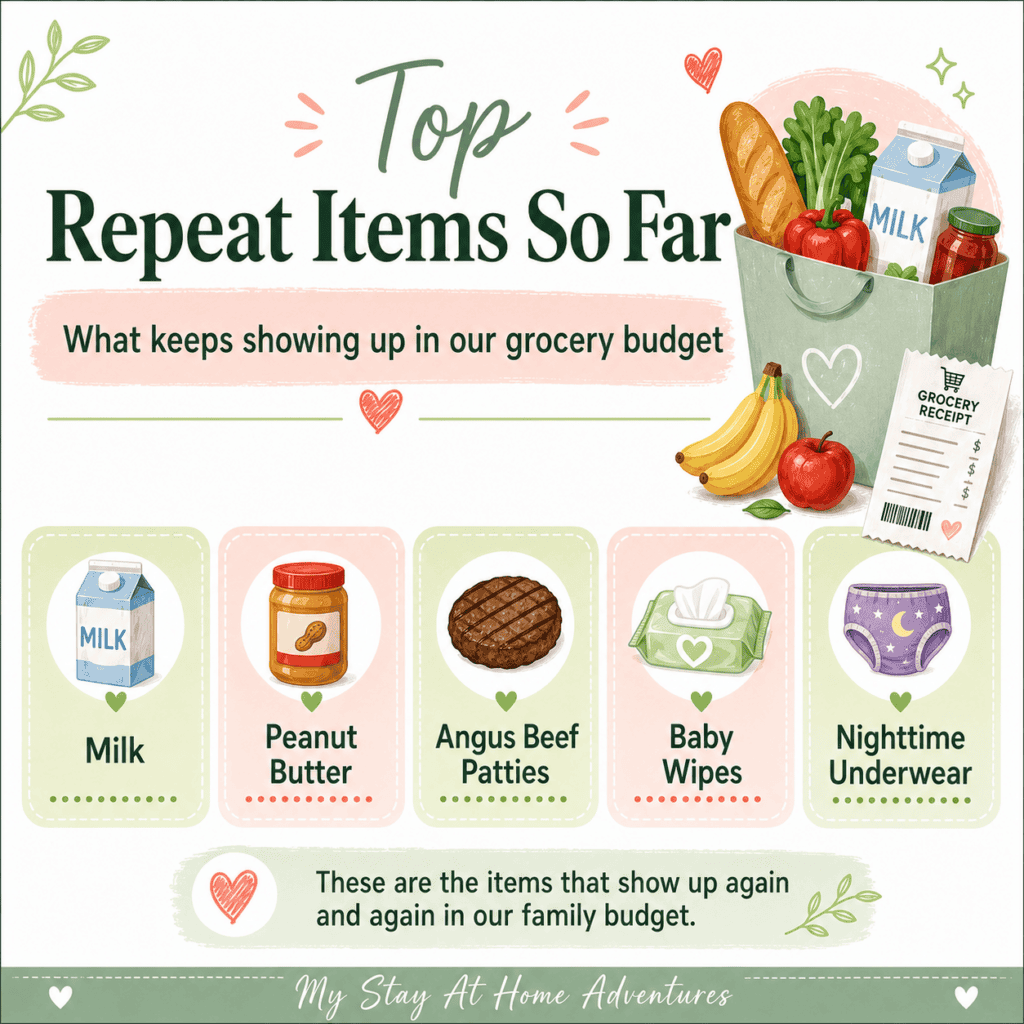
Our June purchases included bulk packages of chicken breasts, chicken tenderloins, wings, nuggets, chicken strips, burgers, sausage, frozen pizza, peanut butter, snacks, drinks, paper products, baby wipes, and nighttime underwear.
When I looked at everything together, the total stopped feeling so mysterious.
We bought more frozen protein than we had in May, but those are foods our family consistently eats. The money left our account in June, even though many of those larger packages were intended to last into July or longer.
That is one challenge with bulk shopping. It can make one month look expensive because the full price is recorded immediately, while the products are used over several weeks.
The real question is not simply, “Was June high?”
The better question is, “How long did those purchases last?”
Carpet Installation Changed Our Routine
We also had carpet installed during June.
The carpet itself is not included in this grocery total, but the installation affected how our household operated. Rooms had to be cleared, furniture had to be moved, and our normal routines were disrupted.
During a home project like that, convenience matters.
We relied more on frozen pizzas, chicken nuggets, chicken strips, burgers, paper plates, and foods that were easier to prepare while the house was being worked on.
I am not mentioning that as an excuse. I am mentioning it because grocery spending does not happen separately from the rest of our lives.
What is happening inside our homes affects what we buy, how we shop, and which meals feel realistic.
The Kids Were Home More
I expected our spending to increase once the kids were home more, and that appears to have happened too.
During the school year, our days follow a more predictable routine. Summer changes that. Drinks disappear faster, snacks are eaten more frequently, and we need more food available throughout the day.
In June, we purchased milk, juice, iced tea, sparkling water, Poppi, Olipop, snacks, frozen foods, and other convenient options.
One drink or snack may not seem expensive, but those repeat purchases can quietly increase the monthly total.
This does not mean I am going to stop buying everything the kids enjoy. It means tracking helps me see how summer changes our family’s grocery habits so I can plan for it instead of feeling surprised.
Not Everything We Bought Was Food
Another important part of June’s story is that not everything included in the total was food.
We also purchased:
- Goodnites nighttime underwear
- Baby wipes
- Toilet paper
- Paper towels
- Paper plates and cups
- Cleaning and personal care products
- Garden supplies
We spent $41.44 on Goodnites and $21.74 on a bulk package of baby wipes. We also spent approximately $43.88 on garden-related products, including planters and potting mix.
These are real household expenses, but they were not food eaten during June.
Someone could look at our $1,304.06 total and assume all of it went toward meals. Looking at the individual purchases gives a much more accurate picture.
Prices That Increased Between January and June
June was not higher only because we purchased more. Some products we regularly buy also cost more than they did in January.
I compared the same products and package sizes whenever possible.
| Item | January | June | Increase |
|---|---|---|---|
| Great Value 2% Milk, 1 gallon | $4.11 | $4.73 | $0.62 |
| Great Value Black Forest Ham, 32 oz. | $7.00 | $8.01 | $1.01 |
| Wholly Guacamole Minis, 6-pack | $4.88 | $5.47 | $0.59 |
| Member’s Mark Nonfat Greek Yogurt, 48 oz. | $4.97 | $5.27 | $0.30 |
| Great Value Quick Oats, 42 oz. | $3.97 | $4.18 | $0.21 |
| Member’s Mark Sparkling Water, 24-pack | $10.68 | $10.98 | $0.30 |
Milk was one of the most noticeable increases.
A gallon increased from $4.11 in January to $4.73 in June. That is only $0.62, but we regularly purchase several gallons because milk is an important part of our son’s diet.
Repeated purchases are where small price increases begin to matter.
Not everything went up, though. Some prices stayed the same, while others dropped or changed throughout the month. That is why tracking individual items is more helpful than assuming every grocery price is moving in the same direction.
Our 2026 Grocery Totals So Far
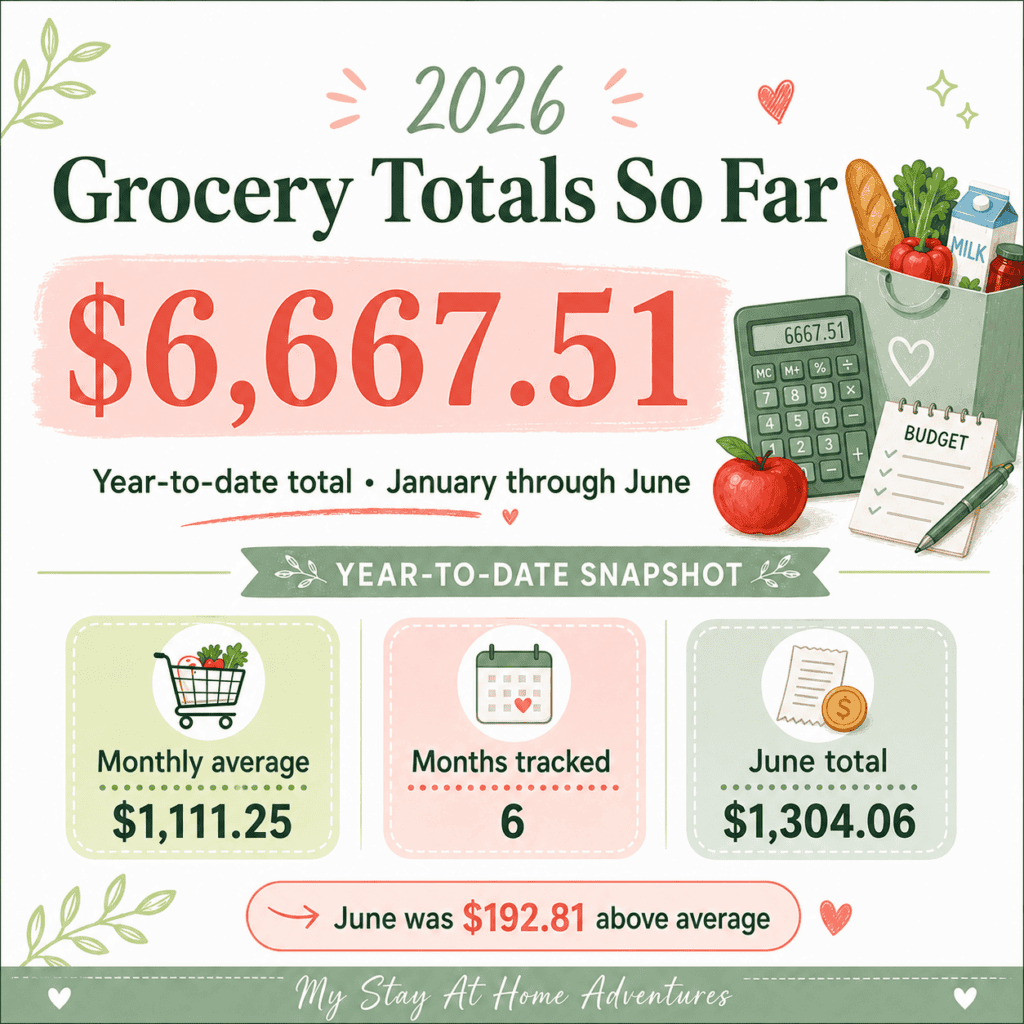
After tracking January through June, our numbers are:
- Year-to-date total: $6,667.51
- Current monthly average: $1,111.25
- Months tracked: Six
- June total: $1,304.06
June came in $192.81 above our current monthly average.
That does not mean June was a failure. It means June was a higher-spending month, and now I understand more about why.
I Am Not Ashamed of the June Total
Would I have liked the total to be lower? Of course.
But I am not ashamed that we spent $1,304.06.
Shame does not help me create a better grocery list. It does not show me which purchases lasted for several months, which prices increased, or how our routines affected what we bought.
Information helps me do those things.
June reflected our real life. The kids were home more, we had carpet installed, our routine changed, and we stocked up on products our family uses.
Tracking is not about punishing myself when the number goes up. It is about replacing assumptions with facts so I can make more informed decisions moving forward.
Looking Ahead to July
For the first time, I am not waiting until the end of the month to see where our grocery money went.
Throughout July, I am using my grocery spreadsheet and ChatGPT before I shop. We are looking at what is already in my pantry and freezer, what my family is running low on, what meals we are planning, and when I will have access to the car.
I am also using my free grocery budget tracker to keep up with our purchases throughout the month. Instead of waiting until July ends to add everything together, I can see what we have spent and where the money is going as the month continues.
We are considering our actual family needs too.
Some products are medically necessary. Some are needed for summer school lunches. Some are family favorites that we consistently use, while other purchases may no longer make sense as our summer routines change.
The goal is not to let ChatGPT control our grocery budget or tell us what we are allowed to buy. I am still making every final decision for my family.
I am using it as another set of eyes to help me review what we already have, catch possible duplicates, organize my list, and plan around the days when I will not have access to a vehicle.
At the end of July, I will share whether using ChatGPT alongside my spreadsheet and grocery tracker helped us shop more intentionally.
For the first time, I will not reach the end of the month, look at the total, and wonder what happened. I will already know the story behind our purchases.
What I Am Learning From June
June reminded me that a higher grocery total does not always have one simple explanation.
The kids were home more, the carpet installation disrupted our routine, and we relied more on convenient meals. We also stocked up on bulk proteins, drinks, snacks, diapers, wipes, and household supplies.
Once I looked through the spreadsheet, the $1,304.06 total did not feel as mysterious.
That is the purpose of this series.
I am not trying to create a perfect grocery budget or convince another family that they should spend what we spend. I am paying attention, learning from our real numbers, and making changes where they make sense for our household.
Have you noticed your grocery spending changing since summer started?
No shame. No judgment. Just real numbers from real life.