6 Cheap Decor Hacks That Look Expensive
This post may contain affiliate links which might earn us money. Please read my Disclosure and Privacy policies here
The most common home décor mistake on a modest budget isn't one massive splurge that wipes out your account. Instead, the real issue is the accumulation of ten small purchases that drain your budget without shifting the visual baseline.
Ten repetitive twenty-dollar purchases leave you with zero structural improvement to show for it. Redirecting that exact spend toward a foundational upgrade produces a room that looks considered, intentional, and noticeably elevated.
Replacing clustered trinkets with a single commanding decorative medieval armor display piece from Medieval Collectibles transforms a chaotic shelf into a curated focal point. This guide details six specific value choices that offer disproportionate visual returns.
1. A Rug That Fits the Room
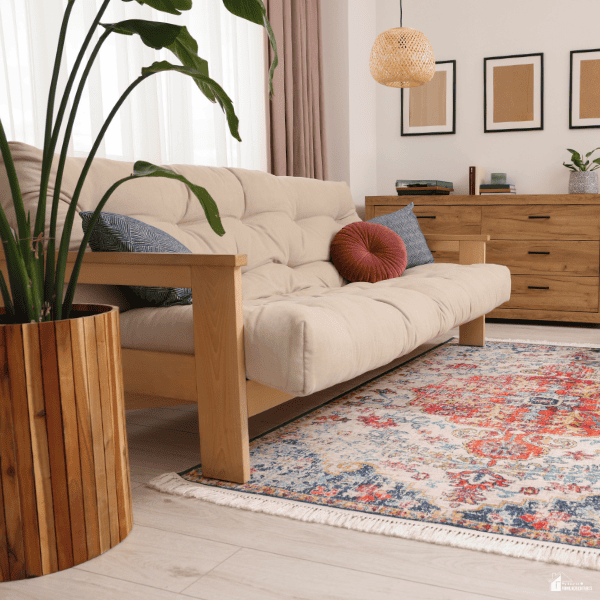
Start with the floor dimensions. The single most common styling mistake involves a rug that fails to extend underneath the front legs of a room's primary seating arrangement. When textiles float in the center of the floor absent any connection to the furniture, the space reads immediately as an afterthought.
The technical fix requires specific measurements rather than guesswork. Secure an 8×10 rug minimum for a standard layout, ensuring the front feet of every sofa and chair sit firmly within its borders. That one distinct textile boundary tells the eye exactly where the seating arrangement begins and ends.
If you're starting from scratch, anchoring that boundary with a cozy couch from Home Reserve gives the rug something substantial to frame, instead of leaving the textile to define an empty patch of floor.
A flat rug profile ensures heavy accent chairs slide smoothly without catching, making the room functionally practical.
| Key Insight: A properly sized rug is a room’s floor plan. Spending $200 on one foundational piece transforms a space more than ten separate $20 decor items, which often create visual noise without a focal point. |
2. Real Plants, and Big Ones
The next element introduces necessary organic texture. Lining up a massive collection of small succulents on a windowsill creates visual clutter, whereas one large-scale statement plant acts as a deliberate architectural feature.
A towering specimen placed in an empty corner draws the eye upward, shifting the room's proportions dynamically.
Fiddle-leaf figs deliver striking vertical height for a modest initial cost, frequently populating local garden centers for under sixty dollars. If your chosen corner lacks direct sunlight, a heavy snake plant provides indestructible, sword-like foliage that survives neglect.
Monstera deliciosa plants introduce broad, split leaves that cast dramatic shadows against blank walls during the afternoon sun.
A single large specimen delivers significantly more warmth than an equivalent budget spent on static ceramic vases. This specific living investment actively gains total volume and physical presence as the growing season progresses, appreciating in aesthetic value every single month.
3. Curtains Hung at Ceiling Height
Shift your structural focus directly toward the window treatments. Hanging curtain rods flush against the window frame remains the most pervasive budget decorating error in residential homes. Standard placement truncates the room's maximum height, making eight-foot ceilings feel oppressive and shrinking the perceived size of the glass.
Correcting this hardware placement mimics the exact structural trick utilized inside luxury custom homes. Mount the metal rod four to six inches below the ceiling line, ensuring the fabric panels skim the structural baseboards.
That pronounced vertical stretch successfully tricks the eye into registering a ten-foot ceiling, transforming standard contractor windows into compelling architectural centerpieces.
This adjustment strictly requires a drill, drywall anchors, and minimal labor. Accessible linen-look synthetic curtains in warm white look indistinguishable from expensive bespoke versions when draped from maximum height. Elevating your curtain brackets sets a commanding vertical line.
| Pro Tip: Don't buy new curtains; rehang your existing ones. Mounting the rod near the ceiling costs nothing but instantly makes windows and the entire room feel taller and more architecturally considered. |

4. A Dining Table Built to Last
Strategic home improvements worth spending on sometimes involve recognizing when a larger upfront purchase saves thousands over a ten-year timeline.
Flat-pack dining tables constructed from particleboard might look sleek upon assembly, but the internal geometry fails quickly under repetitive daily weight. As the synthetic veneer peels and the legs loosen, the dining room looks progressively more neglected.
A heavy solid-wood framework equipped with dense metal bracing drops your actual cost per year down to practically nothing. Physical weight serves as the most accurate proxy for manufacturing integrity. An authentic industrial dining table pairs a solid reclaimed hardwood surface with fabricated steel legs.
Reclaimed wood features natural variations, old saw marks, and deep grain patterns that effortlessly mask accidental scratches. A heavy steel base prevents lateral shifting, ensuring the surface remains perfectly level while carrying heavy platters.
This specific material combination ignores fleeting seasonal trends, providing the room with a permanent center of gravity.
5. One Powerful Display Object
After securing the heaviest furniture pieces, your attention must turn to refining the display surfaces. Standard bookshelf styling regularly falls into a predictable rhythm of small candles, identical picture frames, and mass-produced plaster shapes.
Collectively, they generate disorganized visual noise rather than cultivating a deliberate personal aesthetic.
The immediate solution involves aggressive editing and installing one artifact carrying substantial physical weight. A meticulously crafted historic replica demands immediate attention and signals a highly confident curatorial strategy.
Placing a heavy defensive armor piece on a sturdy wooden shelf introduces striking metallic reflections and complex forged geometry.
It operates as a definitive anchor point that breaks up identical rows of book spines and sparks immediate conversations. A singular oversized ceramic vessel, a heavily framed antique map, or an authentic brass maritime tool performs the exact same function.
Trading dozens of forgettable retail accents for one imposing artifact eliminates aesthetic clutter.
6. One Lamp That Changes the Atmosphere
The final essential adjustment skips physical materials entirely and targets the room's direct illumination. Standard builder-grade overhead lighting blasts spaces with flat, undifferentiated brightness that erases ambient shadow.
Excellent architecture instantly looks incredibly cheap under harsh downward glare, because a room illuminated exclusively from a central ceiling fixture mimics a clinical waiting area.
Targeted secondary lighting restores the necessary optical dimension. Localized illumination casts soft shadows across textured fabrics, highlighting the depth of your rugs and the metallic sheen of your display items. The critical technical specification driving this effect is the specific bulb output.
A simple brass floor lamp equipped with the proper warm bulb easily outperforms expensive crystal chandeliers on pure aesthetic impact. Upgrading to specialized lighting choices shifts the entire atmosphere of the living space from sterile to inviting.
The Bottom Line
Expanding your base textile to hold the entire furniture group, raising curtain hardware to the ceiling line, and distributing warm lighting across horizontal planes costs extremely little. Adding massive living plants introduces organic shadows and raw geometry that small accessories simply fail to provide.
Major anchor elements demand a rigorous focus on commercial-grade durability to protect your wallet over the next decade. Relying on forged steel brackets and solid reclaimed hardwood for the dining room prevents the endless cycle of replacing fragile veneer tops.
Similarly, editing a cluttered bookcase down to a singular heavy artifact establishes a deliberate, museum-quality atmosphere.