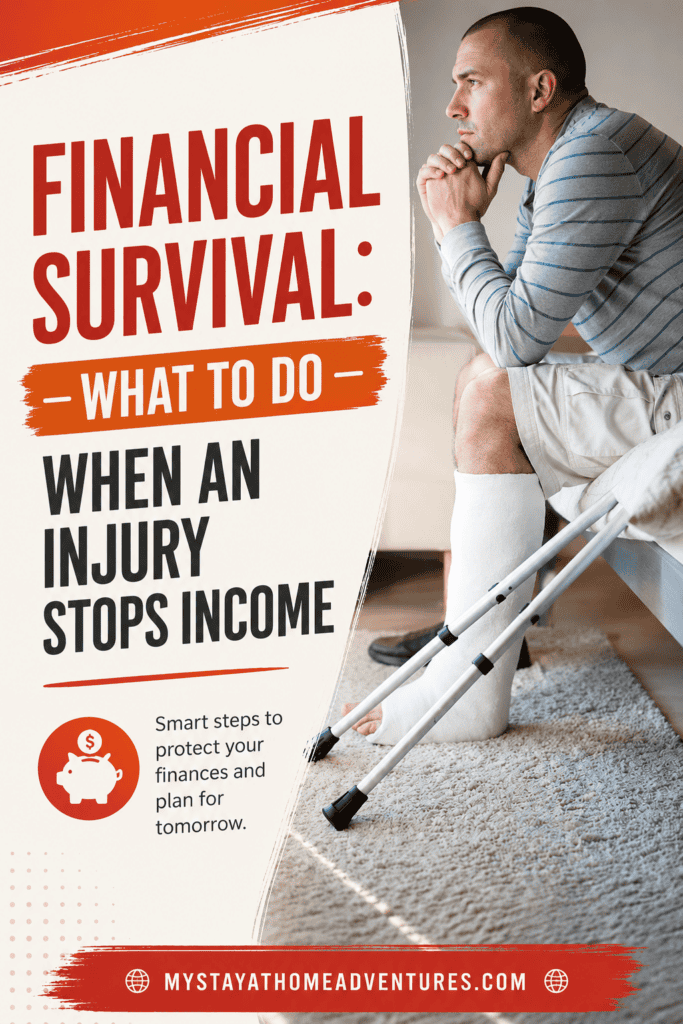
Financial Survival: What to Do When an Injury Stops Income
This post may contain affiliate links which might earn us money. Please read my Disclosure and Privacy policies here
Life changes in a heartbeat when a sudden injury keeps you from working. You might feel overwhelmed by the weight of unpaid bills and rising medical costs. This situation requires a calm mind and a solid plan to keep your family safe.
Finding ways to manage your money is the most pressing task right now. You must look at your budget and your legal options at the same time. This guide will help you understand how to navigate these tough times with confidence.

Immediate Impact Of Lost Earnings
The loss of a regular paycheck hits a household hard and fast. Rent or mortgage payments do not stop just because you are hurt. You need to identify your most urgent expenses right away to stay afloat.
A government report found that many people face long-term challenges after a workplace incident. In 5 different states, between 18% and 41% of workers with lost-time injuries ended up being permanently disabled. This fact highlights the need for early financial planning and support.
You should check your insurance policies for any short-term disability coverage. These benefits can provide a small safety net as you recover. It is a good idea to talk to your employer about any available sick leave or vacation time.
Navigating The Initial Financial Shock
Dealing with the shock of a sudden injury is a major emotional hurdle. Your focus is often split between physical healing and financial stress. Balancing these two priorities is difficult but necessary for your future well-being.
Seeking guidance from a professional can provide much-needed clarity during this time. Reaching out to a trusted Virginia law firm can help you figure out if you have a valid claim for your losses. This step allows you to focus on your physical recovery as experts handle the legal details.
You should start a folder to keep all your medical records and receipts in one place. Having clear documentation of every expense will make any future claims much smoother. This organization helps you track exactly how much the injury is costing your family.
Long-Term Effects On Your Future
The consequences of a serious injury can stretch far into the future. It is not just about the money you are missing this month. You have to think about how this affects your long-term goals and retirement plans.
Academic research suggests that health risks from injuries can threaten your financial survival for years. These risks impact your ability to work through your retirement years, regardless of how old you are now. Planning for these extended impacts is a key part of your recovery.
You might need to adjust your expectations for your career path. Some injuries require a change in job duties or a total shift in industries. Taking the time to explore new skills can help you stay employed in the long run – even if your physical abilities change.
Understanding The True Cost Of Trauma
The price of an accident goes way beyond the initial medical bill. You have to consider ongoing therapy, medication, and the loss of future earning power. These hidden costs can add up to hundreds of thousands of dollars.
Global estimates show that injuries could lead to US$7.86 trillion in economic losses over a 15-year period. This massive number shows just how significant the impact of physical trauma is on the world economy. It proves that your individual struggle is part of a much larger issue.
You should consider the costs of help at home or specialized equipment:
- Professional physical therapy sessions
- Home modifications for accessibility
- Specialized medical devices
- Transportation to doctor visits

Legal Options For Recovery
There are laws designed to protect workers and accident victims from financial ruin. You may be entitled to payments that cover a portion of your missed wages. Understanding these rules is the first step toward getting the help you deserve.
A medical journal noted that some compensation systems pay out 80% of a claimant's weekly earnings. This money is meant to help people who need more than a week off work. It provides a key bridge as you are unable to perform your normal job.
You must meet specific deadlines to file for these benefits. Missing a cutoff date can result in losing your right to any payment at all. It is wise to start the application process as soon as you are physically able to do so.
The Reality Of Compensation Claims
The process of getting a claim approved is rarely quick or simple. You will likely have to provide a lot of evidence and talk to many different people. Patience and persistence are your best tools during this waiting period.
Actuarial experts explain that each claim requires a file and verification of the accident. You must provide proof of your loss of income through detailed records. This level of scrutiny is common in the world of insurance and legal settlements.
A study on lower extremity trauma showed that the average 1-year economic loss is about $64,427 per patient. This figure includes lost productivity and the cost of medical care. Knowing these numbers helps you advocate for a settlement that truly covers your needs.
Protecting Your Mental And Physical Health
Physical healing often depends on your mental state. Constant money worries can slow your recovery. Managing stress is a medical necessity.
Researchers found a strong connection between compensation status and psychological function. Their study suggests that people with severe injuries and longer hospital stays are more likely to seek legal help. Understanding this link can help you find the right emotional support.
Surround yourself with people who understand what you are going through. Joining a support group or talking to a counselor can make a big difference. Staying positive is a powerful way to help your body recover faster.
Rebuilding your life after an injury takes a lot of courage and strength. You have to face many challenges at once while trying to heal your body. By taking small steps every day, you can regain your financial footing and move forward.
You do not have to handle all of this on your own. Use the resources available to you and talk to professionals who can help. Focus on your recovery and stay focused on a brighter future for yourself and your family.