The 7 a.m. Hot Water Math: Why a Family of Five Runs Out and What Actually Fixes It
This post may contain affiliate links which might earn us money. Please read my Disclosure and Privacy policies here
Seven in the morning. Five people and one tank. The person who showers last gets water best described as brisk. andthe family verdict is usually that the heater has died. Before you call in a reliable water heater installation team, it helps to know the one number that really decides your morning.
Start With the Number on the Label
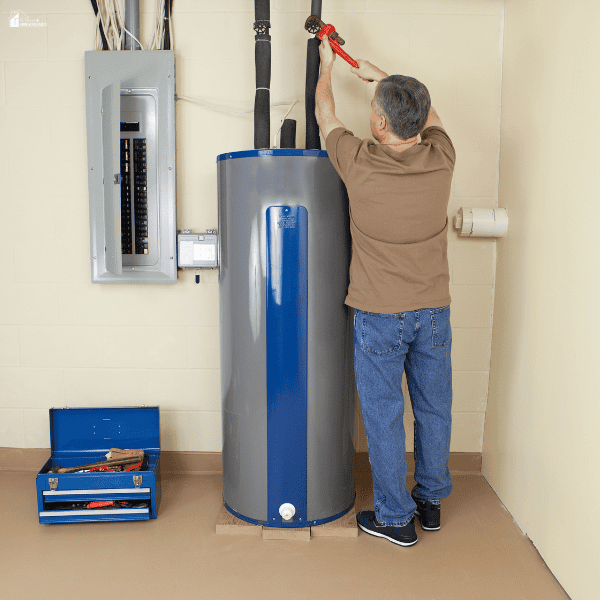
That number is the first-hour rating, or FHR. It sits on the yellow EnergyGuide sticker. It tells you how many gallons the unit can deliver during one busy hour, starting from a full tank. The rough formula is 70% of the tank volume plus the hourly recovery rate.
A 50-gallon tank therefore gives you about 35 usable gallons, because cold water floods the bottom while the hot water leaves the top.
Now compare that with your peak hour demand. The sizing figures below come from the Department of Energy guide to sizing a water heater.
| Activity | Hot Water Per Use |
|---|---|
| Shower, 10 minutes | 10 gallons |
| Bath | 10 gallons |
| Shaving | 2 gallons |
| Hand and face washing | 1 gallon |
| Automatic dishwasher | 6 gallons |
| Clothes washer, warm cycle | 7 gallons |
Where the Sums Break Down
Three ten-minute showers consume 30 gallons. Adding a dishwasher cycle and one warm laundry load increases demand. Total water usage for that hour reaches 43 gallons. Including a fourth and fifth shower pushes demand close to 63 gallons.
Electric 50-gallon tanks often rate around 56 gallons of FHR. Such capacity empties before the last child is even awake. Gas units can rate 75 gallons or more. These figures explain why identical tank sizes perform nothing alike.
Winter quietly doubles the problem. Mains water in Chicago can arrive near 40 degrees in February, so the heater must lift the temperature by roughly 80 degrees instead of 60. Tankless units feel this most sharply. A model advertised at 11 gpm can drop to about 7.5 gpm once the required rise climbs.
Signs the Size is Your Problem
- The water turns cold at the same point every single morning.
- Full hot water comes back after roughly an hour of quiet.
- The tank pops or rumbles while it heats.
- Summer mornings feel fine and winter mornings feel cruel.
Fixes That Cost Nothing
- Stagger the showers by fifteen minutes so the burner can catch up.
- Move the dishwasher and the laundry to the evening.
- Trim the longest shower in the house by two minutes.
- Flush the tank once a year to clear the sediment layer.

Upgrades Worth Paying For
- A WaterSense showerhead runs at 2.0 gpm against the federal limit of 2.5 gpm, which saves about 4 gallons per shower.
- That single swap saves a typical family around 2,700 gallons of water and 330 kWh of electricity a year.
- A thermostatic mixing valve stores water at 140 degrees and delivers it at a safer 120 degrees, stretching usable capacity by roughly 20%.
- Storing at 140 degrees also keeps Legionella bacteria out of the warm zone where they thrive.
Before You Sign for a New Unit
- Check the serial number for the age, since most tanks last 8 to 12 years.
- Read the FHR on the EnergyGuide label rather than the gallon figure on the box.
- Ask the installer to size the unit for February inlet water.
- Confirm that the permit and the removal of the old tank are included in the price.
The Short Version
For five people, a gas tank of 50 to 75 gallons usually works, while an electric household should look at 66 to 80 gallons. Tankless sizing sits around 7 to 8 gpm at your local winter rise.
Water heating eats 14% to 18% of a typical utility bill, so the correct size pays you back twice. The queue at the bathroom door will stay exactly as long. The last person in it simply stops paying for the privilege in goosebumps.