10 Affordable Ways to Use Pillar Candles for Home Decor
This post may contain affiliate links which might earn us money. Please read my Disclosure and Privacy policies here
A room rarely needs more decoration simply because one surface looks empty. Sometimes it needs a focal point, a little height, or something solid enough to hold its own beside furniture and artwork. Pillar candles can do that without introducing another permanent object.
They are also easy to reuse. A neutral candle that works on a dining table in October can move to a fireplace in January and a console in spring. If several rooms call for the same size or finish, buying pillar candles in bulk can lower the cost per piece without locking the house into one fixed arrangement.
Open flames require more thought than ordinary accessories. Good candle fire safety starts with a stable surface and enough distance from anything that can burn. In bedrooms, on bookshelves, or in other awkward spots, flameless versions often make more sense.
1. Start With the Surface, Not the Candle
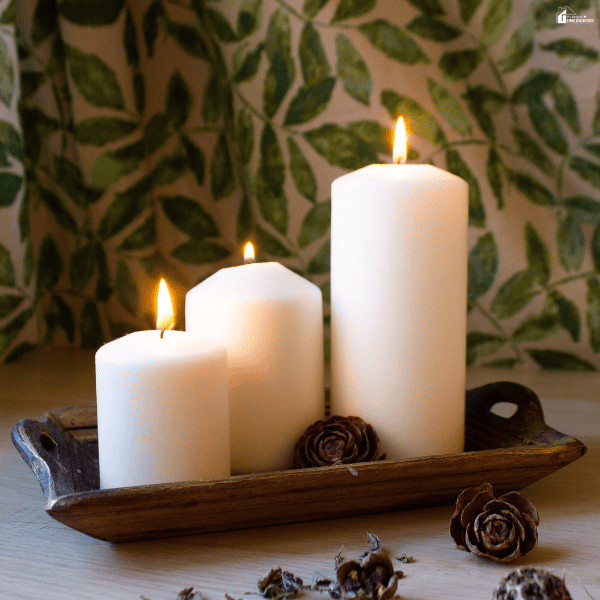
The easiest way to use pillar candles for home decor is to find a surface that already feels unfinished. A small sideboard may need only one substantial candle. A larger table can take two at different heights without looking underdecorated.
Spacing has more effect than quantity. When every object touches the next one, even attractive pieces begin to look like clutter. Leave enough bare surface for the candle to register as part of the composition.
Material can do some of the work too. Plain ivory wax against dark timber has enough contrast on its own. There is little reason to surround it with extra ornament.
2. Keep the Dining Table Ready for Real Life
A dining table is one of the easiest places to overstyle. Tall centerpieces interrupt conversation, and elaborate arrangements must be removed every time the table is used.
Low pillar candles are easier to live with. Unscented wax is preferable around food, and the candle height should allow people to see one another comfortably.
The same arrangement can look different without replacing anything. Put the candles directly on wood for an informal dinner. Add a runner when the room needs softness. The key is that the centerpiece can stay simple enough to work for everyday weekday meals.
3. Use an Empty Fireplace After Heating Season
An unused fireplace often becomes a large dark shape once the room no longer needs heat. Candles can add depth without pretending to recreate a wood fire.
Avoid arranging the candles in a perfect row. Vary the depths to create better shadows and keep the firebox itself visible. Two or three larger pillars usually look more convincing than many small ones.
Real candles belong only in a clean fireplace that is no longer being used for fire. Remove stored logs before lighting anything. If the fireplace is purely decorative, flameless candles are easier to leave there throughout the season.
4. Give the Mantel Less to Do
A mantel does not have to carry a complete collection of objects. Sometimes one side needs visual weight while the other side is better left alone.
A pair of pillar candles can balance artwork without mirroring everything around it. Try placing them fairly close together. That usually looks calmer than spreading individual candles across the full width of the mantel.
This approach becomes especially useful around holidays. Once combustible decorations sit near the fireplace, it becomes harder to place an open flame safely. Battery-operated pillars preserve the same composition without forcing the surrounding decor farther away.
5. Use a Console as a Small Evening Light Source
An entry console often has two lives. During the day, it collects whatever comes through the door. In the evening, it becomes part of the room again.
A couple of pillars can make that transition with very little effort. Place them toward one end rather than centering the arrangement. The remaining surface stays available for everyday use.
This is also a good place for inexpensive candle holders with some age or texture. A secondhand brass base can change the character of plain wax immediately. Ceramic creates a quieter effect. Neither requires changing the candle itself.
6. Put the Glow Into Shelving, Not Another Lamp
Shelving can become visually dense, especially when most of it is filled with books. A small patch of warm light breaks that density in a way no other decorative object can.
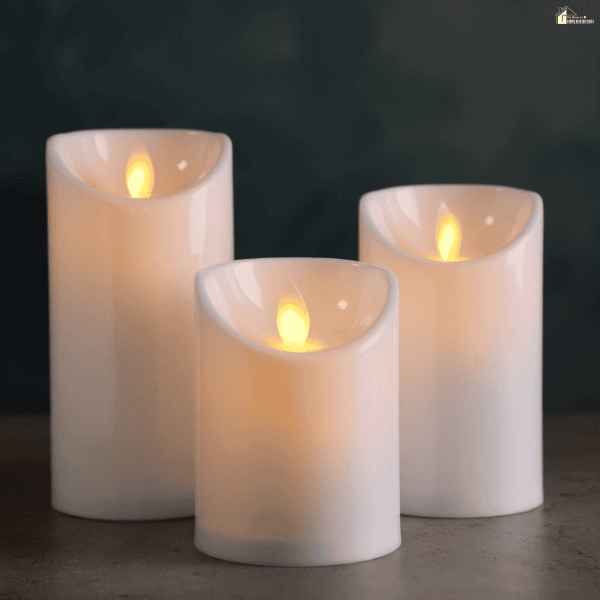
Open flames don't belong beside paper or under a shelf with limited clearance, so this idea works best with LED pillars. One light is often enough. You don't need to repeat the same effect on every shelf.
The absence of wiring is another advantage. A battery candle can take up space on a shelf where a lamp would be awkward and still disappear into the arrangement during daylight hours.
7. Treat the Bedroom as a Different Kind of Space
Bedrooms benefit from low light, but they are poor places for unattended flames. People get sleepy, leave the room briefly, or forget what is still burning.
A flameless pillar is a better fit here. Put one on a dresser rather than adding another object to a crowded nightstand. A warm-toned LED creates a softer evening effect than a bright white one.
Timers are useful in this setting. The candle can come on before bedtime and switch itself off later without becoming part of a nightly checklist.
8. Change the Base When the Season Changes
A neutral pillar does not have to look the same all year. The surface beneath it can shift the whole character of the arrangement.
Dark metal creates more contrast with pale wax. A ceramic base feels lighter. Glass can reflect the flame and make one candle appear more substantial than it is.
This is cheaper than buying seasonal candles and safer than decorating a burning candle directly. Ribbon or dried plant material may look attractive around wax, but they have no place near an active flame. Put the decorative change into the holder instead.
9. Let a Candle Reveal the Architecture
A deep wall niche may look interesting in daylight and disappear after sunset. The same can happen to a wide sill or a recessed shelf.
A single pillar can bring that feature back into the room. Light catches nearby edges and creates enough shadow to reveal the depth again.
The candle should support the architecture rather than fill it. Oversized groupings can make a small niche feel crowded. If the space has limited clearance, an LED candle provides the same visual emphasis without the risks of an open flame.
10. Move the Same Candles Around the House
One of the cheapest decorating habits is simply relocating what you already own. Pillar candles are especially good at this because their neutral form works in several settings.
A candle used on the dining table during one season can move to the entry later. Another can leave the mantel and spend a few weeks inside the fireplace. The room changes even though you didn't buy anything new.
Keeping a small group of compatible holders makes this easier. Instead of shopping for a fresh arrangement each time the house feels stale, change the combination. That is where pillar candles become genuinely economical.
Their value comes from how many different settings they can fill, not from how decorative they look when you first buy them.