Practical Ways to Make a Laundry Room Work Better
This post may contain affiliate links which might earn us money. Please read my Disclosure and Privacy policies here
Laundry rooms are usually designed around function, but that does not mean they have to feel cramped, chaotic or unpleasant to use. A few practical changes can make everyday tasks much easier without requiring a complete renovation.
The most useful improvements usually come from better storage, clearer work surfaces and a layout that reduces unnecessary movement. Even small rooms can feel more efficient when every item has a logical place and the space is organised around the way laundry actually gets done.
The goal is not to create a perfect utility room. It is to make washing, drying, folding and storing clothes feel less like a series of small frustrations.
Give the Room More Visual Character
Utility spaces are often ignored when it comes to decorating, but a small visual upgrade can make the room feel much more pleasant to use.
Someone looking at laundry room wallpaper online can use pattern or colour to give the room more personality without changing the cabinetry or appliances. In smaller spaces, one accent wall is often enough to make the room feel intentional rather than purely functional.
The key is to keep the rest of the design relatively simple. Storage, worktops and shelving should still do most of the practical work, while the wall treatment adds warmth and interest.
Use Vertical Space More Effectively
Laundry rooms often have limited floor space, so walls become especially valuable.
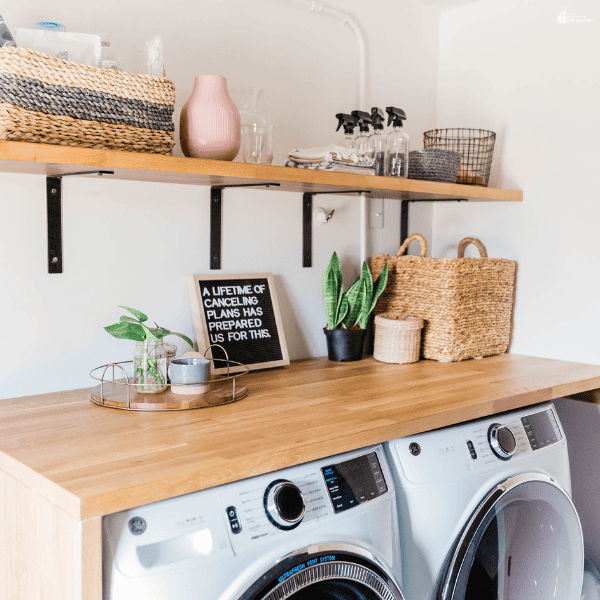
Shelves above the washer and dryer can hold detergents, baskets and cleaning supplies, while hooks can keep ironing boards, drying racks or smaller tools off the floor.
Tall storage also helps prevent clutter from spreading across the work surface.
Closed cabinets are useful for products that do not need to stay visible, while open shelves work well for frequently used items.
The most important rule is accessibility.
Heavy or regularly used products should stay within comfortable reach, while less common items can be stored higher up.
Create a Proper Folding Area
One of the biggest improvements a laundry room can gain is a clear surface for folding clothes.
Without one, clean laundry often ends up on a bed, sofa or dining table and stays there much longer than intended.
A worktop above front-loading machines can provide a useful folding station without taking up extra floor space. In a larger room, a narrow counter or small table can serve the same purpose.
Keep the surface mostly clear.
If it becomes permanent storage for bottles, baskets and miscellaneous household items, it quickly loses its usefulness.
A dedicated folding area helps keep the entire laundry process in one place.

Sort Laundry Before It Becomes a Pile
Sorting is much easier when the system is built into the room.
Separate baskets for lights, darks, towels or other categories can reduce the need to reorganise everything before each wash.
The system does not need to be complicated.
Two or three clearly defined baskets are often enough for most households. Labels can help if several family members use the room and need to understand where things belong.
This small change also makes it easier to see when there is enough laundry for a full load.
Instead of one large mixed pile, the room begins to organise the work automatically.
Add Somewhere for Air-Drying
Not every item should go into the dryer.
A wall-mounted rack, ceiling-mounted system or simple hanging rail can create space for delicate clothes without filling the room with temporary drying stands.
Retractable options are especially useful in small rooms because they disappear when not needed.
Good ventilation matters too.
If clothes are regularly air-dried indoors, airflow helps prevent the space from feeling damp or musty.
A practical drying area makes the room more flexible and reduces the temptation to hang clothes over doors, chairs or other unsuitable places around the house.
Keep Everyday Supplies Easy to Reach
The items used most often should be the easiest to access.
Detergent, stain remover, dryer sheets and laundry bags should all have clearly defined places close to the machines.
Less frequently used cleaning products can be stored elsewhere.
This prevents cabinets from becoming crowded with unrelated items and reduces the amount of searching required during routine tasks.
It is also useful to keep a small container for objects found in pockets.
Coins, buttons and other small items otherwise tend to collect on top of the machines and contribute to visual clutter.
A simple system for these small details can make the room feel much more organised.
The Best Laundry Rooms Reduce Friction
A laundry room works well when each step naturally leads to the next.
Clothes can be sorted, washed, dried, folded and stored without constantly carrying them to different parts of the house or moving unrelated items out of the way.
That efficiency usually comes from a collection of small decisions rather than one major renovation.
Better shelving, a clear folding surface, useful drying space and a more pleasant visual environment can all improve the experience.
The result is still a practical room, but one that feels easier to use and much less chaotic.
When the space supports the routine instead of working against it, even a repetitive household task becomes more manageable.