The Gift of Memories: Why Experiences Are Replacing Material Goods
This post may contain affiliate links which might earn us money. Please read my Disclosure and Privacy policies here
Remember that shiny bike your kid begged for last Christmas? It's likely gathering dust by now. But that family camping trip last summer? They still rave about it years later.
Science confirms it: Children with boosted self-esteem derive less happiness from toys and possessions, favoring social experiences instead, as shown in an experimental Nature study where manipulated self-esteem cut materialistic tendencies by over 15% [1].
Drawing from hands-on frugal parenting insights and child psychology data, we analyzed real family stories to reveal why this shift builds lasting bonds without breaking the bank.
Ready to try it?

What Science Says About Experiences vs. Things
A study from the University of Texas tracked 2,635 adults throughout their day. People who spent money on experiences reported higher happiness than those who bought material items [2], regardless of cost. Whether you bought a shirt or went to a concert, the experience brought more joy.
Another study from the University of Colorado found that people derive more lasting pleasure from life experiences than from material possessions [3]. The research showed that experiences bring more joy because they connect to deeper personal meanings and create better social relationships.
A new phone loses its shine in weeks. But memories from experiences get better with time. You reinterpret them and share them with others.
Creating Memorable Experiences on Any Budget
You don’t need a fat wallet to build great memories. Some of the best experiences happen at home or in your neighborhood.
At home:
- Cook a new recipe together and make it a weekly tradition
- Set up an indoor camping night with tents and s’mores
- Start a small garden project and watch it grow
Local adventures:
- Visit museums on free admission days
- Pack a picnic for community events
- Explore hiking trails you’ve never tried
- Check out farmers markets and street fairs
Saving for something special:
This is where the experience fund approach works. Instead of buying random stuff throughout the year, set aside money for one meaningful experience. That said, practical gifts like a custom branded laptop bag can work well in a corporate or team setting where the goal is utility rather than sentiment.
Sometimes the most meaningful gifts aren’t things you can wrap. When planning our anniversary celebration, we decided to save up for the Delta restaurant’s Michelin-star quality dining experience in Greece. The evening of innovative cuisine and cultural immersion became a memory worth far more than any physical gift.
The point is simple: prioritize what matters. One amazing experience beats ten mediocre purchases.
Gift Vouchers: Budget-Friendly Way to Give Experiences
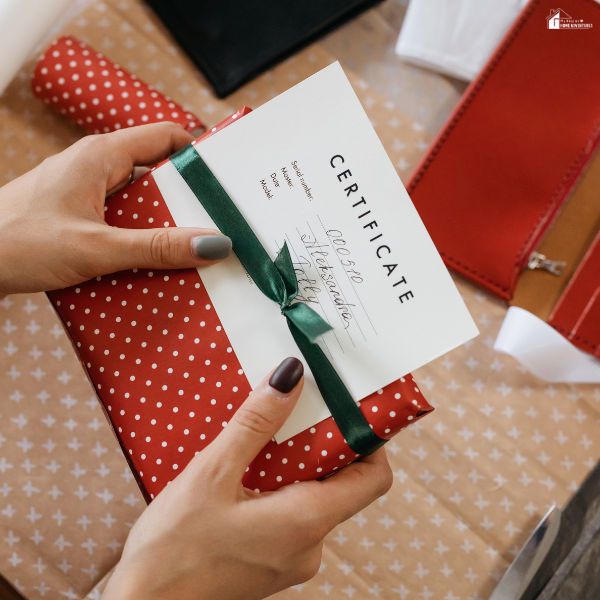
Gift vouchers solve a real problem. You want to give an experience, but coordinating schedules and budgets is tough.
Market Trend: The global gift card market reached $744.1B in 2024 and is projected to grow at a 12.5% CAGR to $2.39T by 2034 [4].
Teaching Kids the Value of Experiences
Kids need to learn that happiness doesn’t come from piles of toys.
Involve them in planning experiences. Let them help choose activities. Build anticipation by talking about upcoming adventures together.
When they ask for toys, suggest alternatives. “Instead of that toy, what if we went to the science museum?” Frame it as something special you’ll do together.
Create traditions around experiences. Annual camping trips or monthly cooking nights become memories they’ll carry forever.
The Bottom Line
Experiences create richer, more lasting happiness than material goods. The science proves it across multiple studies.
You don’t need unlimited funds to make this shift happen. Start small with free local activities. Choose one experience-based gift this year instead of something that will end up forgotten in a closet.
The best investments are in moments that become memories. Your family will thank you for it.
Reference:
- Li, Y., Wang, X., & Zhang, L. (2025). The role of theory of mind in how increasing preschoolers' self-esteem affects their materialism: An experimental study. Scientific Reports, 15(1), Article s41598-025-26801-8.
- https://www.nature.com/articles/s41598-025-26801-8Kumar, A., Killingsworth, M. A., & Gilovich, T. (2020). Spending on doing promotes more moment-to-moment happiness than spending on having. Journal of Experimental Social Psychology, 91, Article 103946. https://news.utexas.edu/2020/03/09/spending-on-experiences-versus-possessions-advances-more-immediate-happiness/
- Van Boven, L., & Gilovich, T. (2003). To do or to have? That is the question. Journal of Personality and Social Psychology, 85(6), 1193–1202. https://www.colorado.edu/today/2003/12/09/experiences-make-people-happier-material-goods-says-cu-prof
- Global Market Insights. (2025, March). Gift card market size & share, growth analysis report 2025-2034 (Report No. GMI10030). https://www.gminsights.com/industry-analysis/gift-cards-markethttps://www.gminsights.com/industry-analysis/gift-cards-market