
Why Modern Retrofit Projects Are Paying More Attention to Roof Heat Dynamics
This post may contain affiliate links which might earn us money. Please read my Disclosure and Privacy policies here
For a long time, roof retrofits were treated as fairly straightforward upgrades: stop leaks, improve insulation, maybe replace aging materials, and move on. That view is changing.
In today’s retrofit market, teams are looking at the roof less as a cap on the building and more as an active thermal system—one that can either stabilise indoor conditions or quietly work against them all day long.
That shift is not happening by accident. Energy costs are more volatile, cooling loads are rising in many regions, and building owners are paying closer attention to comfort complaints that used to be dismissed as inevitable.
Top-floor overheating, inconsistent room temperatures, and HVAC systems that seem to run endlessly are no longer seen as isolated annoyances. More often, they point back to what is happening directly under the roof deck.
The Roof Is One of the Busiest Thermal Zones in a Building
A roof absorbs more solar radiation than almost any other part of the building envelope. On a hot day, surface temperatures can climb far above ambient air temperature, and that heat does not just stay outside.
It moves downward through a mix of conduction, convection, and radiation. In retrofit projects, that matters because older assemblies were often designed around very different assumptions about climate, energy prices, and occupant expectations.
Radiant Heat Is Getting More Attention
One of the biggest reasons roof heat dynamics are now part of the retrofit conversation is a better understanding of radiant heat transfer. Insulation remains essential, of course, but insulation alone does not address every mode of heat movement.
In many attics and roof cavities, radiant energy from a hot roof deck can significantly increase temperatures in the space below, which in turn affects ducts, ceiling surfaces, and cooling demand.
This is especially relevant in homes and low-rise commercial buildings where attic spaces act as thermal buffers. When those spaces overheat, the HVAC system has to fight not just outdoor air, but a superheated zone sitting directly above occupied rooms.
Existing Buildings Rarely Behave Like New Construction Models
Retrofits also force reality into the equation. In a new build, designers can coordinate roof reflectivity, ventilation, insulation levels, air sealing, and mechanical sizing from the start. Existing buildings are messier.
They come with partial upgrades, inconsistent air barriers, ductwork in unconditioned attics, and materials layered over decades.
That is why modern retrofit teams are spending more time diagnosing heat pathways before choosing solutions. A roof replacement alone may not solve the problem if solar gain is still driving attic temperatures up.
Likewise, adding more insulation without improving ventilation or addressing radiant transfer can leave performance gains on the table.
Why the Economics Have Changed
The financial case has become clearer. Cooling-dominated markets have seen the most obvious impact, but even mixed climates are feeling it during longer shoulder seasons and more frequent heat spikes.
Building owners are increasingly aware that the roof influences more than energy bills. It affects occupant comfort, equipment lifespan, and maintenance patterns.
Around the midpoint of many retrofit assessments, the conversation turns from “How much insulation do we need?” to “How is heat actually moving through this assembly?” That is where products and strategies designed to manage radiation begin to enter the discussion.
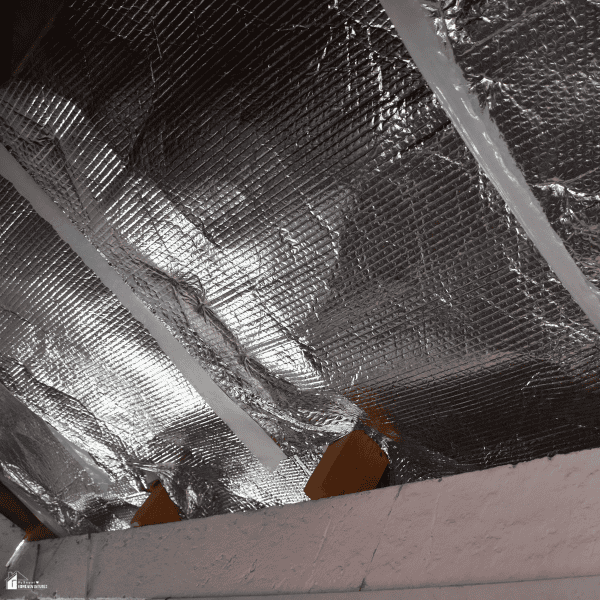
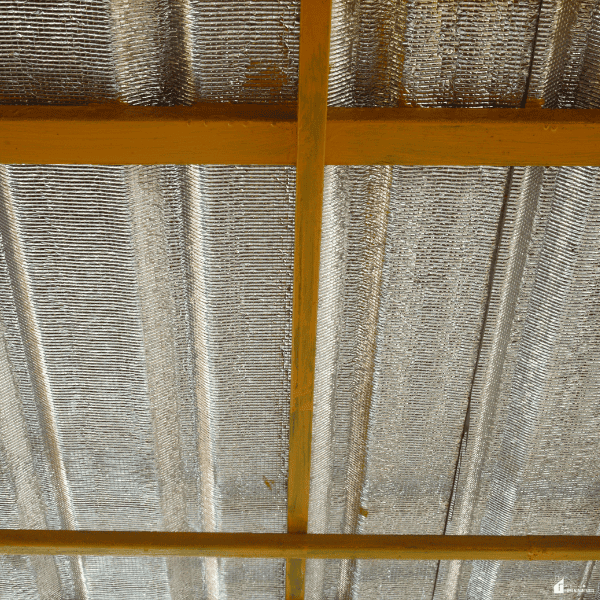
Specifiers comparing roof and attic upgrades often review options like thermal barrier foil used in attic insulation systems alongside ventilation improvements and insulation enhancements, not as a gimmick, but as part of a broader heat-control strategy.
The key point is that retrofit economics now reward precision. Owners do not just want more material; they want better thermal behaviour.
What Better Retrofit Planning Looks Like
The strongest retrofit projects tend to start with a simple premise: diagnose first, upgrade second. That sounds obvious, yet roofs are still often specified based on generic assumptions rather than building-specific conditions.
Look Beyond R-Value Alone
R-value still matters. No serious practitioner would argue otherwise. But retrofit decisions improve when teams also consider:
- roof orientation and solar exposure
- attic ventilation performance
- duct location and condition
- air leakage pathways between attic and occupied space
- the role of radiant heat in peak summer loads
A roof assembly with good nominal insulation can still perform poorly if ducts sit in a high-heat attic or if ceiling penetrations allow unwanted heat exchange. That is why infrared scans, attic temperature readings, and HVAC runtime data are becoming more useful during retrofit planning.
Climate and Use Pattern Matter More Than Ever
Not every building needs the same roof strategy. A warehouse, a school, and a single-family home may all struggle with roof-related heat gain, but the operational consequences differ. A residence may show the problem as hot bedrooms and high summer utility bills.
In a commercial property, it may appear as uneven comfort, productivity complaints, or excessive rooftop unit wear.
Climate also changes the equation. In hot, sunny regions, radiant control under the roof deck can have a meaningful effect on attic conditions. In mixed climates, the design needs to account for both summer heat and winter moisture management. That is why context matters more than rules of thumb.
Common Retrofit Mistakes
Some of the most expensive retrofit errors come from treating roof heat as a single-variable problem.
Replacing the Roof Without Reconsidering the Assembly
A new roof membrane or shingle system may improve weather protection, but it does not automatically improve thermal performance. If the underlying heat pathways remain unchanged, occupants may notice little difference indoors.
Ignoring Mechanical Interactions
When ducts, air handlers, or refrigerant lines sit in overheated attic spaces, the roof’s thermal behaviour becomes a mechanical systems issue as well. Retrofit teams that coordinate envelope and HVAC decisions typically get better results than teams that treat them separately.
Missing the Comfort Narrative
Owners often approve roof retrofits for durability reasons, then only later discover the comfort benefits—or the missed opportunity. Framing the roof as part of the indoor environment, not just an exterior shell, leads to smarter investment decisions.
The Bigger Shift in Retrofit Thinking
What we are seeing is a broader maturation of retrofit practice. The industry is moving away from isolated upgrades and toward system-level thinking. Roofs are central to that shift because they sit at the intersection of solar exposure, airflow, moisture risk, and energy demand.
Paying attention to roof heat dynamics does not mean every project needs a complicated solution. It means recognising that the roof is not thermally neutral. In many existing buildings, it is one of the main reasons the interior feels harder to cool than it should.
That understanding is reshaping retrofit priorities. And in a market where owners expect measurable performance, that is not a niche concern anymore. It is becoming standard practice.