Cost Per Gram of Protein: The Grocery Math That Stretches Your Food Budget
This post may contain affiliate links which might earn us money. Please read my Disclosure and Privacy policies here
Shelf tags tell you the price per pound, and for protein that's the wrong number to shop by. A pound of one food can carry twice the protein of a pound of another, so two packages with the same unit price can be wildly different deals for a family trying to eat well on a modest budget.
The fix is a small piece of arithmetic you can do on your phone in the aisle: what does each gram of protein cost me?
Why Price Per Pound Fools You
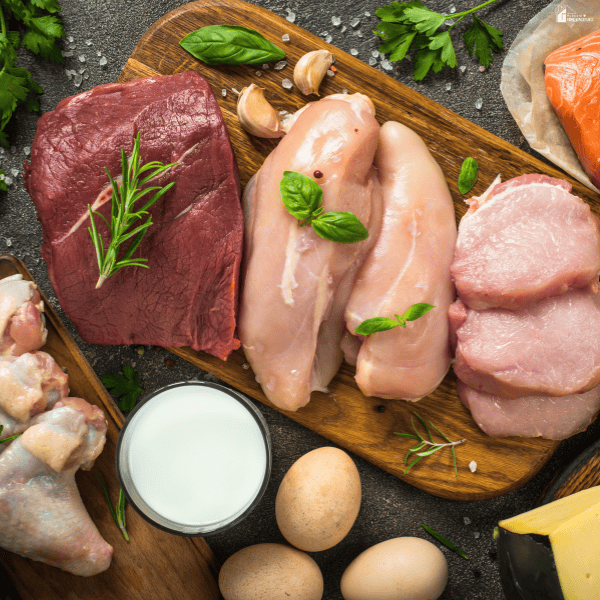
Protein density varies a lot between foods, even ones we think of as interchangeable.
Harvard's Nutrition Source puts a 4-ounce broiled sirloin steak at about 33 grams of protein, while 4 ounces (113 g) of grilled sockeye salmon has about 30 grams and a cup of cooked lentils about 18 grams.
The same page notes that adults need a minimum of 0.8 grams per kilogram of body weight, which works out to roughly 50 grams a day for a 140-pound person.
Two adults around that weight need about 100 grams between them before the kids are counted, and grams are what you're really paying for at the checkout.
It also helps to have a reference point for what a protein-heavy plate looks like when someone else has done the math.
The high-protein menu at Bondi Meal Prep is a useful one: an Australian meal service whose lamb and broccoli rice bowl lists 53.1 grams (about 1.9 oz) of protein in 347 calories, with prices across the range topping out at A$16.90.
Those are Australian dollars and I'm not converting them, since the service only delivers in Australia, but even at that ceiling the bowl comes in under 32 Australian cents per gram.
The Formula
Cost per gram of protein = price paid ÷ total grams of protein in the package.
To get total grams, you need two figures off the label. The FDA's guide to the Nutrition Facts label says to check the servings per container and the serving size first, because every number below them, protein included, describes a single serving.
Multiply protein per serving by servings per container, then divide the price by that total. Move the decimal two places and you have cents per gram.
Packaged Foods With a Label
Canned tuna, yogurt, cheese, peanut butter, frozen chicken and dry beans all carry a Nutrition Facts panel, so they're the easy ones. Watch for packages where the serving size is unusually small; the per-serving protein looks modest, but the container may hold more servings than you'd guess.
Also watch out for “high protein” claims on the front. They don't tell you anything about cost, and a snack bar with 20 grams can still be one of the priciest grams in your cart.
Fresh Meat and Fish
Butcher-counter meat often has no panel at all, so lean on published per-ounce figures like Harvard's. Remember that a raw weight shrinks once it's cooked, which means the protein you actually eat per dollar is a little lower than a raw-weight calculation suggests.
Bone-in cuts complicate it further, since you're paying for weight you'll never eat. That doesn't make them a bad buy, but it's worth doing the math once instead of assuming.
Dried Beans and Lentils
These are where many families find their cheapest grams, and they make the strongest case for owning a pressure cooker. If unsoaked beans have always felt like too much planning, this guide to making Instant Pot dried beans with no pre-soaking takes the overnight soak out of the plan.
Pair beans with rice, eggs or a little meat and you'll stretch the pricier proteins across more meals.

Build Your Own Cheat Sheet
You don't need to recalculate every trip. Pick the eight or ten proteins your family actually eats and work out cost per gram for each one using your last receipt.
Write the list in your phone's notes app, sorted cheapest to priciest. When a sale shows up, you'll know within seconds whether it beats your usual pick or only looks like a deal.
Revisit the list every couple of months. Prices drift, and a staple that was cheap in spring may have crept up by fall.
Where the Math Meets Real Life
Cost per gram isn't the only thing that matters. Saturated fat, sodium and fiber differ a lot between protein sources, and Harvard's page makes that point with its ham steak example, which carries a hefty sodium load alongside its protein.
Time counts too. A cheap gram you never get around to cooking isn't cheap; it's food waste, so leave room in the plan for a few quick options on the busiest nights.
The best use of the number is as a tiebreaker. When two proteins suit the same dinner, buy the one with the lower cost per gram, and keep the shelf-stable winners stocked so you're never paying full price out of desperation.
If you want ideas for which ones to keep on hand, this list of pantry staples on a budget is a good place to start building that backup shelf.
A Quick Weekend Exercise
Grab this week's receipt and a calculator. Work out cost per gram for every protein you bought, then circle the cheapest two and the priciest two.
Odds are the priciest ones are convenience items you could swap for something similar at half the cost per gram, at least on a few nights a week. That one swap, made consistently, is the kind of small change that keeps a grocery budget intact without anyone at the table feeling shortchanged.