The Outdoor Lighting Issues That Get Worse Every Time It Rains
This post may contain affiliate links which might earn us money. Please read my Disclosure and Privacy policies here
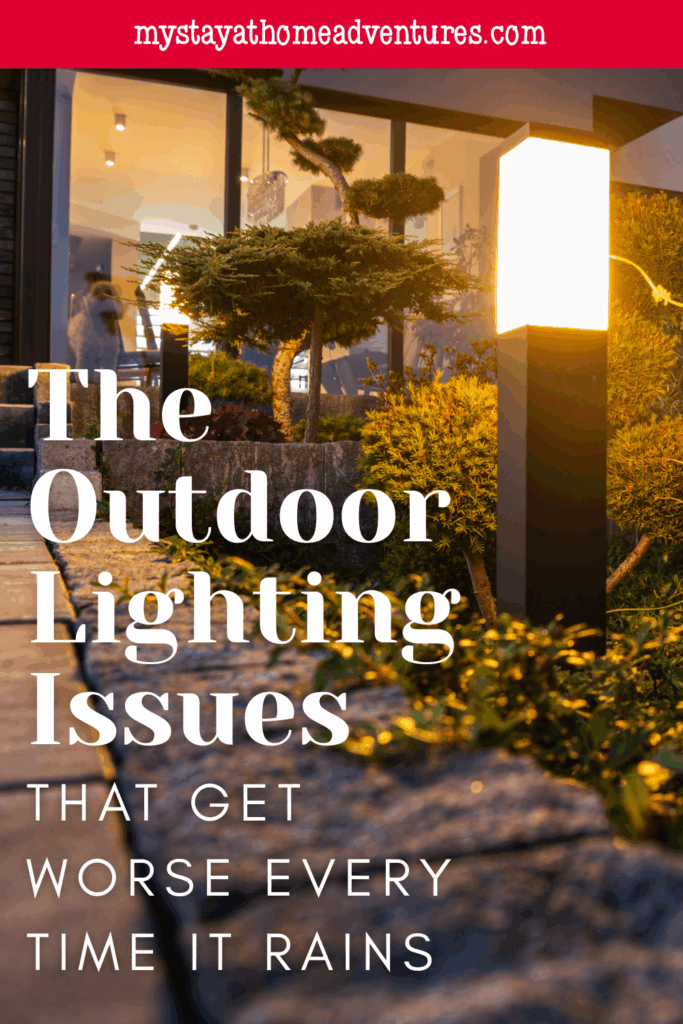
Your landscape lights are mostly fine. It rains, and the next day they come on but half of them flicker. Or you realize that one section near the driveway is completely off. Then a day or two later it dries and everything works fine. Problem solved, right?
Not even close. The reality is that when water gets into places where it shouldn't be, it causes damage. And each time it happens it gets worse. Connectors corrode a little more. Seals degrade a little more. The transformer is under more stress.
Eventually, drying it out doesn't work anymore and your repairs cost a lot more than if you nipped the problem in the bud when it started.
Water Gets Into Wire Connections
The most common issue stemming from rain has to do with wire connections. These are areas where your main cable forks off to individual fixtures or a wire was connected to extend a run. Even waterproof connectors exist (and many installations don't use the proper ones) but over time, water gets in.
Here’s how it works: moisture gets into the connector and the electrical current running through it produces minimal heat. This reaction starts corroding the copper wire. At first it's a little green, a little white – mostly harmless and the connection works.
As corrosion builds up (or down) after a few rain cycles, electricity cannot travel properly. Your lights dim or do not respond.
The caveat is that sometimes, under dry conditions, the connection still works because although it's corroded, it's not entirely shut off. But throw in water and water is conductive, meaning it conducts electricity away from where it needs to go.
The lights fail. Then they dry out and magically they work again, meaning people think it's just a glitch.
Fixture Seals Break Down
Landscape light fixtures are generally “weatherproof” but those seals around the lens and where the wire goes into the body of the fixture cannot withstand all the UV rays over time. Rubber and silicone get brittle in the sun. Temperature fluctuations expand and contract them. Eventually, tiny seams start to form.
When it rains, water gets into the housing of the fixture. If you have LED fixtures, the electronics within do not adapt well to moisture. Getting landscape lighting repair before seals completely break down saves you from having to replace entire fixtures.
The worse the seal becomes, the more water enters with each subsequent rain. What starts as a few droplets eventually creates a fixture full of water. You’ll notice condensation inside the lens, or water actually sloshing around inside of it. By this point it's usually too late, the fixture is gone.
Transformers Start Failing
Your transformer is the box that takes household voltage down to low voltage appropriate for your landscape lights. Most are rated for outdoor use but that does not mean they’re water-proof. If your transformer casing has cracks, openings or poorly constructed entry points, rain will get inside.
Water and components do not mix well. Water and electrical systems create chaos, either short-circuiting, voltage fluctuations or total failure of voltage based upon moisture present on internal wiring or circuit boards.
Sometimes the transformer trips its internal breaker once wet; other times it continues operating but does not provide steady voltage output which makes your lights flicker.
Buried Wires Develop Problems
Underground wire connecting your transformer to fixtures is embedded in the ground that gets soaked every time it rains. If that wire has nicks in its insulation – from installation efforts or landscaping maintenance or even age – water can reach the copper wire.
Once moisture travels through wire insulation – it wicks inside due to capillary action – the wire may look good on the outside but it's corroded inside. This creates resistance on the line meaning less voltage gets to your fixtures. Those at the end of the run get dimmer or fail entirely.
As time goes on this problem becomes worse. As wire corrodes, heat builds up from current. That heat damages further insulation which creates further openings allowing more water in – which creates more corrosion. It's a cycle that spins faster with every rainstorm.
Ground Shifts Stress Connections
Heavy rain saturates soil around your lighting system. In some cases this creates slight ground shift or settling. That movement puts stress on underground wire connections and can pull them apart or loosen them just enough to create problems.
You may have a connection that works great for years but after multiple heavy storms and subsequent ground shifting, it's now barely hanging on. It works most of the time but when the ground is saturated and heavy, stress on that connection is enough to break the circuit.
This is one of those things that seem random because it doesn’t happen every single time it rains; it happens depending on how saturated and heavy ground gets; it happens based on how much movement occurs each time it rains. But each time it moves, it creates more stress.
What This Means for Your System
It's always the same storyline: everything works fine when dry; when it's wet it fails; once everything dries out it's operational again. Homeowners think it's a quirk that they can live with but each cycle of wet-dry-dry-wet does worse damage. Corrosion expands. Seals degrade further. Connections become weaker.
One day you dry everything out and it's not enough; corrosion has taken its toll; seal is gone; wire corroded through. What was once an intermittent nuisance became a dead lighting system requiring heavy repairs to make functional again.
The repairs are almost always cheaper when you do them sooner rather than later. Replacing a corroded wire connector is a lot cheaper than replacing a whole run of wire. Resealing a fixture is cheaper than buying an entirely new one. Finding it beforehand saves hundreds of dollars.
If your lights do anything funny when it rains – don't let them wait until it's worse because it will be!