Stay Cool Without Breaking the Bank: Budget-Friendly Tips to Improve HVAC Efficiency at Home
This post may contain affiliate links which might earn us money. Please read my Disclosure and Privacy policies here
Your electricity bill shoots up $60 in July and you spend a week convinced something is broken. You call someone out, pay for a service visit, find out the system is fine. Turns out you blocked two vents with furniture you rearranged in June and never changed the filter since February.
Sixty dollars a month, every month, gone because of two blocked vents and a dirty filter. That kind of invisible waste is everywhere in homes running central air or heat, and it shows up on the bill long before anyone thinks to look for it.
Heating and cooling burn through close to half the average home’s energy budget. The Department of Energy pegs annual household spending around $2,000, and a decent slice of that just bleeds out through dirty equipment and gaps people meant to seal two summers ago.
None of this requires hiring anyone. Most of it is just knowing where to look first.
Start With the Free Fixes
Before spending anything, there are problems hiding in plain sight that cost nothing to fix except a few minutes of attention. These are the ones that pay back the fastest.
Your Filter
Check yours right now. If it looks gray and fuzzy, that is your system straining to pull air through a wall of dust. Energy Star recommends checking every 30 days and swapping it out every one to three months depending on pets, dust, and how hard the system runs.
A $5 filter every few months versus running a stressed system all season is not a hard comparison.
Your Vents and Registers
Vents are the thing you moved furniture in front of and forgot about. Closing them to save energy in unused rooms is also a myth worth killing off.
The system was sized for the full house. Blocking or closing registers creates pressure imbalances that make the system work harder, not less. Open all of them back up and move anything sitting directly in front of them.
Your Windows on the Hot Side
A west-facing window in the afternoon just radiates heat straight into the room while the AC runs longer trying to keep up. Cheap roller shades or blackout curtains on the sunny side of the house will drop indoor temps more than you’d think for a $25 fix.
Three to four degrees cooler on a bad afternoon, for a $25 curtain. That room was a problem before and now it mostly isn’t.
Your Doors and Window Frames
Run your hand along the door frame on a hot day. Feel any air movement? That is conditioned air going out. Adhesive weatherstripping is a few dollars a door and takes maybe ten minutes, which is almost insulting given how much it helps.
If you want a broader sense of where the house is losing ground before summer, preventing home maintenance issues before they escalate is a decent place to start.
Thermostat Habits and Daily Decisions
How you run the system day to day matters as much as the equipment itself. A few habit changes here tend to show up on the bill within a month.
Stop Leaving It at One Setting All Day
The Department of Energy puts the savings at around 10 percent annually if you bump it 7 to 10 degrees while the house sits empty. Which sounds small until you do it for twelve months straight. Small, but it stacks.
A programmable thermostat does it automatically for $25 to $50. The smart thermostat versions run $150 to $250 and handle a lot more, plus most utilities offer rebates that take a chunk off the price before you even pay for it.
Use the Ceiling Fan
Ceiling fans don’t actually cool the air. What happens is the moving air creates enough of a wind chill that 76 degrees feels more like 73. Run the fan and push the thermostat up two or three degrees. The fan draws about a penny an hour. The AC running longer costs considerably more than that.
Get the Annual Service Done
A professional service call once a year, particularly before summer, is where improving HVAC efficiency pays for itself.
They clean the coils, check refrigerant, and generally poke around for things that are about to become expensive. Dirty coils push run cycles longer because the system can’t transfer heat efficiently. Skipping the visit is usually cheaper in the short run and not in the long one.

The Outdoor Unit Needs Attention Too
Most of the maintenance focus lands on the indoor side of the system. The condenser outside gets ignored until something goes wrong.
Keep Two Feet Clear Around It
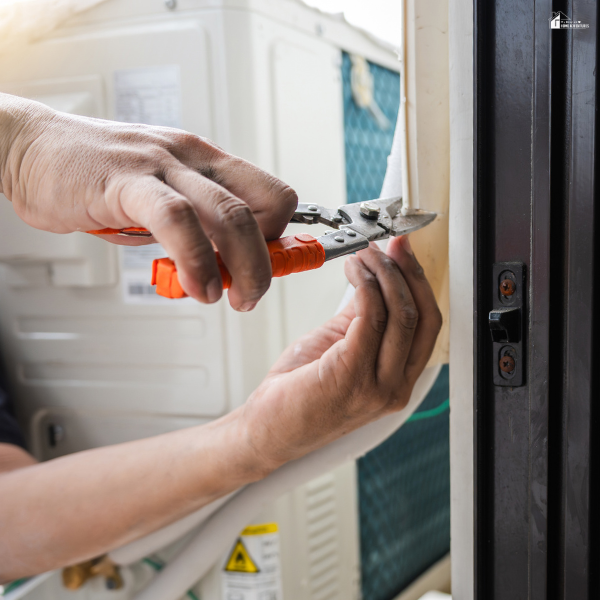
Grass and weeds creeping up against the condenser choke off the airflow it needs to dump heat. Two feet of clearance is the number people cite, and it’s a reasonable one.
Spray the fins down with a garden hose every few weeks when it’s running hard. Dust and debris pack in there and the unit has to work harder than it should.
Check Your Ductwork
Gaps or loose joints in the ductwork mean conditioned air is just dumping into the attic or wall cavity on the way to the room you actually wanted to cool.
Sealing with mastic or foil tape, not the regular stuff labeled duct tape which actually fails pretty quickly, can cut energy waste by 5 to 30 percent depending on how bad it is. Worth looking at visible runs in the attic or basement before you call anyone.
Running through a seasonal home maintenance checklist each spring and fall at least puts things like the duct inspection and the filter swap on a real schedule instead of the mental list that keeps not getting done.
Upgrades Worth the Money
Once the free and cheap fixes are handled, there are a few upgrades that pay back enough to be worth the upfront spend.
Attic Insulation
An attic that isn’t insulated properly turns into a heat battery in summer, charging up all day and dumping it back into the house at night while the AC just keeps spinning. Cost to fix depends heavily on the space. Could be a few hundred, could be closer to two thousand.
The federal Energy Efficient Home Improvement Credit currently covers 30 percent of the cost, capped at $1,200, which changes the math on what’s worth doing.
Window Film
Window film is one of those things that sounds like it should make rooms noticeably darker and mostly doesn’t.
It blocks a real portion of solar heat coming through glass, professionally installed runs $1 to $3 per square foot, and for south and west-facing rooms that bake all afternoon it makes a genuine difference without the commitment of full window replacement.
Smart Thermostat
If you are still on a manual thermostat or an older programmable model, the upgrade to a smart thermostat is one of the easier decisions on this list.
Energy Star-certified models save roughly $100 a year on average and most utility companies offer rebates that bring the purchase price down. Check the rebate page before buying anything.
Heat Pump
If the current system is on its way out anyway, heat pumps handle both heating and cooling and outperform traditional systems in moderate climates by a real margin. SEER2 16 or higher is the target for efficiency under current standards.
The Inflation Reduction Act has a federal tax credit attached to high-efficiency models, up to $2,000 back. Stack that with whatever the utility offers and the actual out-of-pocket number looks pretty different from the sticker.

What Your Utility Bill Is Actually Telling You
Most people check the total, wince, and pay it. Pull up the same month from two or three years back and the number actually tells you something.
Track Year Over Year
If this July’s bill is noticeably higher than last July’s with roughly similar weather, something in the system changed. Keeping that kind of running track is one of those smart money habits that catches problems early, before a small efficiency loss turns into a repair bill.
Get the Free Energy Audit
A lot of utility companies offer free home energy audits, either online or with someone coming out at no charge. The recommendations vary by home. Attic air sealing might rank above a new thermostat for your house.
For a different house it might be the opposite. Worth knowing which problems are yours before spending on a solution.
Look at the Rebate Page
Most utility companies run rebate programs covering smart thermostats, insulation, and efficient equipment. Nobody checks these. Most customers never check what is available. Ten minutes on the utility’s website before buying anything can come back as a check in the mail.
Along the same lines, a longer list of ways to save money at home this year covers a lot of ground beyond just the HVAC side of the budget.
When the Equipment Is the Problem
There is a point where maintenance and habit changes stop closing the gap because the system itself cannot respond to them.
Signs It Is Time to Replace
A 15 or 20-year-old unit running on worn parts and outdated refrigerant is not going to match a modern system, regardless of how well you maintain it. Replacing it with an Energy Star-certified system can cut heating and cooling energy use by up to half. The bill difference shows up every month.
The general calculation: if the repair estimate is more than half the cost of a replacement and the unit is already past 10 years old, replacement tends to win on total cost over time. The savings compound month after month on a newer, more efficient system.
This is the same pattern that works for most household budget problems, honestly. Hit the highest-impact items first, track what you’re spending, and let the bill flag when something shifts. The full breakdown of ways to save money at home shows how often the biggest wins are just this kind of sustained attention rather than any single big overhaul.
Conclusion
Start with the filter and the vents. Those are free and they move the bill. Weatherstrip the drafty doors. Close the curtains on whatever side of the house gets cooked in the afternoon.
Get on a thermostat schedule and run the ceiling fans while you’re at it. Annual service before summer hits. Hose off the condenser.
The bigger upgrades make sense when the system is old enough that every season brings a new repair. At that point replacement is not a splurge, it just stops costing money in three different ways at once.