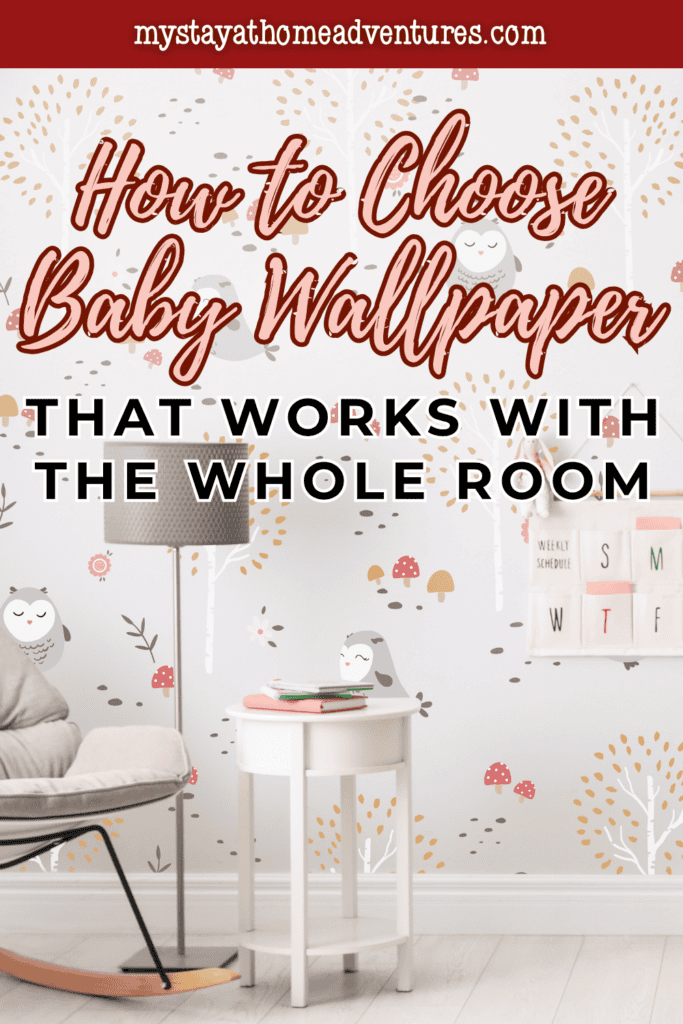
How to Choose Baby Wallpaper That Works with the Whole Room
This post may contain affiliate links which might earn us money. Please read my Disclosure and Privacy policies here
Baby wallpaper must fit with the current furniture (crib, dresser, chair) in the babys nursery.
First decide where all of the furniture will be placed, and then select a wallpaper pattern that compliments the overall appearance of the nursery, and has the potential to allow for future changes.
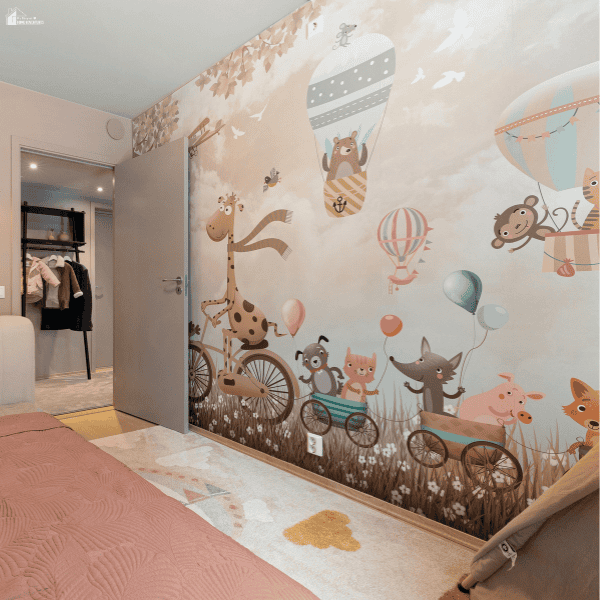
Begin With the Rooms Atmosphere
Choose either a subtle backdrop or a visually striking pattern. Soft color combinations look simple, while large, dynamic forms draw in viewers. Both pastel colors and baby-themed elements may be used by all genders.
Existing finishes should be considered when comparing different Baby Wallpaper designs. The design can either continue a color scheme of the shared crib or dresser, creating consistency; or it can provide contrast against these items, which will define each piece of furniture.
Place Artwork Around Your Layout
Behind the crib, you can create a feature wall. However, if there is a more visible part of the room, you might want to use that for your main focal point. Do not move the crib to an area where it will be difficult to see or reach, in order to make room for artwork.
Measure the walls and document where the windows, doors, crib height, changing unit and wardrobe are located, along with their respective measurements. To ensure that an off-center crib is balanced within the available wall space; adjust the design accordingly.
The existing dresser may hide some of the animals in the foreground of the mural. Place any important parts of the mural (above) the furniture, or next to it. Also, ask for a crop view of your mural based on the measurements you provide. Do not hang anything above the babys crib.
The small strip of wall left over when you install a wardrobe is perfect for repeating patterns. Artwork can be cut down to fit around sloped walls. You will also have to compose the layout of your display in the alcove and test how much light shines into the area.
Choose Scale Without Visual Clutter
The size of a room, along with how much of the wall is exposed, should be taken into account when selecting a wallpaper. If there are large and widely spaced motifs used on a wallpaper in a small room, but still have some of the wall showing, then this will work.
However, if the motifs are very small and close together, this will look busy.
A small room with little natural light will look better if you use softer colors and simpler finishes around it. Paper is not an adequate substitute for good lighting.
Repeats are used to make room changes and open up space. A baby room mural requires open space to display its image. Minimize competition with other decor and cluttered shelves.
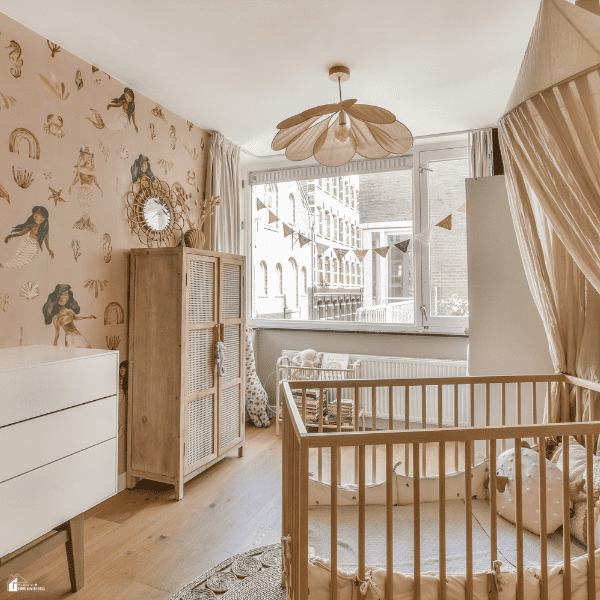
Test Color Where it Will Appear
Sample comparison to flooring and fixed finishes is possible. The feeling of enclosure in a dark baby wallpaper may vary based on contrast, lighting, patterns and proportions.
Judge samples under the same light you would typically use in your workspace (usually a bulb). The bulb used may alter how warm the sample appears. Angled lighting will reveal texture.
Screens produce light while printed materials reflect it. Color perception is affected by the screens settings and how glossy the screens surface is. When buy wallpaper online, take measurements and hold physical samples up against the wall where you plan to install them.
Consider the difference between natural light and artificial light at night, and look at the darker areas of your room.
Connect Textiles, Paint and Coverage
If you’re keeping patterned curtains or a highchair in your child’s room, choose subtle wallpaper. Look for a design that shares at least one color with these items.
You can also mix patterns of different sizes to create balance. Contrasting colors can help curtains, rugs, and bedding work well together.
Plain curtains or a simple rug will complement detailed wallpaper. For the other walls, choose a background or accent color from the wallpaper. Then, test paint swatches alongside your fabric samples.
A single statement wall is best suited for dramatic images or busy repeat patterns. However, several or even every wall may feature restrained repeating designs, or a deliberately enclosing color scheme.
Keep Future Changes Affordable
For a babys nursery choose wallpaper with colors that will complement multiple pieces of furniture. Temporary themes may be added to areas of the room outside the crib area, so that it isn't necessary to replace the wallpaper.
If the room has an adjoining dressing area or play area then the same wallpaper can be repeated in those spaces, or they could use a common color for painting.
Review all manufacturers’ documentation on products used in your babys nursery. This includes documentation regarding the types of materials, adhesives, installation procedures, ventilation requirements and drying times.
Prior to ordering, view samples, crop images of furniture arrangements and position furniture to assess if there are any conflicts with the layout of your nursery. Do not assume that any product will be certified for use in a babys nursery or will have high quality.