Is a Gas Station Business Worth It? Costs, Margins, and Day-to-Day Reality
This post may contain affiliate links which might earn us money. Please read my Disclosure and Privacy policies here
My Bottom-Line Take in 90 Seconds
Is a gas station business worth it? It can be—if you treat fuel as a traffic driver and make your money inside the store. On fuel, the business often nets single-digit cents per gallon after credit card fees; real gas station profitability comes from c‑store mix, foodservice, and a couple of smart add-ons.
My rule-of-thumb for a “worth it” site is 3,000–5,000 gallons/day with a store that converts at least 35% gross profit and $10+ average basket on busy dayparts. If the numbers don’t pencil with conservative assumptions, I walk.
Who This Business Is (and Isn’t) For
This is an operating business, not a passive investment. If you like processes, staffing, merchandising, and watching KPIs like a hawk, you can earn a compelling ROI gas station owners talk about—often mid-teens cash-on-cash once stabilized.
If you want “set and forget,” you’ll donate margin to shrink, card fees, and bad contracts. Local conditions vary, but the operators who win are the ones who show up daily (or build systems that do).
The Three Levers That Decide “Worth It”
- Location: ingress/egress, corner visibility, daytime population, and traffic patterns matter more than brand alone.
- Supply terms: the fuel supply contract, freight, and card fees determine if your pennies per gallon stick.
- In-store execution: product mix, food/coffee, and add-ons turn traffic into gross profit dollars.
A quick anecdote: I once evaluated a corner site doing 110k gallons/month that looked fantastic on paper. The killer was a long-term supply deal with a minimum volume penalty and brand differential that priced me out of the local market.
Two extra cents per gallon in costs wiped out $2,000+ in monthly profit. Great corner, wrong contract—hard pass.
How Gas Stations Really Make Money
Fuel: Volume, Pennies per Gallon, and Credit Card Fees
Fuel keeps the canopy lit and the forecourt full, but net fuel margin is thin. In my markets, I model net at roughly 5–12¢/gal after freight and card fees, knowing it can swing by the day.
Visa/Mastercard costs can eat 2–3% of the retail price, so price discipline and cash discount strategy (where legal) matter. I never count on fuel to carry the P&L; it mostly pays to bring people onto the lot.
C‑Store: Beverages, Snacks, Tobacco, and Foodservice
The store is where gas station margins expand. Averages I plan with: packaged beverages and coffee often land 45–65% GP, hot food 50–70% GP, salty snacks 35–45%, candy 40–55%, and tobacco/smokeless closer to 10–20% GP but critical for basket traffic.
My target is a blended c‑store profitability of 30–36% GP with a rising share from food and beverage. I review category margin and mix weekly, not quarterly—problems compound too fast.
Add-Ons: Car Wash, Air/Vac, ATM, Propane, Lottery, EV Charging
Add-ons are quiet profit engines. My best performers: an in-bay automatic car wash with 50–60% contribution, propane exchange, and a surcharge ATM. Lottery is a strong traffic driver, not a margin king; I treat it like fuel—drive trips, then upsell.
EV charging can be a long-term traffic strategy where utility incentives offset capex; I co-locate chargers near the coffee/food entrance to convert dwell time into spend.
The Takeaway
Fuel drives volume; the store and services drive gross profit. I design everything—from pump prompts to planograms—to move customers from the forecourt to higher-margin decisions.
Startup Paths and Real Costs (Buy vs. Build; Branded vs. Unbranded)
Acquisition vs. Ground-Up: Timelines, Capex, and Risk
Buying an operating store compresses timeline and reduces uncertainty. Directionally, I see “business only” deals ranging from low six figures for underperformers to $1–2M+ for stabilized sites; adding real estate commonly pushes totals into the $1–5M range depending on market.
Ground-up builds can run several million dollars once you include land, tanks/lines, canopy, dispensers, store buildout, and soft costs—and you still carry ramp-up risk. My first-time-owner advice: buy a clean, operating site with verifiable books and upgrade it.
Franchise/Branding vs. Independent: Fees, Rebates, Control
Branded fuel can bring image standards, marketing, and rebates, but you’ll likely pay a brand differential on rack and accept tighter compliance. Unbranded offers more pricing flexibility and often better base cost but fewer marketing perks.
I choose based on neighborhood price sensitivity and my store’s ability to sell on experience (coffee/food) versus price. Rebates are nice; supply flexibility is nicer.
Hidden Costs: USTs, Environmental, Working Capital, Inventory
Budget for diligence and working capital. Directional starting points I use:
- Environmental diligence: Phase I ESA, and if triggered, Phase II—worth every dollar.
- Tank/line system: age, lining, and monitoring; replacing dispensers/POS can be a six-figure surprise.
- Fuel inventory: 10–30k gallons on hand can mean $30–90k tied up depending on wholesale price.
- Store inventory and cash float: $60–150k for initial store stock plus $5–15k in till/coin/ATM prefund.
- Opening capex: signage, image upgrades, cameras, food equipment—plan a contingency of 10–15%.
My Diligence Checklist (Non-Negotiables)
- Phase I ESA clean; if not, I price remediation risk into the deal or walk.
- Tank age/lining and sensor logs reviewed 3–5 years back.
- Dispenser age and EMV compliance; POS compatibility with loyalty/promo tools.
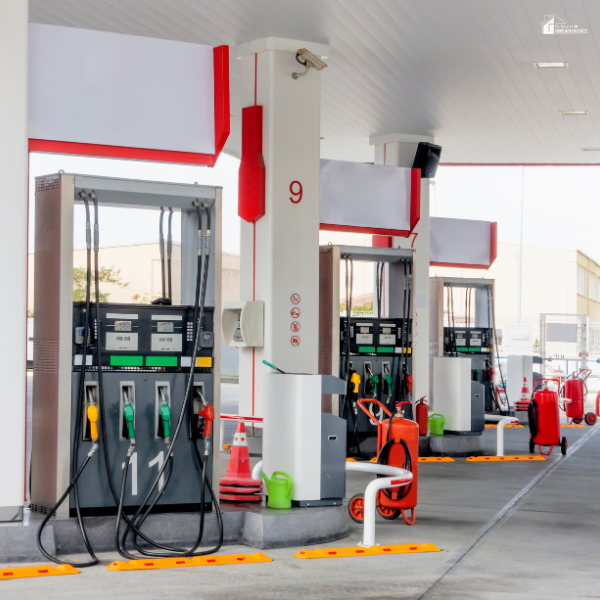
- Canopy condition and lighting—visibility sells fuel, and safety sells baskets.
- Copy of the fuel supply contract and any branded image requirements.
The Takeaway
Entry path dictates control, capital, and timeline. For most first-timers, a proven site with clean environmental history and a reasonable supply agreement beats a shiny ground-up with unknowns.
Fuel Economics and Supply Contracts
How Rack Pricing, Freight, and Brand Differentials Work
I model from the rack up: rack price + freight + brand differential + fees = my true cost. If the branded differential is 2–4¢/gal and freight runs 1–3¢/gal, I need street pricing that covers those pennies plus card fees.
A location with great traffic can still be unworkable if my delivered cost consistently sits above nearby competitors’ ability to retail.
Supply Agreements: Term, Exclusivity, Minimum Gallons, Penalties, Image Standards
The fuel supply contract can make or break you. I negotiate:
- Term: shorter or with performance-based outs.
- Minimum gallons: targets I can hit in shoulder seasons, not just peak months.
- Exclusivity and territory: avoid clauses that box me in.
- Early termination penalties: I push for a sliding scale, not a cliff.
- Image and mystery shop standards: clear, achievable, and budgeted.
Credit Card Fees, Cash Discounts, and Price Sign Strategy
Card fees track the price at the pump—painful when diesel spikes. Where legal, I’ve implemented a cash discount program to align price with payment cost.
Price signs should tell a story: I’ll match the market on a lead grade and make margin on premium and diesel, or pair an aggressive fuel price with a high-margin coffee/food bundle at the door.
Why 2–3¢ Matters: A Quick Example
Assume 100,000 gallons/month. A 2¢/gal swing equals $2,000/month; 3¢ equals $3,000. Annualized, that’s $24,000–$36,000—often the difference between ho-hum and healthy store-level EBITDA. I never sign a contract until I’ve modeled best/likely/worst margin cents per gallon with card fees and freight factored in.

Inside the Store: High-Margin Categories and Add-Ons
Foodservice and Coffee: The Real Profit Centers
My highest-return upgrades have been coffee and breakfast. A fresh-brew program with a simple pastry/taquito rotation routinely delivers 50–70% GP. I tested a $9.99/month coffee subscription at one site; within two months, morning visits rose 14% and attach rates (breakfast add-ons) lifted GP dollars by four figures.
Merchandising and Mix: Planograms, Bundles, Private Label
I treat shelves like real estate. End-caps carry hero SKUs and bundles (e.g., 2-for beverages plus a snack). Planograms are reviewed quarterly; I reward fast movers with facings and evict laggards. Private label on water and snack nuts gave me +8–12 points of margin without complaints.
Simple rule: simplify choices at eye level, signal value at hand level, and push impulse at the counter.
Add-Ons that Work: Car Wash, Propane Exchange, ATM, EV Chargers
- Car wash: strong cash generator with 50–60% contribution; sell bundles on the pump screen.
- Propane exchange: steady weekend traffic; keep cages visible and lit.
- ATM: surcharge revenue plus basket lift for cash buyers.
- EV chargers: I place them near the brightest entrance and promote coffee/meal deals; incentives can make the math work even before site-level profits do.
The Takeaway
Don’t chase gallons without a store that converts. Every pump transaction should funnel toward a clear, high-margin next step—coffee, food, or a value bundle.
Day-to-Day Reality: Operations, Staffing, and Systems
Staffing, Schedules, and Shrink Control
Labor targets drive schedules, not the other way around. I aim for labor at 10–13% of store sales, with more coverage on morning and evening peaks. Shrink is a tax on sloppy systems: strict receiving, daily counts on cigarettes and high-shrink beverages, and no shared logins at POS.
The one camera placement that paid for itself fastest? A tight angle on the cigarette cabinet and the counter, paired with time-stamped POS overlays.
Cash Handling, Drive-Offs, and Safety
Cash handling is about routine: dual counts, sealed drops, manager-only safe access, and daily reconciliation. Drive-offs get reduced when I switch to prepay after 10 p.m., post clear pump-camera signage, and share plate data with local PD portals.
Staff safety is non-negotiable—bright forecourt lighting, convex mirrors around blind corners, and a “no hero” rule for theft.
KPIs I Check Weekly: Gallons/Day, GP Dollars, Basket, Labor %, Void/Return
My dashboard is simple:
- Gallons/day and net cents/gal (post-fees)
- C‑store GP dollars and GP% by category
- Average basket and attach rates for coffee/hot food
- Labor % vs. sales by daypart
- Voids/returns by cashier
A small tweak with big impact: I review void/return patterns every Monday. When I started coaching cashiers whose void rates were 2x peers, shrink dropped within two weeks.
The Takeaway
Consistency wins. Checklists, clean data, and fast feedback loops separate decent stores from great ones.
Compliance, Risk, and Insurance
UST Monitoring, Testing, and Environmental Due Diligence
Underground storage tanks (USTs) are existential risk if ignored. My cadence: daily ATG checks, monthly statistical inventory reconciliation, annual line/tank testing as required, and meticulous logs. Before closing on any site, I review multi-year test records and service tickets; missing paperwork is a red flag I price in—or I walk.
Weights & Measures, Alcohol/Tobacco, Age Verification
Fuel meters and scales must match what you charge. I keep a binder for each inspector: calibration certificates, dispenser seals, and signage. For alcohol/tobacco, I run hard prompts on the POS for ID verification and mystery-shop my own stores quarterly.
Insurance: Pollution Liability, GL, WC, Property, Cyber
I treat pollution liability as mandatory, not optional. Add general liability, workers’ comp, property, and—given today’s POS risks—cyber. One compliance close call changed my SOPs: a line leak alarm during a storm.
We followed procedure, documented everything, and avoided a fine. Now, we run quarterly tabletop drills so the team knows exactly who does what.
The Takeaway
Compliance is a system, not a binder. Budget for it and rehearse it, or it will eventually bill you—with interest.
Financial Model and Scenarios
The Simple Model: Gallons, Cents/gal, C‑Store GP%, Labor, Fixed Costs
My quick model fits on one page. Inputs: monthly gallons, net cents/gal (after freight and fees), c‑store sales, c‑store GP%, labor %, fixed costs (rent/loan, utilities, insurance, maintenance), and other income (ATM/car wash). If it doesn’t cash flow here, it won’t improve with wishful thinking.
Sensitivities: Fuel Margin Swings, Card Fees, Wage Changes
I run sensitivities before I spend a dime on diligence. Fuel margin ±2¢, card fees ±30 bps, labor cost ±$1/hour. I want to see that EBITDA stays positive in the “likely-worst” band, not just the rosy case.
Break-Even and Payback Scenarios
Illustrative example (plug your local data):
- Volume: 80k / 100k / 120k gallons per month
- Net fuel margin: 7–10¢/gal after fees
- C‑store sales: $120k / $150k / $180k with 27–35% GP
- Labor: 10–13% of store sales
- Fixed costs: $35–60k/month depending on rent/loan and utilities
At 100k gallons and 8¢ net, fuel contributes $8,000. If the store does $150k at 32% GP, that’s $48,000 GP. Subtract labor at 12% ($18,000) and fixed at, say, $45,000; add $4,000 from wash/ATM/propane—you’re around breakeven to modestly positive.
A 2¢ margin improvement adds $2,000 to EBITDA; a 3-point lift in store GP adds $4,500. Small levers, big outcomes.
The Takeaway
A driver-based model clarifies reality fast. If tiny swings break the deal, the deal is already broken.
Case Study: How I Evaluated a Real Deal
The Opportunity: Location, Volumes, Store Mix
A corner site on a commuter artery: reported 95–105k gallons/month, c‑store at ~$135k with 30% GP, no car wash. Morning traffic was strong, and there was room for a coffee island.
The Diligence: Tanks, Contracts, Financials
I pulled five years of UST records, dispenser service history, and the supply contract. Tanks were double-wall fiberglass, mid-life with clean logs. POS was EMV-compliant but outdated for loyalty.
The supply deal had a minimum of 1.1M gallons/year with a stiff shortfall penalty and a branded differential that ran ~2¢ above the nearest independent.
The Decision: Terms I Negotiated or Why I Walked
I modeled a likely 7–8¢ net margin and saw that a 2¢ miss would erase $2,000/month. I asked for: a lower minimum, a step-down termination fee, and a marketing fund to launch coffee/food. The supplier conceded the marketing fund and a reduced early-termination scale but refused to budge on the minimum. I walked.
Two months later, I bought a slightly smaller site with flexible unbranded supply, added a modest coffee program, and beat the first site’s projected EBITDA within six months.
The Takeaway
Red flags aren’t deal killers—they’re price and term changers. When the math won’t bend, don’t let your pride do it.
Misconceptions and Common Pitfalls
“Fuel Profits Will Make Me Rich”
Reality: fuel is a volume game with thin net cents per gallon. What to do instead: use competitive fuel pricing to drive trips, then monetize with coffee, food, and bundles.
“Brand Guarantees Success”
Reality: brand image helps, but a pricey differential can trap you above market. What to do instead: model delivered cost vs. local retail, and negotiate for flexibility or walk.
“It’s Semi-Passive Once It’s Open”
Reality: without tight controls, shrink, labor drift, and sloppy merchandising eat EBIT. What to do instead: run weekly KPI reviews, enforce checklists, and coach high-variance cashiers.
Decision Framework and 90-Day Action Plan
Go/No-Go Checklist (Location, Contracts, Compliance, Financials)
- Location: easy in/out, corner visibility, and daytime population; confirm traffic counts.
- Supply: minimum gallons you can hit in shoulder months; early-termination scale; freight clarity.
- Compliance: clean Phase I ESA; UST test logs; dispenser/POS status.
- Financials: three years of P&Ls; card fee statements; category GP by month.
Your First 30/60/90 Days After Takeover
- 0–30 days: Reset planograms, brighten lighting, fix top 10 maintenance issues, launch price sign strategy, and audit void/return reports.
- 31–60 days: Roll out coffee/food pilot, implement cash discount program if legal, renegotiate waste/linen/pest, and install targeted cameras.
- 61–90 days: Add one add-on (ATM or propane exchange), refine labor schedules by daypart, and start monthly category margin reviews with the team.
Vendor and Team Setup Basics
Line up: reliable fuel hauler, coffee/food supplier, propane exchange, wash maintenance (if applicable), POS/service tech, and a responsive insurance broker. Hire for attitude; train for SOPs. I bonus managers on GP dollars, shrink, and labor %, not just sales.
The Takeaway
Clarity plus cadence beats heroics. Commit to a 90-day rhythm and the P&L will show it.
FAQs and Resources
FAQs: Financing, Staffing Levels, EV Impact, Seasonality
- How do I finance a deal? I’ve used SBA 7(a)/504 paired with seller notes; build a conservative model and show your ops plan.
- How many staff do I need? For a typical mid-volume site, 8–12 team members covers peaks and PTO; target labor at 10–13% of store sales.
- What about EVs? Treat charging as a traffic and dwell-time play where incentives exist; co-locate near coffee/food and measure attach rates.
- How do I handle seasonality? Build cash reserves, smooth minimums in your supply deal, and adjust labor/ordering by week, not month.