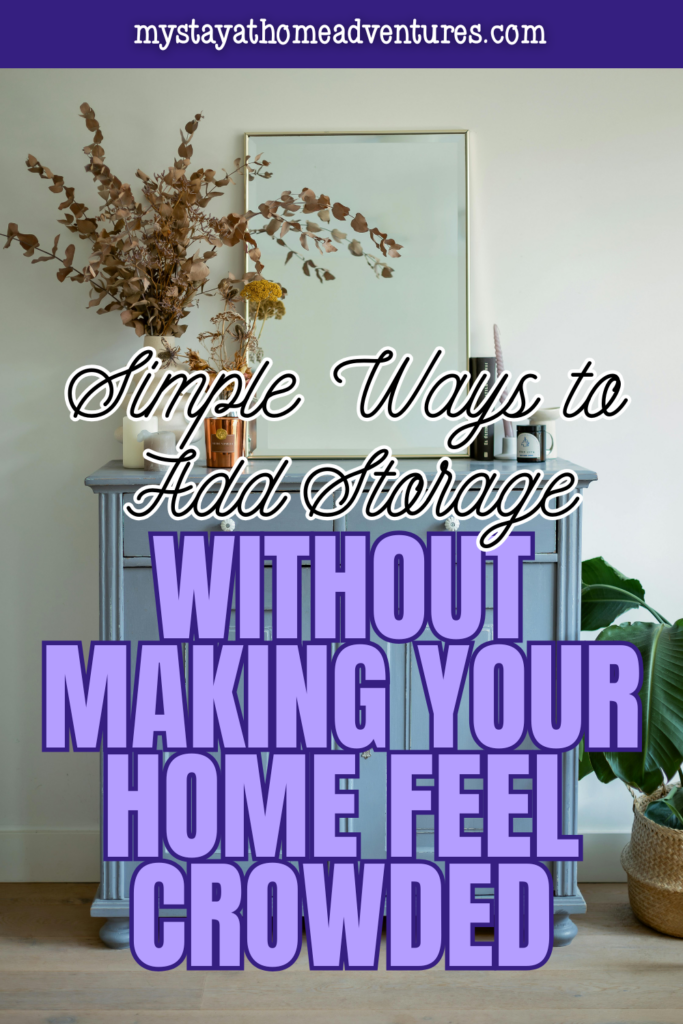
Simple Ways to Add Storage Without Making Your Home Feel Crowded
This post may contain affiliate links which might earn us money. Please read my Disclosure and Privacy policies here
Most of the time, a messy home is not really about having too much stuff. It is about where that stuff ends up. When there is no clear place for things, they spread across counters, tables, and any flat surface they can find.
Two rooms tend to get hit the hardest. The dining area collects mail, chargers, school papers, and whatever gets dropped on the table after work. The living room fills up with remotes, magazines, game controllers, and tangled cords behind the TV.
The fix for both rooms is simpler than you might think. A buffet cabinet in or near the dining area gives you one long surface with closed storage underneath, so all that daily clutter has somewhere to go.
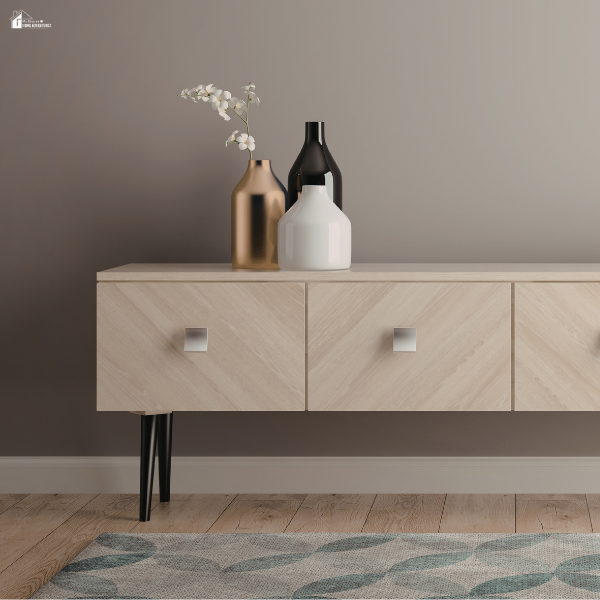
A TV stand that stretches wide enough to actually hold everything around your TV keeps the living room from turning into a cable graveyard.
Neither of these requires a big project or a room makeover. It is just about choosing fewer, longer pieces that do more work.
The Problem With Small Storage Pieces Everywhere
It is tempting to solve clutter by adding a little basket here and a small shelf there. A narrow side table by the couch. A tiny rack in the corner. Each one seems helpful on its own.
But put five or six of these small pieces in one room and the space starts to feel cramped. You have more furniture, more visual noise, and somehow the same amount of clutter. The stuff just moved from one small surface to another.
A different approach: go long and low
Instead of scattering storage around the room, think about running one longer piece along a single wall. A low cabinet that stretches three or four feet does the job of multiple small pieces while taking up less visual space.
This works because your eye reads one long horizontal line as clean and calm. A bunch of short, unrelated objects at different heights reads as busy. Fewer pieces, more length. That is the idea behind everything in this article.
Dining Area Storage That Hides the Mess
The dining area has a unique problem. It is supposed to feel open and welcoming, but it also ends up being a dumping ground for everyday life. You need storage that works hard but does not make the room feel like a utility closet.
What actually piles up
If you look at what collects in most dining areas, it is a mix of things that do not belong together:
- Mail, receipts, and paperwork that never made it to a drawer
- Small kitchen appliances that do not fit on the counter, like a toaster or blender
- Table linens, placemats, and candles you rotate seasonally
- Serving dishes and extra plates you only use for guests
None of these items needs to be visible. They just need a home.
Why a buffet cabinet works here
A buffet cabinet sits low against the wall and gives you a long row of closed storage. Doors and drawers keep everything hidden. The top surface stays clear for a lamp, a plant, or nothing at all.
What makes a buffet cabinet different from a regular sideboard or console table is the depth and interior space. Most buffet cabinets are deep enough to hold plates stacked flat and tall enough inside for small appliances. That means things actually fit instead of being crammed in.
If your dining area connects to the kitchen or a hallway, this kind of cabinet can serve double duty. It catches kitchen overflow on one side and entry clutter on the other.
Living Room Storage That Doesn't Look Like Storage
Living rooms have a different challenge. You need storage, but everything is on display. The room is where you relax and where guests sit. No one wants it to feel like a warehouse.
The stuff you are actually trying to hide
Most living room clutter falls into a few categories:
- Remotes, controllers, and charging cables
- Game consoles, streaming devices, and routers
- Magazines, books, and kids' activity supplies
- Throw blankets and pillows that multiply somehow
The goal is not to get rid of all this. It is to give each category a spot that is easy to access but not always visible.
How a TV stand handles this
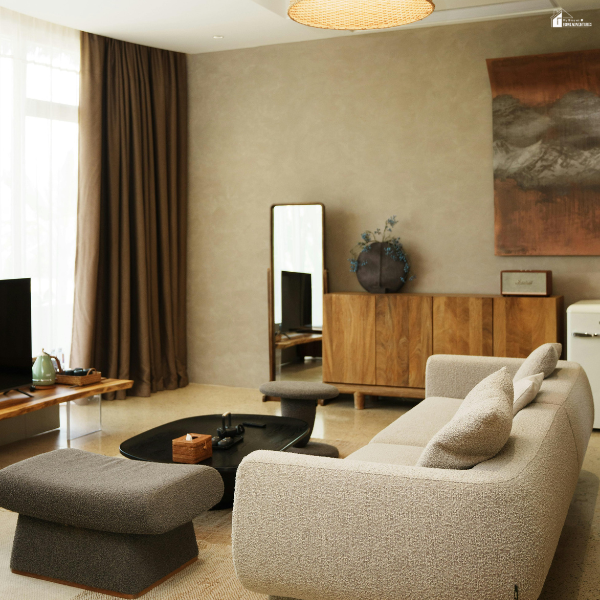
A TV stand that runs wide along the wall gives you both open and closed sections. Open compartments hold media devices where they need airflow. Closed doors or drawers hide everything else.
The key is choosing a TV stand that matches the width of your wall, not just the width of your TV. A 50-inch TV on a small stand leaves an empty wall on both sides. That space usually fills up with random items sitting on the floor or leaning against the wall.
A wider TV stand claims that space intentionally. It gives your media gear, books, and everyday items a real place to live. The room looks put together because everything has been accounted for, not because you own less.
Why Long Cabinets Make Rooms Feel Bigger
This might sound backward. A bigger piece of furniture makes a room feel bigger. But it works, and there are two simple reasons.
The visual trick
A long, low cabinet creates a strong horizontal line across the wall. Your eye follows that line and perceives the room as wider. Compare that to a tall, narrow bookshelf, which draws the eye up and makes the room feel choppy.
Interior designers use this principle all the time. Low furniture with clean lines makes a space feel open, even when the square footage is small.
Fewer pieces, more breathing room
When one cabinet replaces three or four smaller storage items, you are removing visual clutter from the room. Fewer legs on the floor or gaps between objects. Fewer things for your eye to process.
The floor space you free up matters too. A single cabinet against the wall leaves the center of the room open. Three separate pieces scattered around the room eat into your walking paths and make the space feel tighter than it is.
Fewer Pieces, More Storage Length
The next time your home feels cluttered, take a step back before buying another bin or basket. Count how many separate storage pieces you already have in the room. If the number is more than two or three, the problem might not be a lack of storage. It might be too many small pieces doing too little.
Pick the wall that makes the most sense. Choose one longer cabinet that covers real ground. Let it handle the bulk of what the room needs to store.
You will end up with less furniture, more storage, and a room that finally feels like it has some breathing room.