What a Minimum Wage Increase Can Expose in a Pay Structure
This post may contain affiliate links which might earn us money. Please read my Disclosure and Privacy policies here
Minimum wage increases took effect in 19 states on January 1, 2026. Some more states facilitated minimum wage revision throughout the remaining course of the year. In total, 22 states and 66 cities and counties raised their minimum wage in 2026.
These wage increases affect more than 8.3 million employees. These wage increases are typically set either by state labor agencies using a Consumer Price Index formula or by previously scheduled, legislatively approved increases.
For a payroll department, this is a compliance task. For workers, this process could reveal salary discrepancies that they had not previously noticed.
The annual step touches tip credits, salaried thresholds, and recordkeeping duties all at once, which is why practitioners publish running explainers on it.
Let’s discuss how minimum wage increases are calculated and their implications for workers across industries.

Compression Makes an Old Gap Legible
In the proposed minimum wage raise scenario, the overall wage gap closing effects are concentrated at the bottom of the wage scale, where less income is distributed. In this regard, two workers with respective salaries of $14 and $16 an hour may find the salary gap between them narrowed from $2.00 to $0.45.
The provisions under the Equal Pay Act of 1963 gauge fairness by what a job requires in terms of skill, effort, responsibility, and so forth, rather than comparing titles. Separately, Title VII of the Civil Rights Act of 1964 makes it unlawful for employers to discriminate against individuals on the basis of race, color, religion, sex, or national origin.
During the period between fiscal years 2017 and 2021, the Equal Employment Opportunity Commission in the US was successful in reclaiming a total amount of $65.3 million against the complaints made under the Equal Pay Act.
The agency also managed to recover $159 million in favor of those who had filed wage complaints. These amounts were restored after the complaints were filed.
A Visible Gap Is Not Automatically a Claim
Most consumer explainers stop there, and that omission is misleading. The Equal Pay Act builds in four employer defenses. A seniority system, a merit system, a system measuring earnings by quantity or quality of production, or any factor other than sex will justify a differential if the employer proves it.
Longer tenure, a documented performance record, a shift premium, and an earlier promotion are all ordinary explanations for two different numbers.
So the useful question after an adjustment is not whether a gap exists. It is what an employer would say produced it and whether the paperwork backs that up. An employee who believes a wage increase was withheld because of a protected characteristic is entitled to seek legal assistance.
Los Angeles discrimination lawyer Emanuel Shirazi offers experienced and aggressive representation for employees who have been legally wronged by their employers.
Anti-discrimination laws or rules encompass many categories. These aspects or subjects touch on race, sex, national or ethnic origin, religion, sexual orientation, disability, medical conditions, family and maternity leave, and military service.
The types of protection available and the means by which it is pursued will be dictated by the case facts and the law of the state in question.
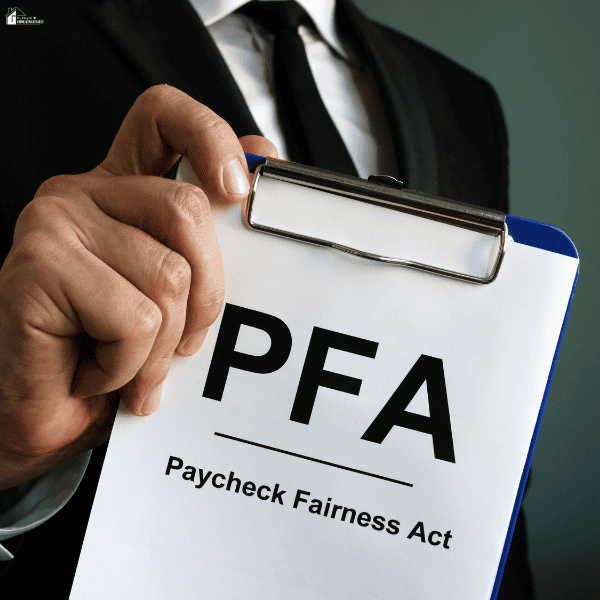
The Ledbetter Rule Buys Less Time Than It Sounds Like
The 2009 Lilly Ledbetter Fair Pay Act changed how the time limit itself is calculated. Every paycheck that imposes a discriminatory compensation rate counts as a fresh violation. That means a pay decision made as far back as 2012 can still be challenged today, but the back pay recovery is limited to the two years before the charge was filed.
What the act doesn't do is get rid of the deadline itself. A Title VII charge still has to reach the EEOC within 180 days, or 300 in a state with its own fair employment agency, counted just from a recent paycheck instead of the original decision. Back pay reaches only two years before the charge was filed, not a day further.
Equal Pay Act claims run on a separate track. They can go straight to federal court without an EEOC charge, on a two-year limit that stretches to three years for a willful violation. The two deadlines are easy to confuse. Resolving one does not affect the other.
Talking About Pay Is Protected, Up to a Point
Wage conversations between coworkers are protected under the National Labor Relations Act. This protection applies when employees discuss pay as part of concerted activity.
An employer may violate the law by disciplining an employee for discussing wages. In some cases, this could lead to an unfair labor practice charge. It may also add to existing concerns about discrimination.
However, the law does not protect every worker. There are several important exceptions. For example, it excludes public sector employees, agricultural workers, domestic workers, independent contractors, and supervisors.
These distinctions can affect workplace protections. A shift lead may qualify as a supervisor under the law. If so, that person may have less protection for wage discussions than the employees they supervise.
What Actually Needs Writing Down
Workers with wage disputes should gather their complete pay history while they still have access to the payroll portal. This includes records of raises and bonuses. They should also document the skills, effort, responsibilities, and working conditions required for the comparison job.
The statute uses these factors to make comparisons. However, job titles do not always reflect the actual work. Pay attention to any changes that happen after a pay complaint. For example, a schedule, performance review, or set of duties may change. Record when each change happened and who made it.
A raise is rarely a legal event by itself. Instead, it is an accounting event that may make an older issue easier to identify. In many cases, the pay gap has an ordinary explanation.
Still, understanding the difference requires accurate records. Workers need their pay history and a clear job comparison. They also need to know which legal deadline applies. Gathering this information is easier in the weeks after a pay adjustment than a year later.