How Floral Designers Use Visual Planning to Create More Cohesive Wedding Atmospheres
This post may contain affiliate links which might earn us money. Please read my Disclosure and Privacy policies here
What guests take away from a wedding is rarely the memory of a single arrangement. It is the room. The way light moved through the venue at a particular hour. The feeling of being enclosed by something that had been thought through.
When people say the wedding was beautiful, they often mean something that happened in aggregate — a quality that built across the day rather than arriving in any one moment.
Floral design is a large part of how that quality is made.
The Problem With Planning Flowers in Isolation
Florists who work on weddings regularly encounter a version of the same surprise: a centrepiece that looked generous and full on the workroom table reads as modest once it is sitting beneath a twelve-foot ceiling.
A ceremony arch that felt exactly right for the scale of the venue becomes a different thing when the chairs are in rows and the guests are seated and the light is coming from a particular angle in the afternoon.
This is not a failure of the designer's eye. It is a consequence of planning flowers without the full room in mind.
The flowers share space with everything else — with the furniture, the linens, the candlelight, the drapery, the natural light sources, the architectural features that distinguish one venue from every other. Arrangements designed in response to those elements tend to feel native to the space.
The ones that do not feel placed into it, present but not integrated.
Colour Across the Day
A wedding moves through time and through different physical spaces. The ceremony has one quality of light and one set of spatial conditions. The cocktail hour shifts. By the time guests reach the reception, the light has changed again and so has the atmosphere the room creates.
Floral palettes that travel well across these shifts are not necessarily palettes that repeat identically.
Outdoor ceremony light can make a dusty rose and eucalyptus combination look soft and romantic. Indoor lighting often deepens those tones and creates a warmer look at the reception tables. Designers can build on that warmth instead of fighting against it.
The palette stays coherent not because every zone looks the same but because the emotional register runs consistently through each one.
Texture carries this logic too. When a bridal bouquet introduces soft, rounded petal forms and trailing movement, that vocabulary can recur in the tablescape florals, in the suspended installation above the dance floor, in the smaller posies at the cake table. The individual compositions vary. The visual language does not.
Seeing the Scene Before It Exists
One part of wedding floral planning that can be genuinely difficult is that the full scene does not come into existence until installation day — when it is too late to reconsider major choices. The arch is built. The centrepieces are made. The only question left is how everything reads together.
Working ahead of that moment means finding ways to picture the complete environment before it is physically assembled.
That involves understanding the furniture that will occupy each zone — the chair silhouettes at ceremony, the dining chairs and table proportions at reception, the lounge pieces in the cocktail space — because these are the objects that sit in direct conversation with the flowers.
When wedding professionals need to preview lounge areas, dining layouts, or ceremony settings alongside floral compositions, render furniture references can help clarify how the full scene will come together.
Seeing the room's spatial framework ahead of installation gives designers a clearer basis for decisions about scale, height, and placement — questions that are much more difficult to answer from a floor plan and a fabric swatch.
Where the Planning Pays Off
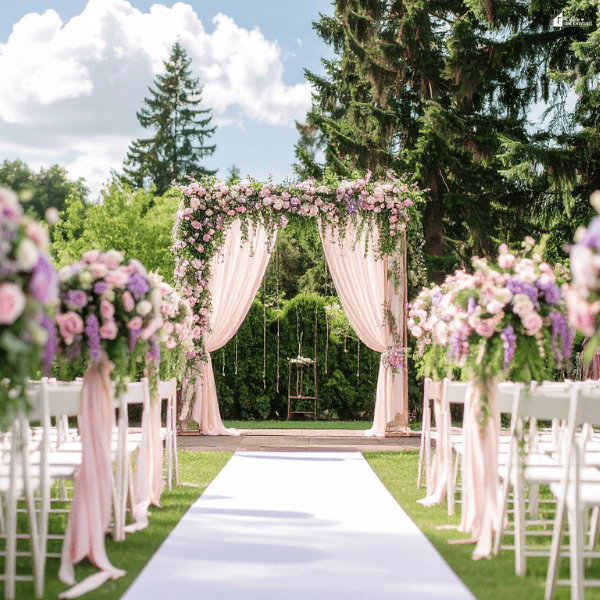
The ceremony arch or backdrop often becomes the most photographed part of a wedding. Its visual impact depends on the space around it.
An arch placed against a stone wall creates a different effect than one placed against an open sky. Designers adjust the flower density, height, and color palette based on the backdrop. Floral designers who review the full venue ahead of time can create designs that fit each setting more naturally.
The reception tablescape is another important part of the wedding atmosphere. Guests spend a large amount of time at the table during the event. Flowers, candles, glassware, linens, and seating all work together to shape the experience.
A centerpiece creates a stronger visual impact when designers plan it around the table setting. Chair height, table width, and ambient lighting all influence how the flowers appear in the room. When designers consider these details together, the floral arrangement feels like a natural part of the table instead of an extra decoration.
Transitional spaces also play an important role in wedding design. These areas can help the atmosphere feel connected from one space to the next.
Designers often focus on spaces between the main wedding zones. These spaces include the path from the ceremony to the dining room, the cocktail terrace, and the reception entrance. A simple floral arrangement in each area can help carry the color palette and mood throughout the event.
Without it, even a beautifully dressed ceremony and reception can feel like two separate events.
Large-scale floral installations make the biggest impact when designers plan the surrounding space around them. Suspended flower ceilings, statement arches, and structural ground pieces work best when they match the room’s layout and flow.
A floral installation transforms a space because the designer planned the room and the flowers together. When designers skip this step, even beautiful florals can feel slightly unfinished.
Guests usually remember weddings that feel fully connected from one space to the next. Designers achieve this by planning the flowers and venue together from the start.
The color palette, scale, and layout all matter during the planning stage. Designers also consider how guests move between each area. These early decisions help create a cohesive wedding atmosphere.