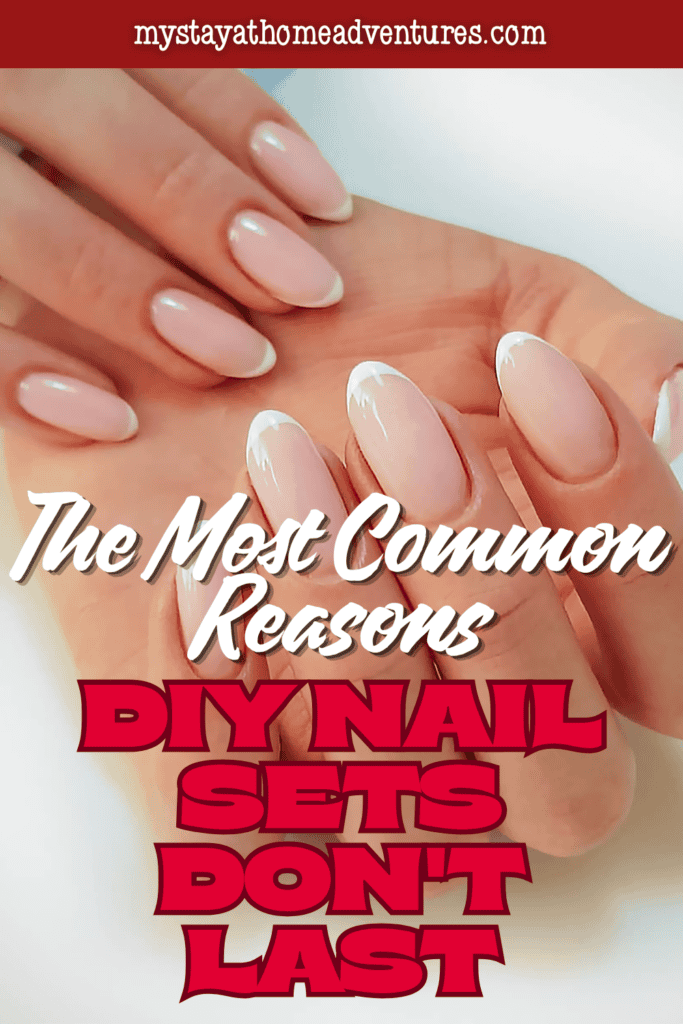
The Most Common Reasons DIY Nail Sets Don’t Last
This post may contain affiliate links which might earn us money. Please read my Disclosure and Privacy policies here
Creating a professional-looking nail set at home can be both satisfying and cost-effective. With more products, tutorials, and tools available than ever before, many people have successfully incorporated DIY nail routines into their regular beauty habits.
Yet one frustration remains surprisingly common: a nail set that looks great on day one but begins lifting, cracking, or falling off much sooner than expected.
When this happens, it is tempting to blame the products themselves. In reality, the lifespan of a DIY nail set is often influenced by preparation, application techniques, and aftercare habits. Small mistakes made early in the process can significantly reduce durability, even when high-quality products are used.
Nail Preparation Is Often the Biggest Problem
One of the most common reasons DIY nail sets fail is inadequate preparation.
Natural nails accumulate oils, moisture, and residue throughout the day. If these are not removed properly before application, products may struggle to adhere effectively. Even a small amount of oil left on the nail surface can reduce the bond between the natural nail and the enhancement being applied.
Proper preparation usually includes cleaning the nail surface, gently removing shine where appropriate, and ensuring the nail is completely dry before beginning the application process. Skipping these steps may save a few minutes initially, but it often leads to lifting and premature wear later.
Many durability issues can be traced back to preparation rather than the products themselves.
Product Application Requires Precision
DIY nail systems often appear simple when demonstrated in tutorials, but successful application usually depends on attention to detail.
Applying too much product can create weak points that are prone to lifting, while applying too little may compromise strength and durability. Placement also matters. Products that touch the skin or cuticle area can lift more easily because they are not attached exclusively to the nail surface.
When people experience repeated lifting issues, they often begin examining factors such as technique, curing times, and product placement. Questions such as why do my gel x nails keep popping off typically arise when wearers are trying to identify which part of the application process may be affecting retention.
Small adjustments in technique can sometimes make a significant difference in how long a set lasts.
Moisture Can Affect Adhesion
Water exposure is another frequently overlooked factor.
Many people complete household chores, shower, wash dishes, or engage in activities involving water shortly before beginning their nail application. Because natural nails absorb moisture, this can affect adhesion if the nail surface has not fully returned to its normal condition before products are applied.
This issue is not always immediately visible. A set may appear secure at first but begin lifting after several days as the bond weakens. Allowing nails to remain clean and dry before application often improves long-term durability.
Understanding how moisture interacts with nail products can help prevent problems before they occur.
Everyday Habits Create Additional Stress
Even a well-applied nail set experiences stress throughout the day.
Opening packages, typing, cleaning, lifting objects, and using nails as tools can gradually weaken enhancements. Many people are unaware of how frequently they place pressure on their nails until they begin paying attention to their habits.
Longer nail styles are particularly vulnerable because additional length creates greater leverage during everyday activities. This does not mean long nails cannot last, but they may require more careful handling than shorter designs.
Protecting nails during daily tasks often contributes just as much to longevity as the original application process.
Product Compatibility Matters
Not all nail products work equally well together.
Different brands formulate products differently, and mixing systems can sometimes create unexpected results. Adhesives, primers, gels, and top coats are often designed to work as part of a coordinated system. When products are combined without considering compatibility, adhesion and durability may suffer.
This does not mean mixing brands always causes problems, but it can introduce additional variables when troubleshooting lifting or retention issues. Consistency within a system often makes it easier to identify and correct potential problems.
When durability becomes a recurring issue, reviewing product combinations can be a useful step.
Aftercare Plays a Larger Role Than Many Realize
Many people focus intensely on application while giving less attention to what happens afterward.
Cuticle care, proper hydration, avoiding excessive force, and protecting nails during demanding activities all contribute to how long a set remains intact. Even the strongest application can be compromised by habits that place excessive stress on the nails.
Good aftercare helps maintain both appearance and durability. It also supports the health of the natural nail underneath, making future applications more successful.
Long-Lasting Nail Sets Depend on the Entire Process
When a DIY nail set fails prematurely, the cause is rarely a single dramatic mistake. More often, it is the result of several small factors working together. Inadequate preparation, moisture exposure, application errors, product incompatibility, and daily habits can all influence how long a set lasts.
The good news is that most of these issues can be corrected. By paying attention to preparation, refining technique, and maintaining proper aftercare, many people find that their DIY nail sets last significantly longer and perform much more consistently.
Over time, understanding the entire process often proves more valuable than simply switching products in search of a quick solution.