How to Deep Clean Small Spaces in 6 Simple Layers
This post may contain affiliate links which might earn us money. Please read my Disclosure and Privacy policies here
You open the closet door and a shoe falls out. The counter, the desk, and the floor all fight for the same square footage. A small space turns messy fast. Every item sits within arm's reach of everything else.
Deep cleaning small spaces feels harder than cleaning a big house. But the actual job is smaller. Most people just lack a system. Effort alone will not fix a cluttered studio or a tight dorm room.
This guide breaks the process into six layers. Each layer builds on the one before it. The method works for any tiny home, studio, or dorm across the USA.

Why Small Spaces Get Messy Faster Than Big Ones
Small spaces get messy fast because everything sits close together. A single dish on the counter touches three other surfaces. One dropped item can block a doorway in a studio apartment.
Most cleaning guides cover a whole house, room by room. That approach misses the real problem in a small apartment. There is no space to spread out while you clean. Small space cleaning needs its own order.
The fix is a layered system, not a room list. You declutter first. Then you clean top to bottom. Then you handle wet rooms before dry ones.
Layer 1: Declutter Before You Clean Anything
You declutter first because clutter blocks every other step. A cluttered counter cannot get wiped down. A floor covered in shoes cannot be vacuumed.
Set a timer for 10 minutes. Clear one surface at a time. Sort items into three piles: keep, store, and toss. This declutter-first habit turns a two-hour job into a 45-minute one.
Under-bed storage and closet bins hold items you keep but rarely use. A quick closet reset at this stage stops new clutter from forming. Once surfaces are clear, the real cleaning can start.
Layer 2: Gather Compact Tools Before You Begin
A small space needs a small toolkit. It does not need a garage full of supplies. A cleaning caddy holds your core tools in one hand. This saves the back-and-forth trips that waste time in a studio apartment.
Your basic kit needs five things. Grab a microfiber cloth, a scrub brush, dish soap, baking soda, and white vinegar. These handle most surfaces in a small kitchen or bathroom. A vacuum cleaner with a hose attachment reaches corners a full-size model misses.
A steam cleaner adds one more tool for tight spaces. It skips the chemical spray entirely. A portable steam cleaner reaches grout lines and window tracks that a rag cannot clean well. Steam also skips the rinse step that sprays require.
Layer 3: Clean High to Low in Every Room
You clean high to low because dust falls as you work. Wipe a shelf first, and the dust lands on a clean floor. Wipe the floor first, and you redo it after dusting the shelves.
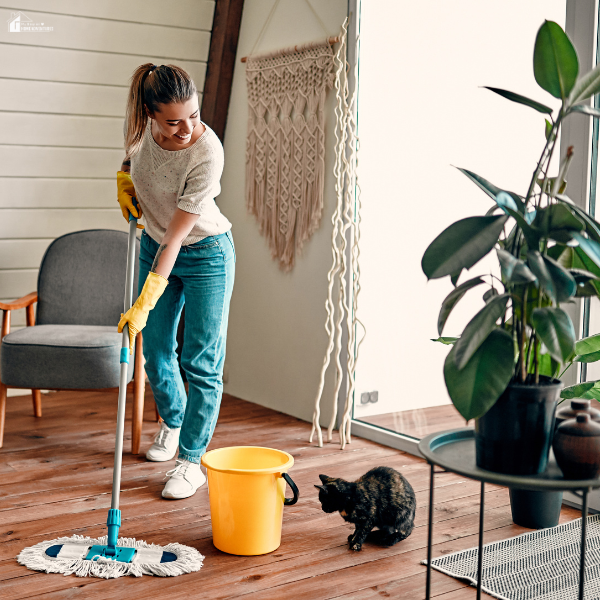
Start each room at the ceiling line. Work down from there. Dusting light fixtures and shelves comes before wiping counters. Wiping counters comes before mopping or vacuuming the floor.
Baseboards and light switches collect grime that most people skip. A damp cloth on both takes under two minutes per room. This one habit keeps small rooms clean far longer.
Layer 4: Clean Wet Rooms Before Dry Ones
You clean wet rooms first because they need time to dry. A bathroom holds moisture that spreads if left unchecked. Cleaning it first gives the room time to air out.
Small bathroom cleaning starts with the toilet, sink, and shower in that order. Spray a disinfectant and let it sit for a few minutes. This dwell time cuts your scrubbing effort in half.
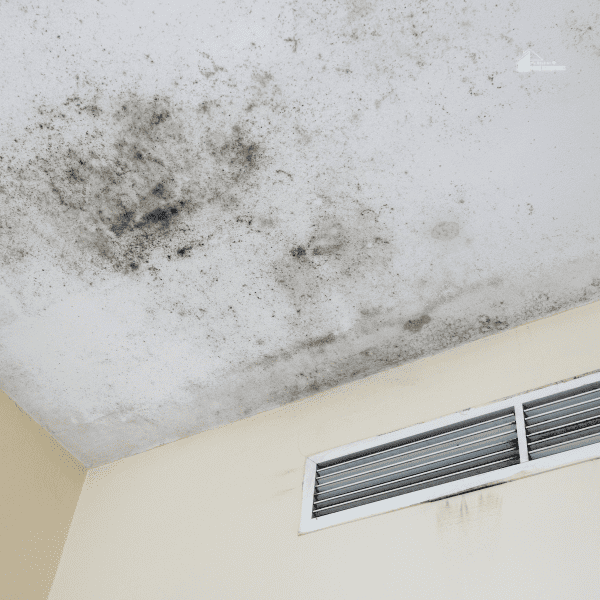
Bathroom ventilation matters as much as the scrub itself. Run the fan for 15 minutes after a shower. This stops bathroom mildew before it starts. A dry bathroom resists new grime far longer than a damp one.
Cleaning the Small Kitchen Without Clutter
Small kitchen cleaning follows the same wet-room logic as the bathroom. Kitchen grease builds up fast in a space with little airflow. A baking soda paste lifts stovetop buildup with a short soak, not hard scrubbing.
Sink stains form fast in a small kitchen sink. The sink gets used many times a day. Wipe the basin dry after each use. This one habit saves you a deep scrub at the end of the week.
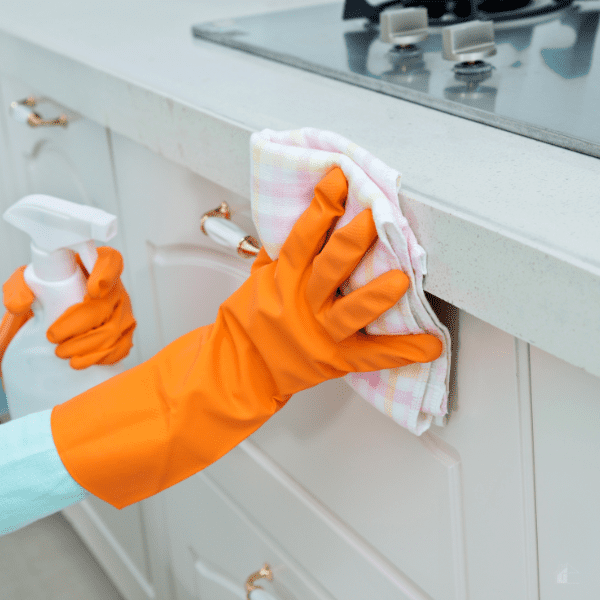
Cabinet handles carry more grease than most people expect. A quick wipe during your weekly pass keeps them from feeling sticky.
Layer 5: Dry Every Surface Before You Move On
You dry every surface right after cleaning it. A wet counter attracts dust within hours. A dry one resists dust for days.
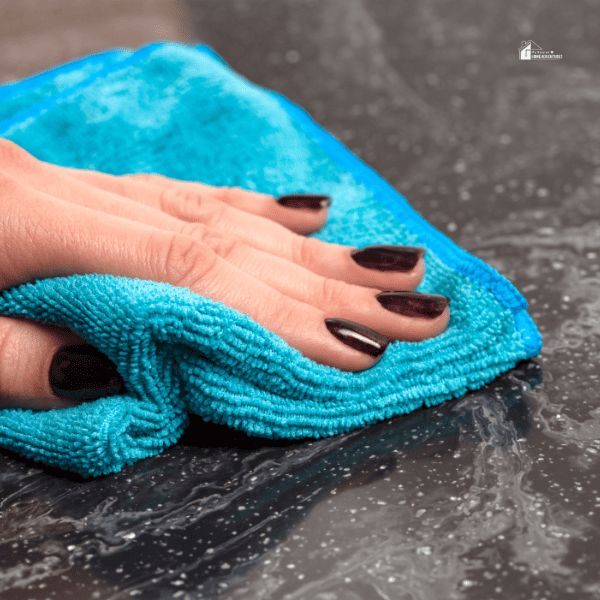
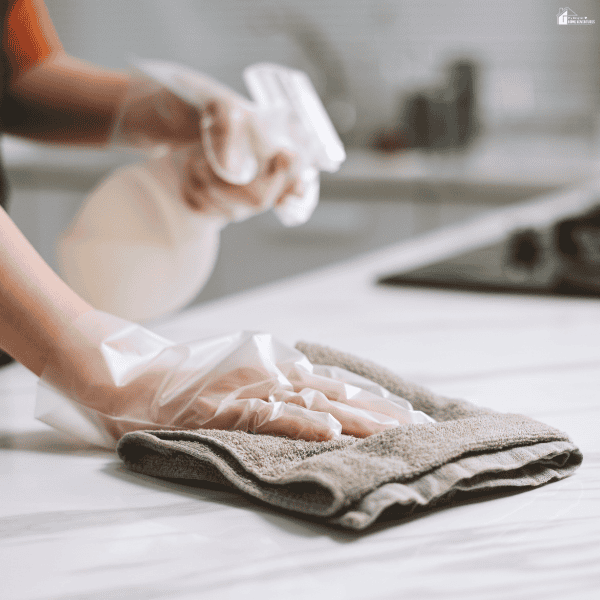
Damp wiping works for dusting. But a dry pass always follows it. A microfiber cloth handles both the wet wipe and the dry finish. This two-step habit separates a clean room from a streaky one.
Windows and mirrors need the same order. Clean window tracks first, then the glass, then dry it with a squeegee. Skipping the dry step is the top reason streaks come back within a day.
Layer 6: Reset Storage So Clutter Does Not Return
You reset storage last, so the clean space stays clean. Every item needs one home, not three possible spots. A storage reset takes 10 minutes once your pile is sorted.
Vertical storage solves the biggest problem in a small home. Floor space runs out fast. Wall shelves and over-door racks hold items without eating into your walking room.
Trash needs a fast exit from a small space. Trash odor builds quickly in tight rooms with little airflow. Take the bag out daily, not weekly. This stops the smell from settling into fabric and carpet.
A Weekly Reset Keeps Deep Cleaning Rare
A weekly reset stops small messes from becoming another deep clean. Ten minutes of tidying beats a two-hour scramble later. This keeps your space guest-ready with little extra effort.
Pick one day and repeat the same short routine. Wipe the counters. Run the vacuum. Reset any clutter that crept back. A cleaning routine like this becomes automatic after a few weeks.
Drain smell and laundry routine gaps are common weak points. A weekly baking soda flush closes the drain gap. A same-day laundry habit closes the other one.
How Often Should You Deep Clean a Small Space?
Most small spaces need a full deep clean once a month. Weekly resets fill the gap in between. A studio or dorm with daily use may need it every three weeks instead.
High-traffic spots like the kitchen and bathroom need attention every two weeks. Your real schedule depends on how many people share the space. One person in a studio can often stretch to six weeks between deep cleans.
Two or more roommates in the same square footage need a shorter cycle. Three weeks work well for most shared spaces.
Common Small Space Cleaning Mistakes
A few habits slow down small space cleaning. They also undo your progress fast. Skipping the decluttering step is the most common one.
- Cleaning the floor before dusting the shelves above it.
- Skipping ventilation, which lets bathroom mildew return fast.
- Leaving surfaces wet, which attracts new dust and grime.
- Storing items with no fixed spot, so clutter creeps back.
- Using a full-size vacuum in spaces too tight to maneuver.
Each mistake adds time to your next cleaning session. Fix them once, and your weekly resets stay short.
Frequently Asked Questions (FAQs)
Small space cleaning raises a few common questions from renters and owners. Here are direct answers to the ones asked most.
Where should I start when deep cleaning a small apartment?
Start by decluttering one surface at a time. A clear surface is the only way to clean it fully.
How long does it take to deep clean a studio apartment?
Most studio apartments take one to two hours with the layered method. Decluttering first cuts that time nearly in half.
What tools do I need for small space cleaning?
A microfiber cloth, scrub brush, dish soap, baking soda, and vinegar cover most jobs. A compact vacuum and a steam cleaner handle the rest.
How do I stop a small kitchen from smelling?
Wipe the sink and counters dry after each use. Take out the trash daily and flush the drain with baking soda weekly.
How often should I deep clean a dorm room?
Most dorm rooms need a deep clean every three to four weeks. A quick weekly reset keeps the space livable between deep cleans.
A Small Space Deep Clean Does Not Have to Take All Day
The six-layer method turns a stressful cleaning day into a short, clear process. Decluttering first matters most. Cleaning top to bottom comes next. Drying every surface locks the result in place.
Deep cleaning small spaces stops feeling overwhelming once you follow this order. Each layer builds on the last one. You never redo work you already finished.
Your next deep clean will take less time than the last one. A weekly reset keeps the gap between big cleans wide. Small effort, kept steady, is what keeps a small space feeling large.