
Why Does My Water Smell Like a Swimming Pool? What I Found Out and What I Did About It
This post may contain affiliate links which might earn us money. Please read my Disclosure and Privacy policies here
I noticed it first in the shower.
That faint chemical smell. Not overwhelming, just there. Like someone had cleaned the bathroom with a little too much bleach, except nobody had.
My kids started complaining about it too. Around the same time their skin seemed drier than usual after bath time. More lotion, more itching, more “Mum my skin feels weird.”
I figured it was seasonal. Summer heat, something with the pipes. I ignored it for a while.
Then I actually looked into it.

Why Tap Water Smells Like Chlorine
Municipalities add chlorine to drinking water to kill bacteria and keep the supply safe through the distribution network. That part is necessary and not the problem.
Looking into whole house filtration options I came across Quality Water Lab's whole house chlorine results, which showed total trihalomethanes at 31.83 parts per billion in untreated residential tap water before filtration.
The chlorine itself is the smell. The trihalomethanes are the part most people do not know about.
Chlorine levels also fluctuate. In summer, when water temperatures rise and bacteria multiply faster, utilities increase the dose. That is when the smell gets most noticeable in the shower and sometimes straight from the tap.
The Part Nobody Really Talks About
Trihalomethanes form when chlorine reacts with organic matter in the water supply during treatment. They travel through the distribution system right into your home alongside the chlorine itself.
They are regulated by the EPA because of their health implications over time. They are present in most municipal water supplies at measurable levels. And unlike chlorine you cannot smell them.
Within regulatory limits but not zero, and present in water most families drink and bathe in daily without knowing it is there.
What It Is Doing to Skin and Hair
Chlorine strips natural oils from skin and hair. It is the same reason your skin feels tight after swimming in a pool.
In a pool you notice it because the exposure is obvious. In the shower you absorb it for ten minutes every day without thinking about it. Over time that adds up.
For kids with sensitive skin the effect is more noticeable. Bath time strips the protective barrier faster. More itching, more dryness, more lotion needed afterward.
I was spending more on moisturizer, gentle shampoo, and fragrance-free products trying to manage symptoms without understanding the source. Once I made the connection I started doing the math on what that was actually costing me every year.
What I Was Actually Spending
Rough numbers from my household:
- Extra moisturizer for dry skin after showering — about $15 a month
- Gentle sulfate-free shampoo for the kids — about $20 a month
- Bottled water for drinking because the tap smell put us off — about $40 a month
That is roughly $75 a month, $900 a year, managing a problem at the symptom level rather than addressing it at the source.
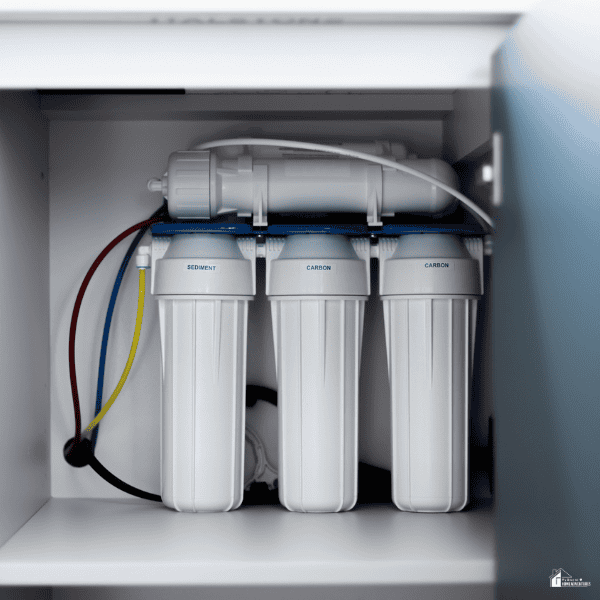
What Whole House Filtration Actually Does
A whole house carbon filter installs at the point where water enters the home. Everything downstream gets filtered water — every tap, every shower, every load of laundry.
For chlorine and disinfection byproducts a catalytic carbon system is the right technology. It does not just reduce chlorine, it breaks it down before it reaches your fixtures.
The systems independently verified to remove trihalomethanes to non-detect in residential testing are tank-based carbon systems. They run between $800 and $1,200 upfront. Maintenance costs around $40 a year, mostly a sediment filter swap every eight months or so.
The Frugal Math
| Details | Annual Cost |
|---|---|
| Symptom management (current) | ~$900/yr |
| Whole house filter upkeep | ~$40/yr |
| Savings after year one | ~$860/yr |
| Payback period on $1,000 system | ~14 months |
After the first year the savings repeat. The dry skin improved. The chlorine smell went away. The kids stopped complaining about bath time.
What to Look for Before Buying
Not all whole house filters are the same. A few things worth checking:
- Tank versus cartridge — tank systems last 8 to 10 years, cartridge systems cost more to run long term
- Catalytic carbon media — handles chloramine as well as chlorine, important since many utilities have switched
- Flow rate — needs to match your home's peak demand without pressure drop
- Independent lab results — published before and after testing data is more reliable than marketing claims
Testing your water first is always worth doing. Your utility publishes an annual water quality report that shows what has been detected and at what levels. That is the starting point before spending anything.
The Bottom Line
The chlorine smell was the thing that made me look. The dry skin and the monthly product spend were what made me act.
If you have been noticing the same things it is worth running the numbers for your own household. The upfront cost is real but so is the ongoing cost of managing a problem at the symptom level every month indefinitely.