The Comeback of the Conversation Pit: How Soulfa’s Sectionals Are Redefining Cozy Spaces
This post may contain affiliate links which might earn us money. Please read my Disclosure and Privacy policies here
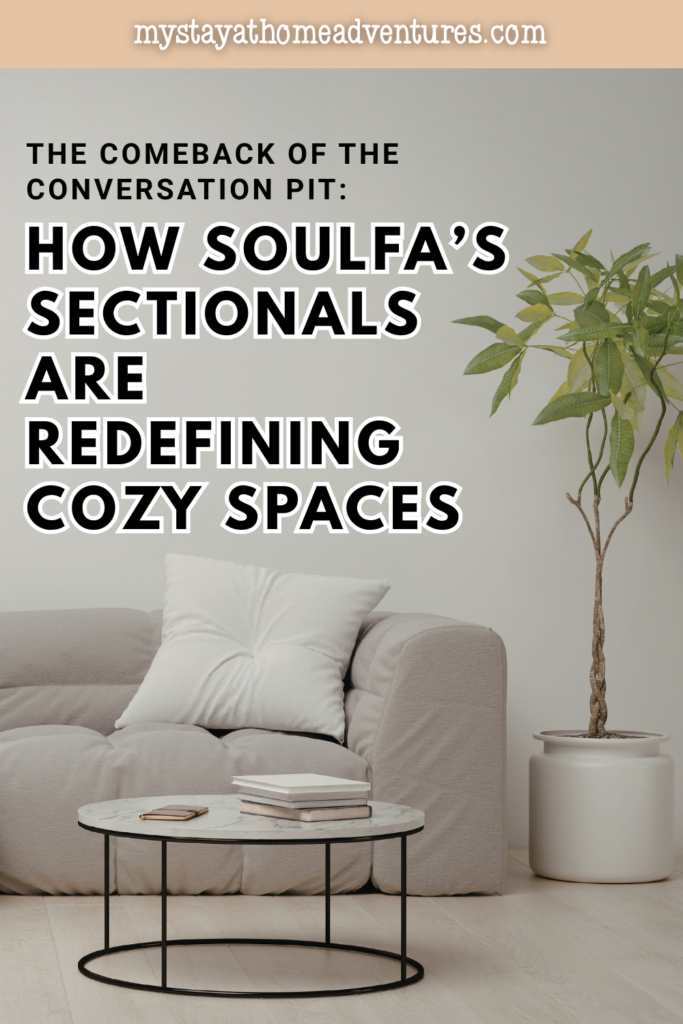
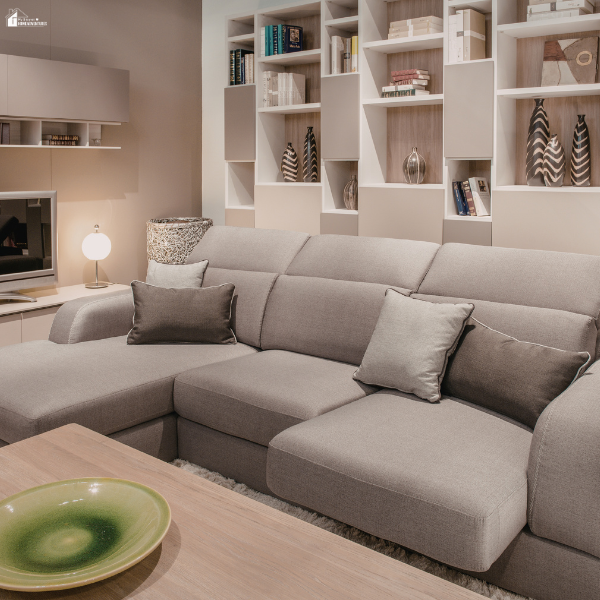
In recent years, interior design has seen a renewed interest in comfort-driven layouts. The “conversation pit,” once associated with 1970s architecture, has resurfaced in a modern form, centered on expansive, low-profile sectional sofas.
As homeowners place greater emphasis on shared living spaces, furniture companies are responding with designs that prioritize comfort, durability, and adaptability. Among them is Soulfa, a boutique American furniture maker that has manufactured its signature “Cloud” sofa since 2015.
Addressing Industry Markups and Furniture Waste
Founded with the aim of addressing both high retail markups and the waste of disposable furniture, Soulfa positions itself between luxury and mass-market production.
According to the Founder and CEO, Vitória, the company was established in response to two extremes in the furniture industry, which are high-end pieces with significant markups and lower-cost alternatives that often wear out within a few years.
Industry data supports part of this concern. The U.S. Environmental Protection Agency reports that approximately 12 million tons of furniture waste enter landfills annually, much of it attributed to short product life cycles.
Soulfa produces a limited number of pieces each year, focusing on handcrafted construction in the United States using ethically sourced materials. The company frames its work around the idea that a sofa is often the second-largest purchase for a home after a mattress.
Within this context, its sectional offerings have become central to its catalog, reflecting broader market demand for adaptable seating. Visit https://www.soulfa.com/ to learn about the brand's construction methods and material choices.
Engineered Fabric Designed for Spill Resistance and Durability
One of Soulfa’s distinguishing features is its “miracle stain-resistant fabric.” After several years of development, the brand engineered a textile intended to balance softness with durability. The fabric is designed to repel spills before they penetrate the surface, reducing the likelihood of permanent stains.
Performance textiles have become a significant segment of the upholstery market. According to research from the American Home Furnishings Alliance, consumers increasingly prioritize easy-care materials, particularly in households with children or pets.
Stain-resistant fabrics typically rely on tight weaves or protective finishes to slow liquid absorption. Soulfa states that its material achieves this resistance while maintaining a soft hand feel, a combination that has historically been difficult to balance.
For homeowners who use sectionals as central gathering spaces, durability is practical rather than cosmetic. Living rooms often function as multipurpose areas for work, entertainment, and family activities.
A fabric that resists spills can extend the lifespan of a sofa and reduce the need for professional cleaning services. By focusing on engineered textiles, the company addresses concerns that commonly accompany light-colored upholstery.
Memory Foam Inserts That Maintain Structure Over Time
Another notable feature is the inclusion of 1.5-inch high-density memory foam inserts in the seat cushions. Soulfa is the only cloud-style couch manufacturer to offer this specific configuration.
The insert is designed to help the cushion maintain its shape while preserving the relaxed appearance associated with overstuffed seating.
Memory foam, first developed by NASA in the 1960s for aircraft seating, is known for its ability to distribute weight evenly. In residential furniture, high-density foam can help prevent sagging and extend structural integrity.
Upholstery experts often note that cushion breakdown is one of the primary reasons consumers replace sofas within five to seven years.
By integrating memory foam into the core of its sectional cushions, Soulfa attempts to address a common complaint about shifting fill and uneven surfaces on cloud-style sofas. The company states that the insert minimizes the need for constant fluffing.
In the context of a conversation-focused layout, consistent support across seats helps maintain both comfort and visual order.
Interchangeable and Washable Covers for Long-Term Adaptability
The brand also offers removable, machine-washable covers for most of its fabric sectionals. Covers can be replaced or changed as interior styles evolve. The company notes that vegan leather options are not removable but can be cleaned.
Removable upholstery aligns with broader sustainability trends. According to a 2023 report by McKinsey & Company on circular design in home goods, modular and replaceable components can extend a product’s life by reducing the need for full replacement.
Instead of discarding a sofa because of stains or color fatigue, consumers can update the covers.
In practical terms, washable covers address everyday concerns. Families often face accidental spills, pet hair buildup, and general wear and tear. Machine-washable textiles reduce reliance on specialized cleaning services. The interchangeable system also allows households to adapt a sectional to seasonal or design shifts without purchasing new frames.
Solid Construction Without Assembly
Soulfa sectionals are built as single, solid structures using kiln-dried oak hardwood and high-density foam. Unlike flat-pack furniture that requires assembly at home, the company states that its sofas arrive fully constructed. This approach eliminates hardware-based assembly points that can weaken over time.
Kiln-drying hardwood reduces its moisture content, limiting warping and cracking. Furniture makers often consider it a benchmark for structural stability. By avoiding knock-down assembly, Soulfa aims to reduce joint stress and long-term loosening.
From a consumer perspective, no-assembly delivery simplifies the purchasing process. A fully constructed frame can contribute to longevity, which aligns with the company’s stated interest in reducing landfill waste associated with short-lived furniture.
Boutique Production and Clean Material Standards
Beyond construction details, Soulfa emphasizes limited production and clean material sourcing. The founder’s letter highlights a focus on organic and non-toxic elements, positioning the brand within a growing wellness-oriented home market.
Research from the Global Wellness Institute indicates that consumers increasingly evaluate indoor environments for potential chemical exposure, including furniture finishes and upholstery treatments.
Producing a limited number of pieces annually allows for controlled oversight. Boutique manufacturing contrasts with large-scale automated production, where cost efficiency often dictates material choices. While Soulfa doesn’t publish large production figures, it underscores quality control as a central priority.
The company also frames its mission in terms of price transparency. In public statements, leadership has criticized high retail markups within the luxury segment. At the same time, it distances itself from low-cost furniture that contributes to landfill waste.
This middle-ground positioning reflects a segment of the market seeking durability without designer-level premiums.
Final Thoughts
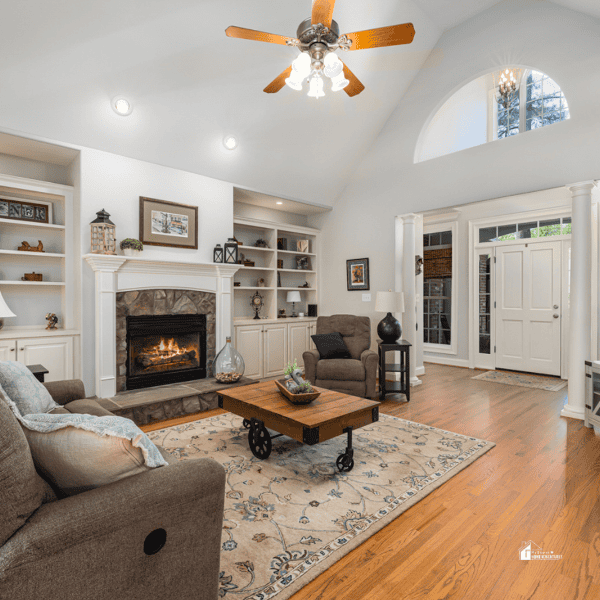
As the renewed interest in conversation-style seating continues, sectional sofas remain central to modern living room design.
By combining engineered fabrics, memory foam inserts, washable covers, and solid hardwood construction, Soulfa offers a case study in how boutique manufacturers are responding to consumer demand for comfort and longevity.
In an industry facing scrutiny over sustainability and pricing, the company’s model illustrates one approach to balancing craftsmanship, material standards, and practical use in contemporary homes.