
The Ultimate Winter Storage Guide for Your Garden Furniture
This post may contain affiliate links which might earn us money. Please read my Disclosure and Privacy policies here
Winter often creeps in faster than anyone expects. One week, the garden feels alive, and the next, everything looks cold and tired. Furniture sits there, collecting moisture, waiting for attention that usually comes too late.
A bit of care before the temperature drops protects the investment you’ve made and saves you from repairs when spring returns.
Clean and Prepare Before Storing
Everything begins with cleaning. Dirt hides in corners, clinging to moisture that can rust, stain, or smell when spring returns. Fill a bucket with warm water and mild detergent. Work with a soft brush, allowing the bristles to reach seams and creases.
Rinse, wait, and let it dry. The order matters. Water trapped under cushions or joints breeds trouble faster than frost ever could.
Typical metal pieces need inspection. A small scratch can become a line of rust if left unattended. A dab of outdoor paint or a quick coat of rust-proof spray seals the surface again. Cushions should be stored inside once dry, away from damp garages or sheds that never truly air out.
Those who own metal sets from Lazy Susan have an easier job. Cast aluminum doesn’t rust, and its finish keeps its color even when nights drop below zero. A gentle wash and a fitted cover are usually enough. The design takes winter in its stride, leaving you free from constant maintenance.
Find the Right Spot
Where the furniture rests during winter decides how well it survives. Garages, sheds, and even covered patios all work if the air moves. Stack chairs, but never bear against each other. Slide a towel or a strip of cardboard between layers. Store glass tabletops upright. Pressure cracks glass faster than cold does.
Wood behaves differently. It breathes. Cover it with plastic and you trap sweat inside the grain. Use a canvas or cotton sheet instead.
If space feels limited, think creatively. Hooks on a wall can hold folding chairs, while smaller side tables can slide under benches. A narrow rack in a garage corner can take several stacked pieces. Storing furniture well doesn’t always require a large shed; just a bit of planning is needed.
When There’s No Space Indoors
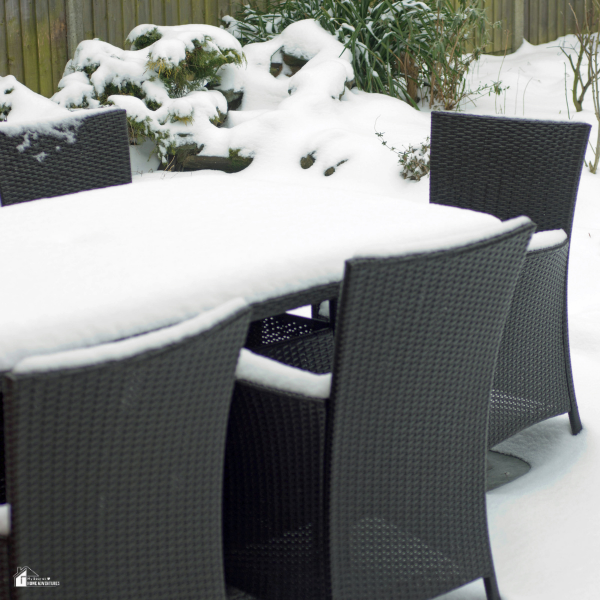
Sometimes furniture has to stay outside. That’s fine as long as you protect it properly. Choose fitted covers that tie securely at the base so wind can’t lift them. Look for versions with air vents to prevent condensation from accumulating.
Before covering, lift each piece slightly off the ground using tiles or small wooden blocks. This simple step keeps water from freezing around the legs. Move the furniture away from trees, fences, or walls, where wet leaves gather. Piles of damp leaves pressed against metal or wood do more harm than a few weeks of cold weather.
It helps to check on the furniture every few weeks. Brush off pooled water and tighten any loose cords or ties. Winter storms can shift covers or push water into seams, so catching it early saves time later. Five minutes in January saves a weekend of repairs in April.

Pay Attention to the Small Things
Accessories tend to suffer the most in winter—store textiles in breathable bags with a few silica packets inside. Plastic bins trap humidity, but fabric bags breathe. For umbrellas, wash the fabric, dry it thoroughly, then stand it upright. Gravity keeps the pole straight that way.
Before closing the season, tighten bolts and joints. Outdoor furniture moves with heat and cold. Looseness now means wobble later. For metal frames, a light layer of car wax forms a barrier that sheds rain and frost alike. It’s a small trick, borrowed from car care, but it works.
Small Habits, Lasting Results
Protecting garden furniture in winter doesn't have to be complicated. It just takes a few consistent steps: clean, dry, lift, cover, check. Done properly, it keeps your outdoor space ready for the next season. High-quality pieces make the process simple. They resist rust, shrug off rain, and keep their finish when others fade.
When spring returns, you’ll notice the difference immediately—no mildew smell, no chipped paint, no weekend spent scrubbing what winter ruined. The table will still sit level, the chairs will feel solid, and your first warm morning outside won’t begin with chores.
A bit of attention before winter sets in is what keeps your garden looking cared for all year long.