What Makes Sheepskin Rugs Different From Other Natural-Fiber Floor Coverings?
This post may contain affiliate links which might earn us money. Please read my Disclosure and Privacy policies here
Natural-fiber rugs come in many forms. Wool, jute, sisal, cotton, and seagrass are common. They may share a natural origin. But they do not feel the same. And they also perform quite differently.
Jute and sisal have a firm, textured surface. Cotton is generally lighter and flatter. Wool has its own softness and resilience.
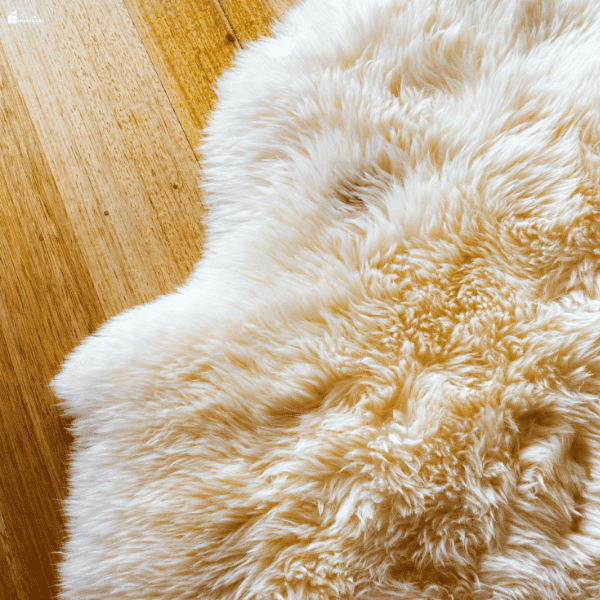
Sheepskin is different again — the wool remains attached to the hide instead of being woven into a conventional rug. That is what gives sheepskin rugs that much-loved and unique fleece surface.
The Texture Is Hard to Mistake
Jute and sisal have a rougher feel. Their fibers are rather firm. This is what gives the finished rug a noticeable texture underfoot. For some rooms, that is exactly the appeal.
Sheepskin takes a softer approach — the wool sits above the hide. It creates a deeper surface and can compress when someone walks or sits on it. It then regains some of its loft with mild brushing.
The wool itself matters, too. Fine fibers feel softer than coarse ones. Fiber diameter is measured in microns. Research cited in the existing sheepskin content found that wool with a mean fiber diameter of 17.5 microns or finer did not increase skin irritation in the study group.
Warmth Is Another Difference
Sheepskin has that one-of-a-kind cozy feel. Wool naturally provides insulation. Its fibers create small spaces that hold air. That makes the dense fleece comfortable against a cold floor. This is particularly useful beside a bed.
Jute and sisal offer something unique. Their surfaces are firm and textured — good qualities for a hard-wearing rug, but not the same experience as stepping onto wool. Cotton can feel soft as well. It simply does not have the same dense fleece structure.
Soft Does Not Mean Fragile
Sheepskin does not necessarily fit that assumption.
Wool fibers have a natural resilience. They can bend repeatedly without breaking. So it helps the fleece retain its shape. Where the rug is placed still matters.
A sheepskin is not the obvious choice for a busy entrance or commercial hallway. Short-wool varieties can be useful where there is regular use — they tend to show compression less noticeably than longer wool. Brushing can also help bring back some of the loft.
Jute and sisal may be better suited to areas where heavy foot traffic is the main concern. Their firmer construction is an advantage there.
Care Depends on the Material
Natural-fiber rugs do all respond to cleaning differently. Sheepskin needs a gentle approach. Shaking the rug outdoors can remove loose dust. A soft brush helps the wool look full.
Spills are best blotted rather than rubbed. Cool water and mild detergent are good for spot cleaning. For a deeper clean, a hand wash with cool water Using a wool-safe soap may be best.
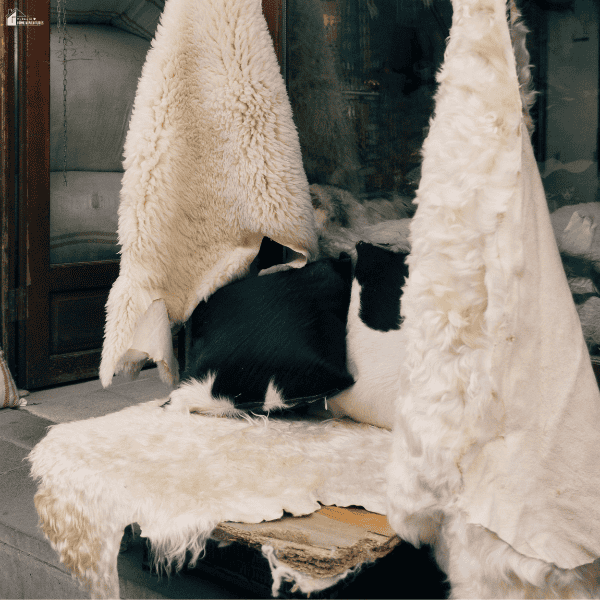
There is another part to remember — the hide. The leather backing needs to be kept dry and stored properly.
The Appearance Is Different
The visual difference is easy to spot. Jute and sisal usually have a more structured appearance. Their woven fibers create a fairly consistent surface. Cotton rugs can introduce more obvious colors and patterns.
Sheepskin is less uniform. The edges can be irregular. The fleece has its own texture and variation. That makes it fairly versatile. Sheepskin matches various spaces and designs. It fits modern and Scandinavian decor. At the same time, it looks good with traditional and eclectic interiors.
Sheepskin can make a room feel warmer. It is known for working well on hard floors. It can also easily be moved to another spot.
Which Material Makes Sense?
There is no universal top contender. Jute and sisal make sense for a firm surface and tolerance for regular foot traffic. Cotton works for a lighter, flatter floor covering. Conventional wool offers warmth and resilience in a more familiar rug construction.
Sheepskin has a narrower role — but it does that role particularly well. The wool provides softness and insulation. The hide gives the rug its backing. Its fleece and natural shape give it a look that a flat woven rug can't quite match.
That is ultimately what makes sheepskin different from other natural-fiber floor coverings. It retains much more of the original material's structure.