7 Benefits of Using a Kitchen Display System in High-Volume Restaurants
This post may contain affiliate links which might earn us money. Please read my Disclosure and Privacy policies here
High-volume restaurants operate under constant pressure. Order volume fluctuates rapidly, peak periods are intense, and small inefficiencies can quickly escalate into delayed service, overwhelmed staff, and inconsistent guest experiences.
In these environments, operational discipline and clear information flow are essential to maintaining speed and accuracy.
As restaurants scale volume across dine-in, takeout, delivery, and drive-thru, many find that paper tickets and verbal communication no longer support reliable execution.

Within a broader restaurant pos system, a kitchen display system (KDS) plays a critical role in helping high-volume kitchens manage complexity by improving visibility, coordination, and workflow control.
Below are seven operational benefits restaurants commonly realize when a KDS is implemented in high-volume settings.
1. Faster Order Awareness During Peak Inflow
In high-volume environments, the speed at which the kitchen becomes aware of new orders has a direct impact on fulfillment time. Even short delays in order arrival can compound during rush periods, creating backlogs that are difficult to recover from.
A kitchen display system improves order awareness by:
- Delivering orders to the kitchen instantly as they are placed
- Eliminating delays caused by physical ticket handling
- Displaying orders in clear sequence as volume increases
Earlier visibility allows kitchen teams to begin preparation sooner, helping maintain pace even as order inflow accelerates.
2. Clearer Prioritization Under Heavy Load
High-volume kitchens often process dozens of concurrent orders, each with different timing and service requirements. Without clear prioritization, staff may focus on the wrong orders, leading to uneven pacing and late deliveries.
A kitchen display system supports prioritization by:
- Sequencing orders based on time, service type, or rules
- Highlighting orders approaching critical timing thresholds
- Making priorities visible across all prep stations
This shared understanding reduces confusion and helps kitchens maintain steady throughput during the busiest service windows.
3. Reduced Dependency on Verbal Communication
Noise levels rise significantly in high-volume kitchens. Verbal callouts, clarifications, and reminders become harder to hear and easier to miss, increasing the risk of miscommunication and delays.
Kitchen display systems reduce reliance on verbal communication by:
- Keeping order details continuously visible
- Reflecting changes or modifications in real time
- Allowing staff to reference screens instead of asking questions
With fewer interruptions, teams can stay focused on execution, which is especially valuable when volume and pressure are high.
4. Improved Coordination Across Multiple Prep Stations
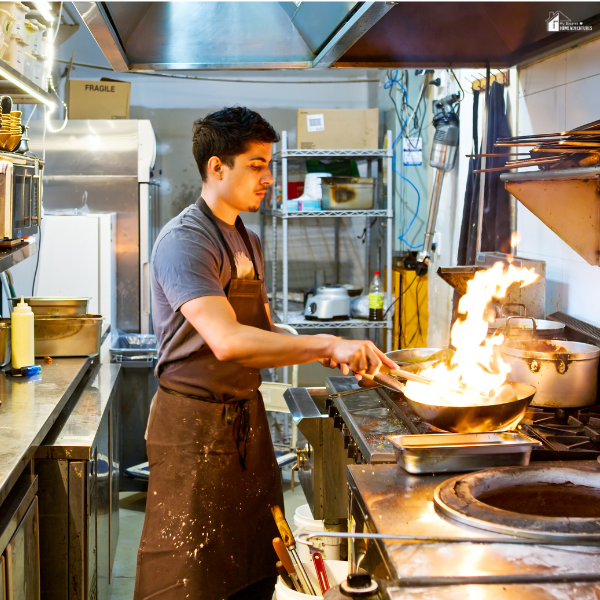
High-volume kitchens rely heavily on parallel preparation. Grill, fry, prep, and assembly stations must work in sync to complete orders efficiently. When coordination breaks down, orders stall at final assembly or handoff.
Kitchen display systems improve coordination by:
- Routing items to the correct prep stations
- Allowing stations to see how their tasks fit into full orders
- Supporting parallel workflows instead of sequential handoffs
This alignment helps reduce waiting time between stations and speeds overall order completion.
5. Better Control Over Bottlenecks and Delays
In high-volume service, bottlenecks can form quickly and silently. Without visibility into elapsed time and order progress, kitchens may not realize where delays are occurring until guests are already waiting.
Kitchen display systems help teams identify issues earlier by:
- Displaying elapsed time for each order
- Highlighting tickets that exceed expected prep windows
- Making bottlenecks visible to supervisors and managers
Earlier intervention allows teams to adjust staffing, pacing, or priorities before delays escalate.
6. More Predictable Handoffs Across Service Channels
High-volume restaurants often support multiple service channels simultaneously. Coordinating handoffs for dine-in, takeout, delivery, and drive thru system orders can become chaotic without structured timing.
Kitchen display systems support smoother handoffs by:
- Aligning prep timing with pickup or delivery expectations
- Improving coordination between the kitchen and service teams
- Reducing congestion at pickup and handoff points
Predictable handoffs help maintain flow across channels and prevent backups that slow overall service.

7. Greater Consistency Across Shifts and Staffing Levels
High-volume restaurants frequently rely on a mix of experienced staff, new hires, and temporary workers. Variability in experience can lead to inconsistent execution, especially during busy periods.
Kitchen display systems promote consistency by:
- Standardizing how orders are displayed and processed
- Reducing reliance on individual memory or informal habits
- Supporting repeatable workflows regardless of staffing mix
For multi-unit or high-turnover operations, this consistency is essential to sustaining performance at scale.
Operational Impact Beyond Speed
While speed is the most visible benefit, the operational impact of a kitchen display system in high-volume restaurants extends further. Clear workflows reduce cognitive load on staff, fewer errors lower rework and waste, and improved pacing stabilizes labor utilization.
Over time, restaurants often see:
- More predictable ticket times during rushes
- Reduced stress and burnout among kitchen teams
- Improved coordination between front and back of house
These outcomes support not only faster service but also more resilient operations under sustained demand.
Implementation Considerations for High-Volume Environments
To realize these benefits, implementation must reflect the realities of high-volume service. Common considerations include:
- Screen placement and visibility from each station
- A configuration that supports peak-order density
- Training that prepares teams for rush conditions
When these factors are addressed, kitchens are better equipped to maintain performance even as volume increases.
Closing Perspective
High-volume restaurant operations leave little margin for error. Bottlenecks, miscommunication, and delays quickly undermine service quality when demand spikes.
By improving visibility, prioritization, coordination, and consistency, kitchen display systems help high-volume kitchens operate with greater control and predictability.
For operators evaluating their ability to scale service without sacrificing speed or accuracy, understanding these benefits provides a practical framework for assessing whether current kitchen workflows can keep pace with growing demand.