Indoor vs Outdoor Garden Tool Storage – Which Is Better?
This post may contain affiliate links which might earn us money. Please read my Disclosure and Privacy policies here
From vegetable planting to trimming shrubs, cultivating flower beds, and keeping a lawn in prime condition, garden tools make any job easier. As with all equipment, they work best if stored properly. Poor storage may cause rusting, handle damage, battery failure, and unnecessary replacement costs.
Many homeowners face the same decision: should garden tools be stored inside or outside? It will depend on the tools you have, the space on your property, and the conditions those tools will have to endure all year.
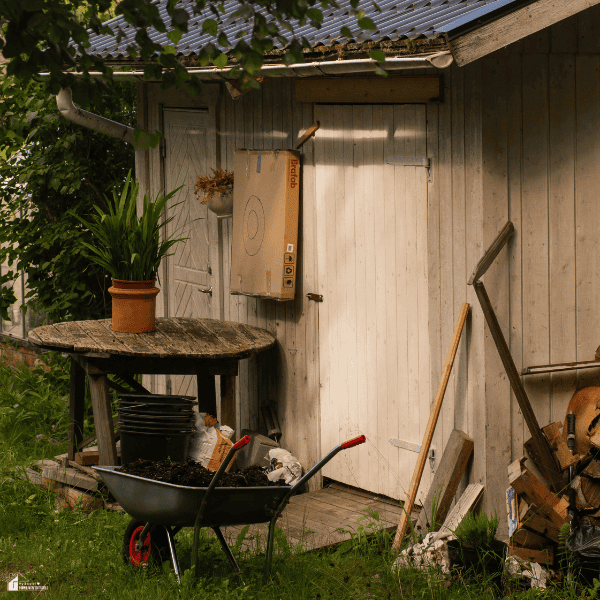
Why Garden Tool Storage Conditions Matter
Garden tools are often exposed to dirt, water, fertilizer, grass clippings, and changing weather conditions. When the work is complete, it is important to store them properly to prevent further wear.
Leaving a shovel outside in the rain may cause it to rust. If pruning shears are stored in a humid area, they can become cumbersome to use. Battery-operated equipment can become less effective when exposed to excessive heat or freezing temperatures.
Regular gardening is also made easier with good storage. Tools that are organized and readily available save time looking for equipment and help you spend more time in the garden. A storage space also keeps the yard tidy and helps prevent accidents caused by misplaced tools.
The Advantages of Indoor Garden Tool Storage
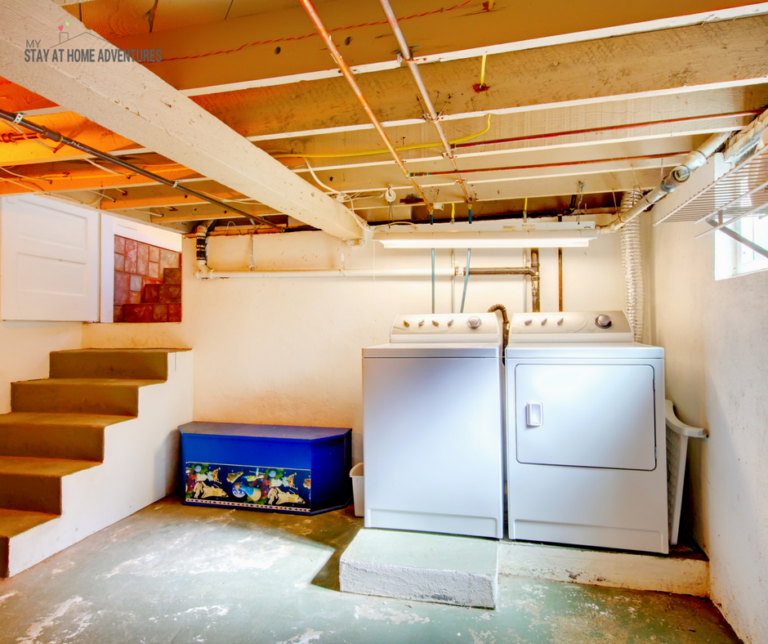
The best protection for garden equipment is indoor storage. Tools are protected from rain, snow, direct sunlight, and high humidity in garages, workshops, basements, and utility rooms. The stable conditions reduce the natural wear that occurs over time.
Inside storage will keep metal tools in better condition because they will be less exposed to moisture. Wooden handles have a reduced risk of cracking or warping, and batteries usually have a longer lifespan when stored at moderate temperatures.
For those who have costly power tools or specialized gardening equipment, indoor storage can help keep them in good condition and dependable.
Another practical benefit is security. The lawn equipment, power tools, and battery systems are a big investment. Keeping them in a secure structure reduces the likelihood of theft and weather damage.
It is also easier to organize in the indoor storage. Wall-mounted racks, shelving units, cabinets, and pegboards can be used to store tools by size and function. Long-handled tools stay upright, smaller tools are within reach, and accessories are less likely to get lost under piles of equipment.
The Limitations of Indoor Storage
The most common problem is space. Usually, there are too many items stored in a garage, such as vehicles, seasonal decorations, sports equipment, and household storage. When the space is already busy and crowded, it may be difficult to find a place for gardening tools.
Convenience can also be a problem. When your garden is far from your garage or basement, you may find it frustrating to have to go to and from the garden carrying tools after every use.
As the years went on, it became more likely that people would leave equipment outside for short periods of time, negating the advantages of protected storage.
Garden tools also track dirt in. During busy growing times, soil, grass, mulch, and moisture can build up rapidly. The storage area may require regular maintenance if tools are not cleaned before storage.
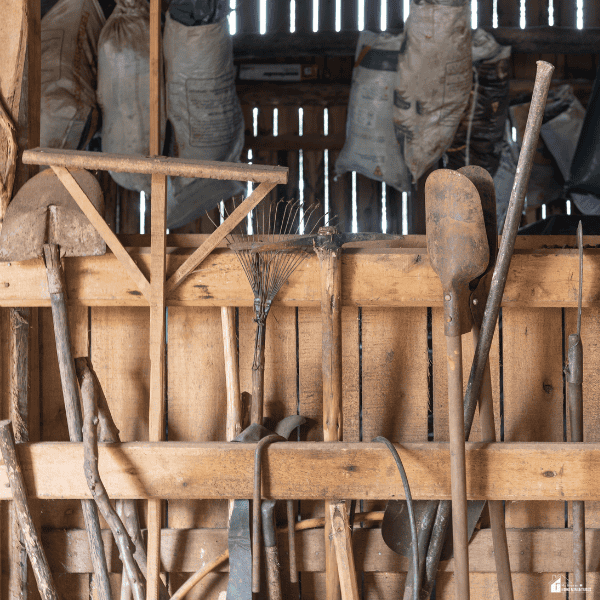
The Benefits of Outdoor Garden Tool Storage
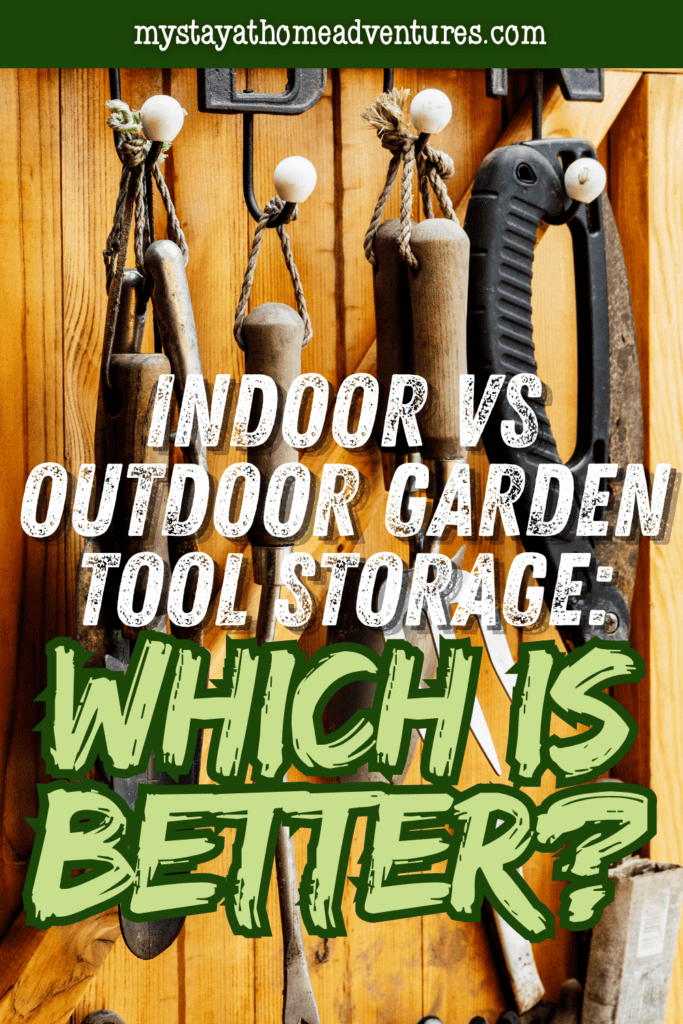
Outdoor storage remains popular because it allows tools to be kept near where they are used. A garden shed, storage cabinet, or deck box can help you to easily access equipment and store it away when not in use.
Outdoor storage may be a better option for homeowners with limited indoor space. Instead of using walls or corners in the garage or basement for gardening tools, you can use them for cars, household products, sports equipment, etc.
Smaller hand tools can be organized in a rolling toolbox for gardening, making it easy to transport them between storage areas and the yard.
Modern sheds and storage cabinets offer much superior protection than older sheds and cabinets. Some have weather-proof materials, tight-fitting locks, storage shelves, hooks, and ventilation options. With a sturdy shed, you can organize and store many tools and keep them safe year-round.
Larger equipment can be stored outside more easily. A shed is a great place to store lawn mowers, wheelbarrows, garden carts, and large landscaping equipment, while it may be hard to store them indoors.
The Challenges of Outdoor Storage
The main worry of outdoor storage is the weather. Even a well-built shed will have changes in temperature and humidity levels throughout the year. Enclosed areas can collect moisture, especially in areas with high humidity or rainfall.
Moisture levels that remain high for extended periods are particularly harmful to metal surfaces. Rust can form over time, and wooden handles can swell, shrink, or crack in extreme temperatures. Power equipment and batteries are also affected by extreme heat and cold.
Security should also be taken into account. Outdoor storage structures are typically more accessible than garages or workshops that are connected to a house.
Locking systems are also used to enhance security, but if you have valuable equipment, you may need to take additional measures such as reinforced doors, outdoor lighting, or security cameras.
Maintenance is another responsibility. Sheds and outdoor cabinets should be inspected regularly to make sure that roofs, seals, vents, and doors are kept in good condition. A small leak can lead to water infiltration and cause equipment damage before it is noticed.
Which Tools Should Be Stored Indoors?
Certain garden tools are ideal for storing indoors, especially those with electronic components or those that require fine-tuned handling.
Whenever possible, store these items indoors:
- Battery-powered garden tools
- Chargers and extra batteries
- Chainsaws
- Hedge trimmers
- Electric pressure washers
- Precision pruning tools
- Fertilizers and garden chemicals
- Irrigation controllers and electronic accessories
Battery systems should be given special consideration, as they can be affected by temperature extremes and may have a shorter lifespan. Most manufacturers recommend storing batteries in a cool, dry place with fairly consistent temperatures year-round.
High-value equipment also requires extra protection. Indoors will limit exposure to the environment and minimize the risk of theft, helping maintain performance and durability.
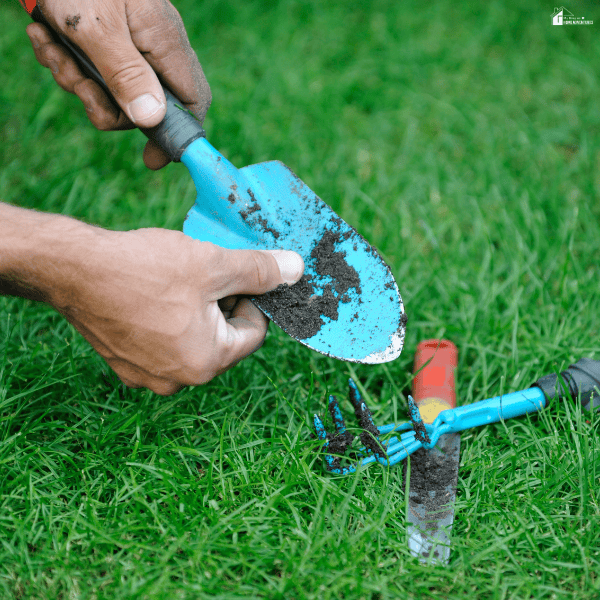
How to Improve Outdoor Tool Storage
If you decide to store them outside, there are a few easy steps you can take to keep your tools safe.
Use a storage structure that will protect from weather conditions and offer good ventilation. Air circulation will help reduce moisture buildup, which is one of the more common causes of rust and corrosion. Shelving, hooks, and wall-mounted racks are also useful for keeping tools organized and off the floor.
It's a big difference if you clean up tools before storing them. Over time, soil, grass, and moisture on equipment can accelerate deterioration. Clean tools and let them dry before storing.
A thin film of oil on metal surfaces will give extra rust protection. Tools stored on racks, not on the floor, also minimize exposure to moisture. Small dehumidifiers or moisture absorbers can be useful in humid climates to keep the air drier inside a shed.
So, Which Garden Tool Storage Solution Is Best?
The best storage solution will depend on the space you have available, the value of your equipment, and the climate. Moisture-related issues may be less common among homeowners in dry climates than in coastal or humid climates.
Likewise, the storage needs of a person with a few simple hand tools will differ from those of a gardener with several power tools and large landscaping equipment.
Many gardeners opt for a combination of indoor and outdoor storage. Hand tools are kept near the garden in a shed; batteries, power tools, and expensive equipment are kept in a garage or workshop. This makes tools easily accessible and provides extra protection for items that require a controlled environment.
Conclusion
The best way to protect your garden tools from moisture, temperature, and theft is to store the equipment indoors, which is ideal for items that are valuable or powered by batteries.
When you have a good-quality shed or storage box, you can store items outside – this can give you some room inside the house. The tips mentioned above should help you make the right decision about storing your gardening tools.