The Home Problems You Put Off (Until You Really Can’t Anymore)
This post may contain affiliate links which might earn us money. Please read my Disclosure and Privacy policies here
There are two types of home problems.
The obvious ones—like something breaking completely, water going where it shouldn’t, or an appliance just giving up on life. Those get dealt with straight away, no question.
And then there’s the other kind.
The quieter ones.
The slow drain.
The weird noise.
The appliance that’s technically working… but not quite right.
Those are the ones I used to ignore.
Not because I didn’t care, but because they never felt urgent enough to interrupt everything else going on. Life gets busy, and if something isn’t actively causing a problem, it’s easy to push it to the bottom of the list.
But those are also the problems that come back later—usually at the worst possible time.
The Slow Build-Up You Don’t Notice (Until You Do)
Most home issues don’t happen all at once.
They build slowly.
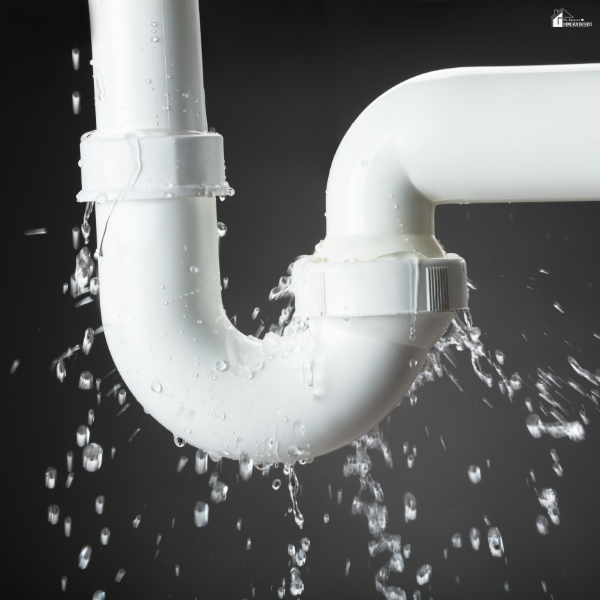
A pipe doesn’t suddenly fail—it starts with a small issue.
An appliance doesn’t just stop—it gives you little signs first.
A system doesn’t break overnight—it wears down over time.
The tricky part is that those early signs are easy to live with.
You adjust. You work around it. You tell yourself it’s fine for now.
And for a while, it is.
Until it isn’t.
The Kitchen Sink Situation (That Went On Way Too Long)
I had a kitchen sink that drained slowly for what felt like forever.
It wasn’t blocked—just slow enough to be annoying.
So I did what most people do. I ignored it.
I rinsed things a bit longer. I avoided thinking about it. I told myself I’d deal with it when I had time.
And then one day, it just stopped draining properly.
Completely.
And suddenly, what could have been a quick fix turned into something much more inconvenient.
That’s when I started looking into things like trenchless pipe bursting—not because I needed something that extreme at the time, but because it made me realize how much goes on behind the scenes with plumbing, and how small issues can escalate if they’re left too long.
It definitely changed how quickly I act now.
Appliances Always Give You Clues
If there’s one thing I’ve learned, it’s this: appliances rarely fail without warning.
They give you clues.
The fridge isn’t as cold as it used to be.
The washing machine sounds different.
The dryer takes longer than usual.
At first, it’s easy to ignore.
Everything still works, so it doesn’t feel urgent.
But those small changes are usually the beginning of something bigger.
Now, instead of waiting, I at least look into it early. Even just checking out services like Maple Leaf Appliance Repair gives you a sense of what might be going on and whether it’s something you should deal with sooner rather than later.
Because once an appliance stops completely, it’s never at a convenient time.
The 10-Minute Jobs That Somehow Take Weeks
There are so many things around the house that take less than 10 minutes to fix.
And yet… they don’t get done.
Tightening a loose handle.
Adjusting a door that doesn’t close properly.
Clearing out something small that’s starting to build up.
None of it is difficult.
But because it’s not urgent, it sits there.
I’ve started trying (not always successfully) to just deal with those things straight away.
And every time I do, I’m reminded how easy it actually was.

When Your Home Starts Feeling “Heavy”
This is something I didn’t expect.
When there are too many small issues around the house, it starts to feel… heavy.
Not messy, exactly. Not chaotic.
Just slightly off.
You’re aware of things that need doing, even if you’re not actively thinking about them.
And it adds this low-level stress that’s hard to explain.
That’s why fixing even one small thing can feel so good.
It’s not just the task—it’s the mental space it frees up.
Learning to Notice (Instead of Ignore)
I used to be very good at tuning things out.
If something wasn’t urgent, I’d ignore it.
Now I try to notice instead.
Not in a stressful way—just being a bit more aware of what’s going on in the house.
Does something feel different?
Is something not working as smoothly as it should?
Is there something I’ve been putting off for a while?
That small shift—just noticing—makes it much easier to stay on top of things.
You Don’t Need to Be an Expert
One thing that used to stop me from dealing with home issues was not knowing exactly what to do.
I’d think, I don’t really understand this, so I’ll leave it.
And sometimes that’s the right call.
But a lot of the time, you don’t need to know everything—you just need to take the first step.
Look into it. Try something small. Figure out what’s going on.
Even if you don’t fix it yourself, you’ll understand it better.
A Slightly Random Thought That Stuck With Me
This might sound unrelated, but it changed how I think about things.
I was reading about different career paths one day and came across information on how to get massage therapy license.
And what stood out wasn’t the career itself—it was the idea of learning a skill step by step, building knowledge over time.
It made me realize that home maintenance is kind of the same.
You’re not expected to know everything straight away.
You learn as you go.
Fix something small. Understand something new. Build confidence over time.
And eventually, things that used to feel intimidating just… don’t anymore.

The “One Thing” Rule
When everything feels like it needs attention, I don’t try to do everything.
I pick one thing.
Just one.
Something small, something manageable.
Fix that, and stop.
Because doing one thing is enough to shift the feeling.
From overwhelmed… to at least slightly in control.
Letting Go of Doing It Perfectly
This one’s important.
I used to delay fixing things because I wanted to do them properly.
But “properly” often meant “perfectly”… which meant not doing it at all.
Now I aim for better, not perfect.
If something works better than it did before, that’s enough.
Most of the time, that’s all you need.
A Home That Doesn’t Constantly Need Your Attention
At the end of the day, I don’t want a perfect home.
I just want one that feels manageable.
Where things mostly work.
Where small issues don’t turn into big ones.
Where I’m not constantly thinking about what needs to be done next.
And that doesn’t come from big efforts or perfect routines.
It comes from small habits:
- Noticing things early
- Fixing what you can, when you can
- Learning as you go
- Letting go of perfection
Nothing complicated.
Just a home that feels a bit lighter, a bit calmer… and a lot easier to live in.